An essential oil extracted from the rhizome of Amomum dealbatum Roxb. killed four laboratory bacterial strains in a study that combined pharmacopoeial quality testing, gas-chromatographic chemical profiling and broth-dilution assays. The sampled rhizome complied with the contaminant limits examined, while the oil showed its strongest bactericidal effect against Staphylococcus aureus and was active against two Gram-positive and two Gram-negative species. These findings concern cultured bacteria and isolated plant material; they do not demonstrate that the oil is safe or effective as a treatment in humans.
The researchers collected 30 healthy A. dealbatum specimens at 2-meter intervals from a natural population in Doimukh, Arunachal Pradesh, during the flowering season in June 2023. Following authentication, the rhizomes were washed, shade-dried and divided into finely and coarsely ground portions for microscopy, physicochemical analysis, chromatographic fingerprinting and essential-oil extraction. The dried material was also tested for heavy metals, aflatoxins, pesticides, total microbial load, yeast and mould, and specified pathogens. A voucher specimen was deposited in the herbarium of the Central Ayurveda Research Institute in Kolkata under accession number 57,936.
Macroscopic and microscopic characterization established a set of features intended to support botanical identification. Dried rhizome fragments were approximately 3.5–7 cm in diameter, pale greyish brown and rough, with a pungent odor and bitter taste. Their transverse sections showed cork composed of elongated rectangular cells, covering trichomes, starch-bearing parenchyma, prismatic calcium oxalate crystals, secretory cells, xylem vessels and fibers. Powder microscopy revealed reticulate vessel fragments, starch grains, thick-walled pitted cork cells, lignified parenchyma, calcium oxalate crystals and aseptate fibers. Together with the high-performance thin-layer chromatography profile, these morpho-anatomical traits were proposed as tools for distinguishing A. dealbatum from a closely related species, A. sabutalum.
The quality-control analyses indicated that the sampled rhizome met the pharmacopoeial limits for the contaminants examined. Atomic absorption spectrometry found arsenic, cadmium, mercury and lead below the cited permissible limits, while high-performance liquid chromatography detected no reported aflatoxin residues. Gas chromatography–mass spectrometry also found no pesticides from the organophosphate, organochlorine or pyrethroid groups tested. No yeast or mould growth was observed in the dried material, and the tested specific pathogens were not reported. The authors described the sample as free of detected external contamination, while noting that more comprehensive toxicity testing would still be required before human consumption.
Physicochemical testing characterized the dried rhizome through loss on drying, ash values and extractive values in several solvents. Methanol produced the highest extractive value, whereas the comparatively low hexane value was interpreted as indicating that the rhizome contained abundant polar phytocompounds. A methanolic extract was also examined by high-performance thin-layer chromatography using a two-step gradient solvent system. The resulting qualitative profile showed bands at retention factors of 0.095, 0.212, 0.315, 0.428, 0.527, 0.604, 0.649, 0.759 and 0.838 under 254-nanometre viewing. Comparisons with standards and densitometric patterns indicated gallic acid and quercetin in the extract, while derivatization revealed blue and green bands attributed to terpenoids.
For chemical analysis, the team hydro-distilled 600 grams of coarsely powdered rhizome using a Clevenger apparatus. The distillation rate was maintained at 2–3 mL per minute for three hours, after which the oil was partitioned with diethyl ether and dried over anhydrous sodium sulfate. The resulting essential oil had a sweet aroma with a slightly pungent undertone, a faint brownish color, a density of 1.11 g/mL, a refractive index of 1.112 and a yield of 1.43 ± 0.07%. The oil also had a visible-light transmission of 65% at 565 nanometres. These measurements documented the physical characteristics of the particular extract used in the investigation.
Conventional gas chromatography coupled with mass spectrometry identified 19 compounds, whereas the comprehensive two-dimensional system detected 51 phytoconstituents. Assignments were based on mass-spectral matching, retention indices and chromatographic behavior; only library matches with similarity scores of at least 80% and retention-index deviations within ±10 units were carried forward for evaluation. The identified oil was dominated numerically by monoterpenes, with sesquiterpenes also forming a major group. Geraniol, linalool, pinocarvone, terpineol and ocimene appeared among notable monoterpenes, while the two-dimensional method also resolved hydrocarbons, esters and additional minor constituents more effectively than the conventional analysis.
The researchers observed substantial differences in relative peak areas assigned by the two chromatographic systems. For example, a compound identified as 2-methyl-4-(2,2,3-trimethylcyclopent-3-en-1-yl) butanol accounted for 14.25% of the conventional GC area but 4.56% in the two-dimensional analysis. The authors attributed the difference to improved separation of co-eluting constituents rather than a true reduction in concentration and cautioned against direct quantitative comparison between configurations using different integration procedures. They also noted uncertainty around the natural status of detected phthalates, including diamyl phthalate and diisooctyl phthalate, which may represent contamination from plastic containers or other laboratory materials rather than plant-derived compounds.
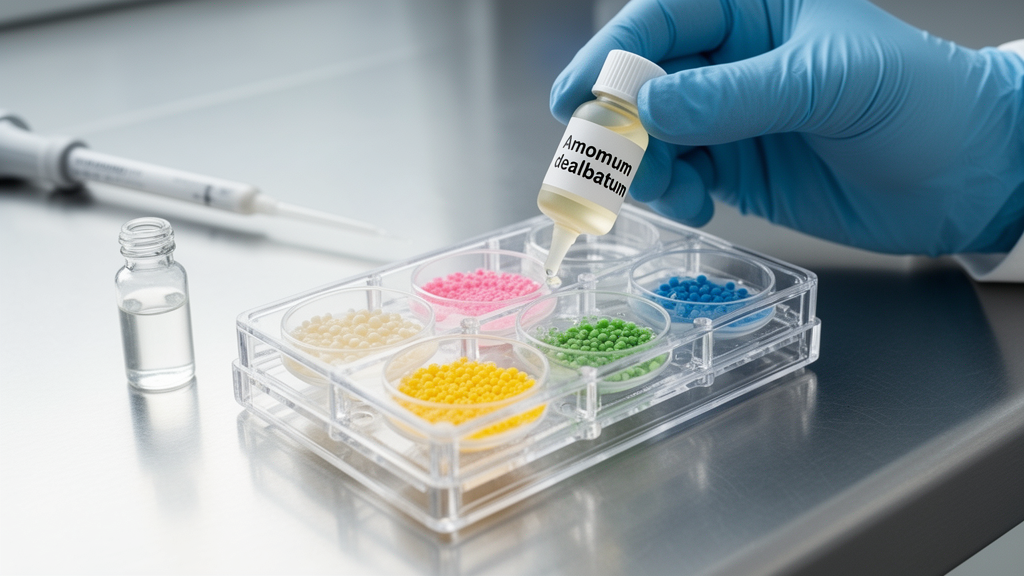
Antibacterial activity was tested in a 96-well micro-broth dilution assay against Enterococcus faecalis and Staphylococcus aureus as Gram-positive cocci, and Escherichia coli and Salmonella sp. as Gram-negative bacilli. Crude oil was prepared in aqueous dimethyl sulfoxide containing Tween-80 and tested across serial dilutions from 1:16 to 1:4,096. Each well received a bacterial suspension giving a final inoculum of 5 × 10⁴ CFU/mL, and the plates were incubated for 18 hours at 37 °C. Samples from the wells were then plated on Mueller–Hinton agar, allowing the researchers to distinguish inhibition in broth from bactericidal activity associated with no visible growth after subculture.
The essential oil was bactericidal against all four test organisms. For E. coli, Salmonella sp. and E. faecalis, the minimum bactericidal concentrations ranged from 1:16 to 1:64. S. aureus was the most sensitive organism: no growth was detected at any tested dilution, so its minimum bactericidal concentration was reported as no more than 1:4,096. Solvent-only and bacterial-only controls grew normally, while ciprofloxacin served as the positive control. The assay therefore measured laboratory bactericidal activity against only four strains, without testing the oil in animals or people. Taken together, the study presents A. dealbatum rhizome as a chemically distinct source of monoterpene-rich essential oil with measurable in vitro activity, alongside an anatomical and chromatographic profile intended to authenticate the plant material.
Subject of Research: Pharmacognostic, chromatographic and in vitro bactericidal evaluation of Amomum dealbatum rhizome essential oil
Article Title: Phytochemical evaluation of Amomum dealbatum Roxb. rhizome and correlating bactericidal activity with GC profiling of its essential oil
Article References: Dutta, S., Roy, S., Kumar, D., Singh, P., Narasimhaji, C. V., Prasad, S. B., Samadder, A., Bose, R., & Hazra, K. (2026). Phytochemical evaluation of Amomum dealbatum Roxb. rhizome and correlating bactericidal activity with GC profiling of its essential oil. Discover Chemistry, 3(1), Article 587. https://doi.org/10.1007/s44371-026-01041-5
Image Credits: AI Generated
DOI: 10.1007/s44371-026-01041-5
Keywords: Amomum dealbatum, essential oil, bactericidal activity, Staphylococcus aureus, Escherichia coli, Salmonella, Enterococcus faecalis, GC-MS, two-dimensional chromatography, plant phytochemistry, Phytochemical, evaluation
News Source: Bethany Barker. (October 21, 2026). Amomum dealbatum oil kills four bacteria in laboratory study. Scienmag.