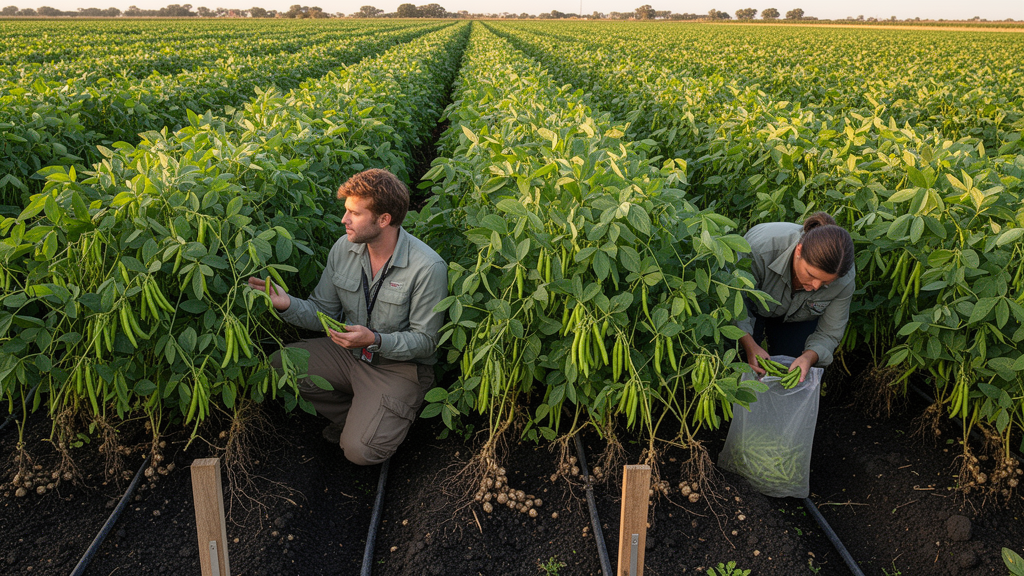
A randomized block-design field experiment found that co-inoculating mungbean with Bradyrhizobium sp. PMR-1 and selected plant growth-promoting rhizobacteria generally outperformed single inoculations and an uninoculated control under the conditions tested. The combined treatments increased nodule number by 32.35% and nodule dry weight by 54.8%, while grain yield rose by 5.8% and straw yield by 24.85%. Principal component analysis identified the pairing of Bradyrhizobium sp. PMR-1 with Bacillus cereus NE-10 as producing the strongest overall response.
The experiment included seven treatments comprising single and co-inoculations formulated in talc-based carriers. The researchers applied the inoculants to mungbean, Vigna radiata L., and measured plant growth, nodulation, chlorophyll content, yield attributes, grain and straw yields, and grain protein. At harvest, they also measured soil enzyme activities, microbial biomass carbon, available nutrients, soil organic carbon stocks, and populations of bacteria, fungi, and phosphate-solubilizing bacteria. Multivariate analyses were used to compare the treatment responses across the measured variables.
Co-inoculation affected several components of plant development and production rather than grain yield alone. In addition to the reported increases in nodulation, grain yield, and straw yield, the study found enhanced grain nutritional quality, assessed through grain protein. The abstract does not provide the absolute grain and straw yields, the magnitude of the change in grain protein, or the exact statistical significance of each response. It therefore supports the reported differences among treatments but does not establish that the same percentage gains will occur under other growing conditions.
The harvest measurements also showed changes in the biological and chemical properties of the rhizosphere. Co-inoculation enhanced enzyme activities and microbial biomass, which the researchers interpreted as evidence of improved rhizosphere nutrient cycling. The combination of Bradyrhizobium sp. with Pantoea agglomerans increased soil organic carbon stocks by 40.06% and microbial biomass carbon by 21.28%. Populations of bacteria, fungi, and phosphate-solubilizing bacteria increased two- to five-fold during crop growth. Together, these observations associate the tested inoculant combinations with greater microbial abundance and activity around mungbean roots, although the reported results do not identify a specific mechanism for the yield responses.
The findings are limited to the particular strains, carrier formulations, and environmental conditions represented by this field experiment. The study compared seven treatments, but the supplied results do not describe multi-location or multi-season replication, and they do not establish how the inoculants would perform in different soils or climates. The authors therefore called for additional multi-season and multi-location trials to determine whether the benefits remain consistent across environments and over time. Subject to that limitation, the research provides evidence that combining Bradyrhizobium with selected PGPR can improve mungbean productivity, measured grain quality, and rhizosphere biological functioning under the tested conditions.
Subject of Research: Effects of bacterial co-inoculation on mungbean yield, grain protein and rhizosphere functioning
Article Title: Synergistic effects of Bradyrhizobium and PGPR bioinoculants on yield, nutritional quality, and rhizosphere functioning of mungbean
Article References: Gupta, D., Pareek, N., Chandra, R., Raverkar, K. P., Sharma, B., Singh, S., Maurya, R., Vishwakarma, D. K., Gaur, A., Rahman, M. Z., Dewidar, A. Z., & Mattar, M. A. (2026). Synergistic effects of Bradyrhizobium and PGPR bioinoculants on yield, nutritional quality, and rhizosphere functioning of mungbean. Plant and Soil. https://doi.org/10.1007/s11104-026-09178-z
Image Credits: AI Generated
DOI: 10.1007/s11104-026-09178-z
Keywords: mungbean, Bradyrhizobium, plant growth-promoting rhizobacteria, bioinoculants, grain yield, grain protein, soil microbial biomass, rhizosphere functioning, field experiment, Synergistic, effects, PGPR
News Source: Alan Morgan. (October 21, 2026). Field trial links bacterial co-inoculation to mungbean yield gains. Scienmag.