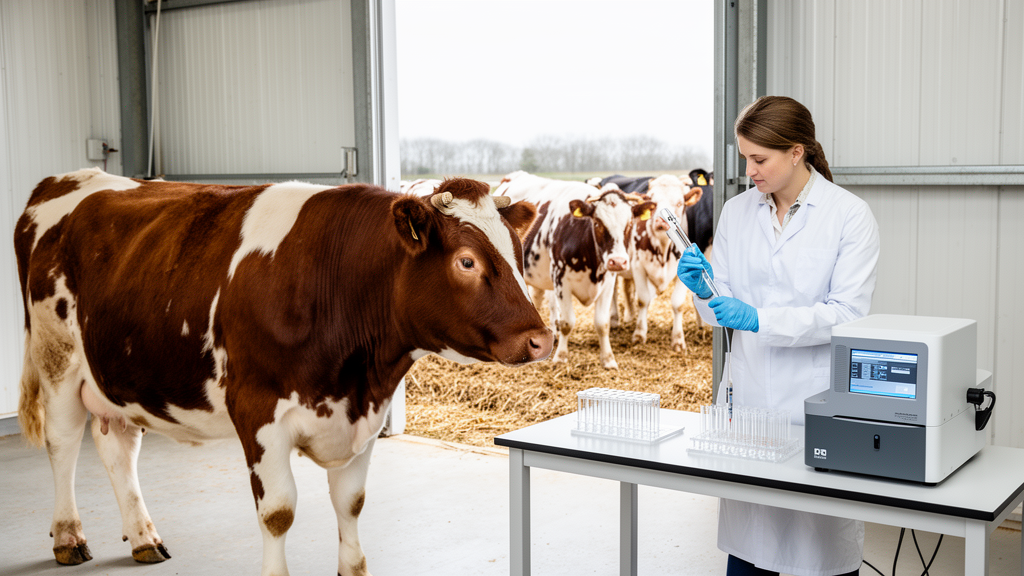
A genome-resolved metagenomic study found distinct rumen microbial communities and carbohydrate-processing functions in Japanese Black × Holstein crossbred, or F1, cattle compared with Japanese Black cattle. Within the F1 group, several reconstructed microbial genomes were associated with carcass weight, ribeye area and the proportion of acetate in the rumen, providing an association-level view of how rumen microbial functions may relate to carcass traits. The researchers characterized the rumen microbiome of 51 F1 cattle at both taxonomic and functional levels.
They then compared these animals with a previously published Japanese Black cattle metagenomic dataset. The analysis used metagenome-assembled genomes, or MAGs, to examine differences in microbial groups between the breeds and to connect particular microbial genomes with functional profiles and carcass measurements. Rumen microbial community structure differed significantly between Japanese Black and F1 cattle.
Their functional profiles also differed when the researchers assessed genes grouped as KEGG orthologs and carbohydrate-active enzyme families. At the genome-resolved level, the comparison identified 116 MAGs with significantly different abundances between the two breeds, indicating that breed-associated differences were visible not only in the overall community but also among individual reconstructed microbial genomes. F1 cattle were enriched in MAGs affiliated with Ruminococcoides and Prevotella .
Their glycoside hydrolase repertoire included families related to starch metabolism, suggesting a fermentation profile oriented toward readily fermentable carbohydrates. Japanese Black cattle, in contrast, showed enrichment of MAGs affiliated with Ruminococcus and Verrucomicrobiota that carried glycoside hydrolase families associated with lignocellulose degradation. The pathway analysis also detected 38 KEGG pathways that differed significantly between the breeds, with several amino acid metabolism pathways enriched in F1 cattle.
Together, the community, genome and pathway results show that the breed-associated contrast included both differences in the abundance of microbial groups and differences in the metabolic capabilities represented in their genomes. Within the F1 cattle, several MAGs carrying diverse glycoside hydrolase families were significantly correlated with carcass weight and ribeye area. These same MAGs were positively associated with the proportion of acetate in the rumen.
The study’s breed comparison combined newly characterized F1 cattle with an earlier Japanese Black dataset, and its carcass-trait relationships were assessed within F1 animals. As a result, the evidence supports breed-associated differences and microbiome–trait correlations, but it does not establish that particular microbes or an acetate-oriented fermentation pattern caused carcass weight or ribeye area to increase. By resolving microbial communities into individual MAGs and linking them to carbohydrate-processing functions and carcass traits, the research provides a genome-level description of rumen variation in Japanese Black × Holstein F1 cattle.
The findings identify candidate microbial and metabolic features that may be relevant to productivity research in beef cattle, while the association design limits interpretation to correlation rather than proof that altering the rumen microbiome would change carcass outcomes.
Subject of Research: Genome-resolved analysis of rumen microbiome functions and carcass-trait associations in Japanese Black × Holstein F1 cattle
Article Title: Genome-resolved metagenomics reveals the taxonomic and functional landscape of the rumen microbiome in Japanese Black × Holstein cattle and its associations with carcass traits
Article References: Sato, Y. (2026). Genome-resolved metagenomics reveals the taxonomic and functional landscape of the rumen microbiome in Japanese Black × Holstein cattle and its associations with carcass traits. BMC Genomics. https://doi.org/10.1186/s12864-026-13486-0
Image Credits: AI Generated
DOI: 10.1186/s12864-026-13486-0
Keywords: rumen microbiome, genome-resolved metagenomics, Japanese Black cattle, Holstein crossbred cattle, carcass weight, ribeye area, rumen acetate, carbohydrate metabolism, MAGs, beef cattle, Genome-resolved, metagenomics
News Source: Juliet Wilcox. (October 21, 2026). Genome-resolved metagenomics maps rumen microbes and carcass-trait links in crossbred cattle. Scienmag.