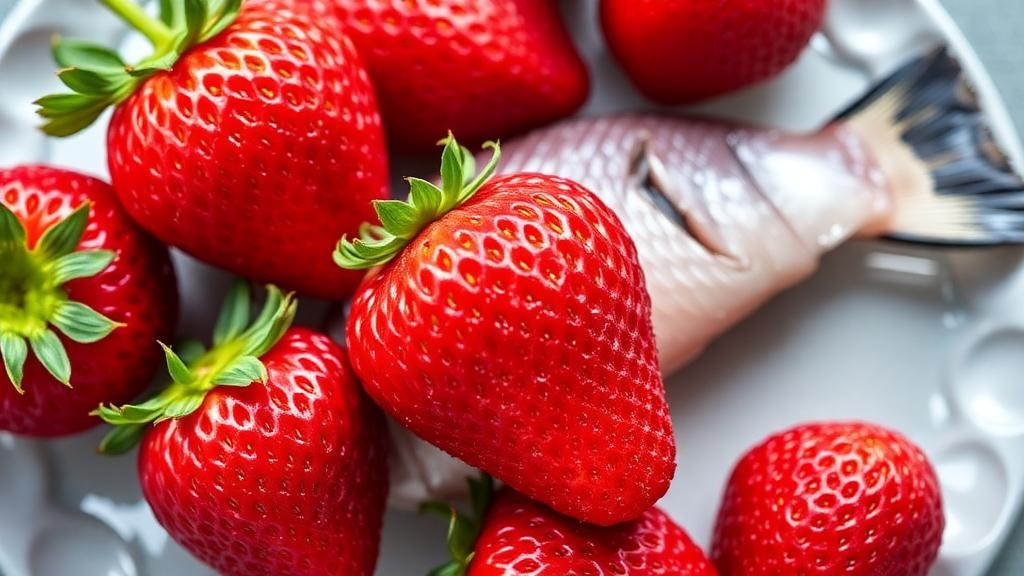
A visible-light-responsive film made from chitosan, polyvinyl alcohol and a thymol-loaded metal-organic framework delayed microbial spoilage in refrigerated fish and kept strawberries free of visible mold through 10 days of storage. The composite, designated CS/PVA/PT, combines the natural preservative thymol with the porphyrin-based porous coordination network PCN-224. In laboratory tests, illuminated nanoparticles produced reactive oxygen species, including singlet oxygen, while the porous carrier sustained the release of thymol. The resulting film suppressed bacteria and fungi, scavenged free radicals, improved moisture and oxygen barriers, and blocked most ultraviolet radiation. These findings are promising for active food packaging, although the system depends on light activation and has not yet undergone comprehensive long-term toxicological assessment.
PCN-224 was loaded with thymol by dispersing the framework in an ethanolic thymol solution, stirring the mixture overnight, and removing unbound thymol by centrifugation and washing. Spectroscopy supported successful incorporation, and the calculated loading efficiency was 5.88%. The resulting PCN@Thy nanoparticles were spherical, with most hydrodynamic sizes between 142 and 220 nanometres, compared with 122 to 190 nanometres for unloaded PCN-224. Their polydispersity index was 0.245, and X-ray diffraction retained the characteristic pattern of the PCN-224 framework, indicating that loading preserved its crystalline structure. Elemental mapping showed broadly overlapping distributions of zirconium, carbon, nitrogen and oxygen. Under visible illumination, fluorescence probes detected increased reactive oxygen species and a strong singlet-oxygen response, establishing that the composite combined a molecular cargo with a light-activated photosensitizer.
Against suspensions of Staphylococcus aureus and Pseudomonas aeruginosa containing 10^5 colony-forming units per millilitre, illuminated PCN@Thy produced substantially lower survival than either free thymol or PCN-224 alone. At the highest tested concentration of 120 micrograms per millilitre, survival was 9.17% for S. aureus and 9.88% for P. aeruginosa. By comparison, the corresponding survival rates with free thymol were 46.32% and 53.03%, while PCN-224 alone yielded 20.45% and 13.60%. The composite also had a concentration-dependent effect on biofilms: at 120 micrograms per millilitre, residual S. aureus biofilm biomass fell to 60% of the control value, while optical-density measurements of remaining P. aeruginosa biofilm decreased from 3.1 to 2.1. Imaging showed less extracellular matrix and more red fluorescence from dead bacteria as treatment intensity increased, consistent with disruption of the biofilm structure and inactivation of its inhabitants.
PCN@Thy was incorporated into a cast chitosan/polyvinyl alcohol matrix at loadings of 0.3, 0.6, 0.9 and 1.2% by mass. Loadings above 1.2% were excluded because severe aggregation and sedimentation prevented homogeneous film formation. Scanning electron microscopy showed smooth, continuous chitosan/polyvinyl alcohol films, whereas higher PCN@Thy contents produced rougher surfaces and visible particle aggregates without creating large cracks or voids. The composite became progressively redder and less transparent as the concentration of the purplish-red PCN-224 increased. At 1.2%, light transmittance at 660 nanometres fell from 97.46% in the unfilled film to 65.46%. At the same loading, transmittance at 280 nanometres dropped from 85.19% to 18.00%; the authors calculated corresponding UV-A and UV-B blocking efficiencies of 99.89% and 86.94%.
The nanoparticles also altered moisture transport, mechanical behaviour and oxidation resistance. In the 1.2% composite, moisture content was 23.42%, compared with 33.22% for the unfilled film, while water solubility fell from 39.24% to 21.05%. Water-vapour permeability decreased from 23.55 to 18.94 × 10^-11 g m^-1 s^-1 Pa^-1, and oxygen permeability declined from 23.76 to 20.04 g m^-2 h^-1. Adding the nanoparticles reduced tensile strength but increased elongation at break, behaviour attributed to particle aggregation, disruption of the original hydrogen-bond network and greater polymer-chain mobility. The 1.2% film scavenged 72.54% of DPPH radicals and 47.92% of ABTS radicals, a marked improvement over the limited activity of the unfilled matrix. Thymol release was slow during the first 200 hours, increased more rapidly at 25 °C than at 4 °C after that point, and continued through 350 hours.
When tested against aquatic spoilage and pathogenic organisms, illuminated CS/PVA/PT produced larger inhibition zones than the chitosan/polyvinyl alcohol film alone. Against P. aeruginosa, the inhibition-zone diameter increased from 0.5 millimetres for the unfilled film to 1.12 millimetres at a 0.3% loading and 1.36 millimetres at 1.2%. Electron microscopy of bacteria treated with the composite film under visible light showed shrinkage, collapse and rupture. Supporting measurements indicated elevated intracellular reactive oxygen species, increased protein leakage and reduced membrane potential, consistent with oxidative damage and membrane depolarization. The film also inhibited Botrytis cinerea, a strawberry-decaying fungus. After three days, fungal colony diameter was 6.42 centimetres in the control, compared with 1.33 centimetres for the unfilled film and 1.11 centimetres for the 1.2% composite, corresponding to reported inhibition rates of 79.24% and 82.70%.
Safety testing gave low hemolysis rates of 0.59% for the unfilled film and 1.74% for the 1.2% composite, both below the 5% threshold used in the study, while cell viability remained above 98% after exposure to film extracts. When buried in soil, the unfilled film lost between 62.67% and 77.49% of its mass, and the composite films lost between 55.76% and 77.93%, with no statistically significant difference among the reported degradation ranges. Zirconium migration from the 1.2% film into fish was measured by inductively coupled plasma mass spectrometry. Concentrations rose from 0.006 to 0.042 milligrams per kilogram between days 0 and 9, giving a calculated migration of 0.036 milligrams per kilogram, below a 2024 European Directorate for the Quality of Medicines reference release limit of 2 milligrams per kilogram for food-contact materials.
For the food trials, fish fillets weighing 10.5 ± 1.1 grams were stored at 4 ± 1 °C in three conditions: unpackaged, wrapped in unfilled chitosan/polyvinyl alcohol, or wrapped in the 1.2% composite after 10 minutes of visible-light irradiation. The composite was selected because it combined the strongest antibacterial, antioxidant and barrier properties among the tested formulations. By day 6, total viable counts reached 7.08 log colony-forming units per gram in unpackaged fish and 6.80 in fish wrapped with the unfilled film, both above the cited acceptability threshold of 6.0 log CFU per gram. Composite-wrapped fish remained below that threshold at 5.92 log CFU per gram on day 6 and exceeded it only on day 9. Total volatile basic nitrogen reached 26.60 milligrams per 100 grams in unfilled-film fish after nine days but only 19.13 milligrams per 100 grams in composite-wrapped fish. Fish hardness declined by 54% without packaging, 37% with the unfilled film and 20% with the composite, while zirconium migration remained low.
Strawberries averaging 21.5 ± 2.0 grams were stored for 10 days at room temperature in sealed cups covered with the films, with an unsealed control. The composite was illuminated for 10 minutes before storage, while the fruit remained out of direct contact with the packaging. Unpackaged strawberries developed mold by day 4 and severe rot by day 6. Those covered with the unfilled film developed small mold spots by day 8, whereas composite-covered berries showed only slight wrinkling and no visible mold through day 10. The composite group also had the lowest color change, weight loss, softening and pulp-pH variation. Taken together, the food trials show that a light-triggered, thymol-releasing film can combine physical barrier effects with chemical and photodynamic antimicrobial activity. The results support further development of porphyrin-framework packaging, but commercial use will require improved performance under low-light conditions, longer-term nanotoxicity studies and validation across a broader range of foods and storage conditions.
Subject of Research: Light-activated thymol-loaded metal-organic framework films for antimicrobial food packaging
Article Title: Synergistic Encapsulation of Thymol in Porphyrin-Based Porous Frameworks Enhances the Multifunctionality of Chitosan/Polyvinyl Alcohol Films for Food Preservation
Article References: Wang, H., Zhou, M., Xu, Y., Huang, Y., Ke, L., Xu, W., Yi, Y., & Zhou, M. (2026). Synergistic Encapsulation of Thymol in Porphyrin-Based Porous Frameworks Enhances the Multifunctionality of Chitosan/Polyvinyl Alcohol Films for Food Preservation. Current Research in Food Science, Article 101605. https://doi.org/10.1016/j.crfs.2026.101605
Image Credits: AI Generated
DOI: 10.1016/j.crfs.2026.101605
Keywords: active food packaging, thymol, chitosan, polyvinyl alcohol, PCN-224, metal-organic frameworks, photodynamic inactivation, food preservation, antimicrobial films, biodegradable packaging, Synergistic, Encapsulation
News Source: Alan Morgan. (October 21, 2026). Light-activated thymol films delay fish spoilage and preserve strawberries. Scienmag.