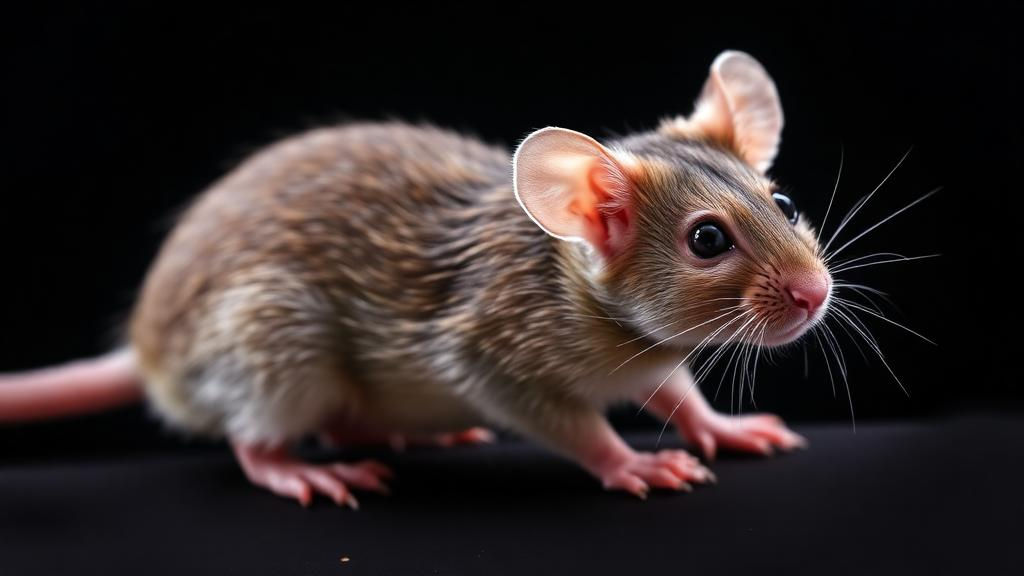
A microRNA derived from the parasite Schistosoma japonicum attenuated carbon-tetrachloride-induced liver fibrosis in mice, according to a preclinical study in Molecular Biology Reports . Systemic administration of a sja-miR-2a-3p agomir increased the molecule’s abundance in serum and liver tissue and was associated with reduced liver injury, fibrosis, inflammation and activation of hepatic stellate cells. The experiment provides evidence for antifibrotic activity in a chemically induced mouse model; it does not establish efficacy or safety in people.
During carbon-tetrachloride-induced fibrogenesis, mice received the sja-miR-2a-3p agomir. Researchers then evaluated histological liver injury and fibrosis, inflammatory responses, markers of hepatic stellate-cell activation, apoptosis in desmin-positive stellate cells, extracellular-matrix production and treatment-associated changes in liver-wide gene expression. Treated mice had a lower liver-weight index, lower Ishak fibrosis scores, reduced collagen deposition and lower hepatic hydroxyproline content.
The investigators also reported decreased expression of alpha-smooth muscle actin, type I collagen alpha 1, type III collagen alpha 1 and transforming growth factor beta. These measurements collectively indicated that the intervention was associated with attenuation of fibrogenesis in the experimental model. Cellular analysis provided additional evidence for the observed effect.
Cleaved caspase-3 signals increased in desmin-positive hepatic stellate cells, consistent with greater apoptotic activity among activated stellate cells. Expression of the inflammatory mediators tumor necrosis factor alpha, interleukin-1 beta and interleukin-6 was reduced in the liver. Whole-liver transcriptomic analysis further showed treatment-associated downregulation of pathways involving extracellular matrix, cytokines, chemokines, nuclear factor kappa B, interleukin-17 and tumor necrosis factor.
Its findings instead describe coordinated changes in fibrosis-related tissue measures, stellate-cell activity, matrix-associated expression and inflammatory signaling after agomir treatment. The work extends earlier findings reported by the researchers that sja-miR-2a-3p has antifibrotic activity in schistosomiasis-associated liver fibrosis. The new experiment tested the same parasite-derived regulatory molecule in a different context: chemical liver injury caused by carbon tetrachloride rather than fibrosis associated with schistosome infection.
The authors proposed that the results support further investigation of helminth-derived microRNAs as modulators of host fibrotic responses. That proposal remains preclinical. The reported evidence comes from mice receiving an agomir in a controlled model of induced liver injury, and the source does not establish clinical effectiveness, safety, optimal delivery or dosing in humans.
Subject of Research: Preclinical evaluation of a parasite-derived microRNA in a mouse model of liver fibrosis.
Article Title: Antifibrotic activity of Schistosoma japonicum-derived sja-miR-2a-3p in carbon tetrachloride-induced liver fibrosis
Article References: Zhong, H., Dong, B., Li, D., Zhu, D., Zhang, R., Lu, K., Li, H., Fu, Z., & Jin, Y. (2026). Antifibrotic activity of Schistosoma japonicum-derived sja-miR-2a-3p in carbon tetrachloride-induced liver fibrosis. Molecular Biology Reports, 53(1), Article 1773. https://doi.org/10.1007/s11033-026-12969-3
Image Credits: AI Generated
DOI: 10.1007/s11033-026-12969-3
Keywords: sja-miR-2a-3p, liver fibrosis, Schistosoma japonicum, microRNA, hepatic stellate cells, carbon tetrachloride, extracellular matrix, inflammation, mouse model, preclinical research, Antifibrotic, activity
News Source: Drew Townsend. (October 21, 2026). Parasite-Derived MicroRNA Attenuates Liver Fibrosis in Mice. Scienmag.