Prostate cancer’s absolute burden increased in Mexico between 2000 and 2023 even as age-standardized rates declined, according to an analysis of Global Burden of Disease estimates for the country and its 32 states. Estimated incident cases rose from 10,697 to 23,085, while deaths increased from 4,759 to 8,904. Despite those increases in absolute numbers, Mexico’s estimated age-standardized burden moved in the opposite direction.
The age-standardized incidence rate declined from 40.70 to 37.59 cases per 100,000 population between 2000 and 2023. The age-standardized mortality rate fell from 19.80 to 15.65 deaths per 100,000, and the age-standardized DALY rate decreased from 344.34 to 271.00 per 100,000. The researchers described the combination of rising totals and falling standardized rates as consistent with population aging and demographic growth.
The study used Global Burden of Disease Study 2023 estimates to examine national and subnational trends in prostate cancer incidence, mortality and disability burden. It evaluated changes from 2000 through 2023 with weighted log-linear models and calculated annual percentage changes (APCs). These are modeled population-level estimates rather than direct measurements of every case, death or health outcome among men in Mexico.
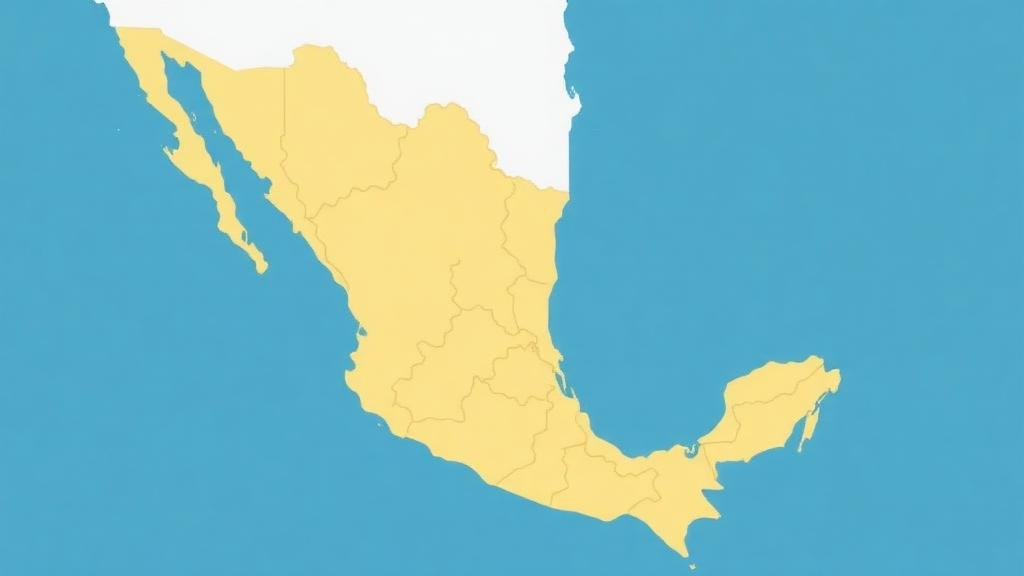
National trends did not fully represent conditions in individual states. The researchers found considerable geographic heterogeneity across the 32 states and assessed its relationship with socioeconomic conditions using the 2020 marginalization index developed by Mexico’s National Population Council. Spearman correlation analyses tested whether state-level marginalization was associated with estimated prostate cancer burden in 2023 and with the pace of change over the study period.
More marginalized states had lower estimated age-standardized prostate cancer burden in 2023. Marginalization was negatively correlated with the age-standardized incidence rate (ρ = −0.556, p = 0.001), age-standardized mortality rate (ρ = −0.471, p = 0.007) and age-standardized DALY rate (ρ = −0.485, p = 0.005). These associations show that, at the state level, greater socioeconomic marginalization coincided with lower modeled rates in the final year of the analysis.
State-level marginalization was also associated with slower improvement over time. It correlated positively with less favorable APCs for incidence (ρ = 0.555, p = 0.001), mortality (ρ = 0.514, p = 0.003) and DALYs (ρ = 0.467, p = 0.007). The pattern means that states with lower estimated age-standardized burden in 2023 did not necessarily show the strongest reductions across the 24-year period; more marginalized states generally progressed more slowly on all three measures.
The findings carry an important limitation because the analysis did not measure diagnostic coverage, cancer-registration completeness, disease stage, treatment access or healthcare utilization. Consequently, lower estimated rates in highly marginalized states cannot be taken as evidence that the underlying risk of prostate cancer or death from it was lower. Incomplete detection or surveillance is one possible explanation for lower recorded rates, but the study could not determine how much of the geographic pattern reflected differences in disease, ascertainment or other factors.
The correlations are also ecological associations based on state-level data. They do not establish that marginalization directly caused the differences in estimated burden or rates of improvement, and they do not by themselves demonstrate differences in health-system performance. The study instead documents two distinct features of the modeled data: more marginalized states had lower estimated age-standardized burden in 2023, but less favorable trends from 2000 to 2023.
Together, the results indicate persistent geographic and socioeconomic differences within Mexico despite national declines in age-standardized incidence, mortality and DALY rates.
Subject of Research: State-level socioeconomic associations with prostate cancer burden and trends in Mexico from 2000 to 2023
Article Title: Subnational inequalities and socioeconomic gradients in prostate cancer burden across Mexico, 2000–2023
Article References: Guzmán-Esquivel, J., Hernández-Fuentes, G. A., Hernandez-Suarez, C. M., Pineda-Urbina, K., Delgado-Enciso, J., Romero-Michel, J. C., Rojas-Larios, F., Meza‑Robles, C., Cabrera-Licona, A., Montesinos-López, O. A., Rodríguez-Hernandez, A., & Delgado-Enciso, I. (2026). Subnational inequalities and socioeconomic gradients in prostate cancer burden across Mexico, 2000–2023. Cancer Causes & Control, 37(11), Article 183. https://doi.org/10.1007/s10552-026-02258-6
Image Credits: AI Generated
DOI: 10.1007/s10552-026-02258-6
Keywords: prostate cancer, Mexico, health inequalities, marginalization, GBD 2023, age-standardized rates, cancer mortality, regional disparities, cancer surveillance, disability-adjusted life years, Subnational, inequalities
News Source: Nathaniel Bowman. (October 21, 2026). Research report: Subnational inequalities and socioeconomic gradients in prostate cancer burden across Mexico, 2000–2023. Scienmag.