• HOME
  • NEWS
  • EXPLORE
    • CAREER
      • Companies
      • Jobs
    • EVENTS
    • iGEM
      • News
      • Team
    • PHOTOS
    • VIDEO
    • WIKI
  • BLOG
  • COMMUNITY
    • FACEBOOK
    • INSTAGRAM
    • TWITTER
Wednesday, October 21, 2026
BIOENGINEER.ORG
No Result
View All Result
  • Login
  • HOME
  • NEWS
  • EXPLORE
    • CAREER
      • Companies
      • Jobs
        • Lecturer
        • PhD Studentship
        • Postdoc
        • Research Assistant
    • EVENTS
    • iGEM
      • News
      • Team
    • PHOTOS
    • VIDEO
    • WIKI
  • BLOG
  • COMMUNITY
    • FACEBOOK
    • INSTAGRAM
    • TWITTER
No Result
View All Result
Bioengineer.org
No Result
View All Result
Home NEWS Science News Health

Smartphone voice patterns associated with type 2 diabetes in 461 adults

by
October 21, 2026
in Health
Reading Time: 2 mins read
0
Smartphone voice patterns associated with type 2 diabetes in 461 adults

AI Reads Voice Spectrograms to Detect Type 2 Diabetes from Short Smartphone Recordings

Share on FacebookShare on TwitterShare on LinkedinShare on RedditShare on Telegram

A peer-reviewed study of 461 adults found associations between type 2 diabetes and acoustic patterns in smartphone voice recordings, with sex-stratified models achieving balanced accuracy of 71.3% for women and 72.4% for men. The research was published in the IEEE Journal of Biomedical and Health Informatics and analyzed 14,759 recordings, according to the supplied research summary.

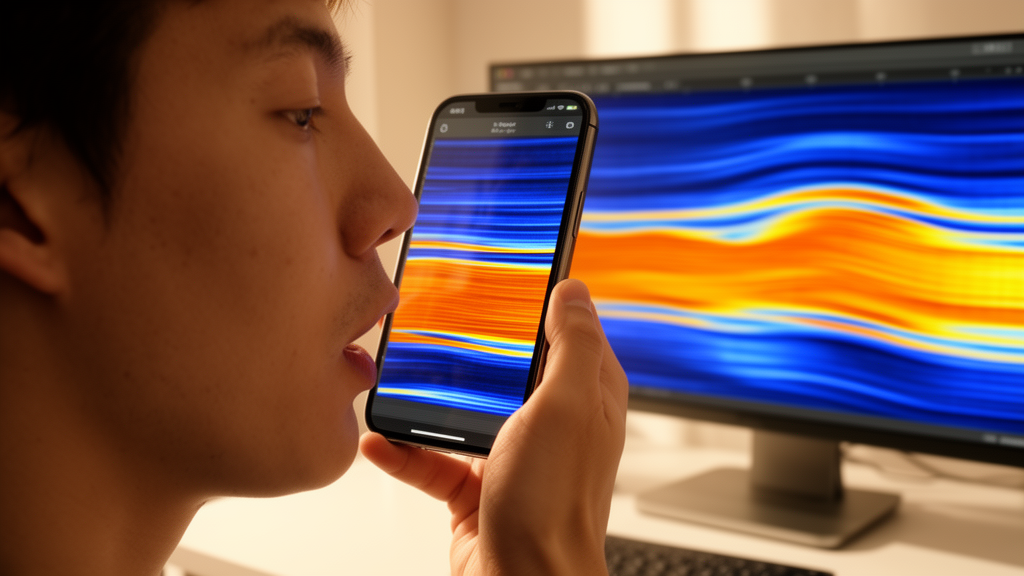
Researchers at Klick Labs converted the recordings into spectrograms, visual representations of sound frequencies, and analyzed them with an Audio Spectrogram Transformer. This approach allowed the model to learn combinations of acoustic patterns directly from the recordings rather than relying primarily on predefined voice features. Participants read randomly selected short English sentences, while their sex was used to stratify the analyses. The study did not require participant age, body mass index, or a fixed voice sample as study criteria, according to the release.

For women, the voice-based models reported a balanced accuracy of 71.3%, an area under the receiver operating characteristic curve of 0.788, and an AUC expressed as a percentage of 78.8%. For men, the corresponding results were 72.4% balanced accuracy, an AUC of 0.779 and 77.9% when expressed as a percentage. Balanced accuracy averages sensitivity and specificity, giving equal weight to identifying people with and without type 2 diabetes. These results measure performance within the analyzed dataset and do not establish that vocal patterns cause diabetes or that the models can determine an individual’s diagnosis.

The study extends an earlier Klick Labs Voice to Diabetes study published in 2023 in Mayo Clinic Proceedings: Digital Health. That earlier work analyzed a fixed one-sentence smartphone recording alongside participants’ age, body mass index and other basic health information, and identified 14 predefined acoustic features associated with type 2 diabetes, including pitch, intensity, shimmer and jitter. It reported conventional accuracy of 89% for women and 86% for men.

The two studies’ reported accuracy figures should not be compared directly. The 2023 study used conventional accuracy, which is the percentage of all predictions that are correct, while the newer study reported balanced accuracy. The investigators said the difference also reflects different inputs, methods, validation approaches and datasets, rather than evidence that the newer models are more accurate. The supplied material does not describe the participants’ diabetes distribution, demographic composition, external validation or performance in routine clinical care, so the reported model performance should not be interpreted as proof of clinical diagnostic utility.

Subject of Research: Smartphone voice-recording analysis for associations with type 2 diabetes in adults

Article Title: Scientists see new vocal patterns associated with type 2 diabetes

Article References: Scientists see new vocal patterns associated with type 2 diabetes. Original publication (Bibliographic details unavailable.)

Image Credits: AI Generated

DOI: Not provided

Keywords: type 2 diabetes, vocal biomarkers, smartphone recordings, spectrograms, audio transformer, acoustic patterns, machine learning, biomedical informatics, Scientists, vocal, patterns, associated

News Source: Ophelia Keating. (October 21, 2026). Smartphone voice patterns associated with type 2 diabetes in 461 adults. Scienmag.


Tags: acoustic patternsassociatedaudio transformerbiomedical informaticsMachine Learningpatternsscientistssmartphone recordingsspectrogramsType 2 diabetesvocalvocal biomarkers
Share12Tweet7Share2ShareShareShare1

Related Posts

National U.S. survey links science perceptions to partisan gaps in vaccine judgments

National U.S. survey links science perceptions to partisan gaps in vaccine judgments

October 21, 2026
Systematic review finds bacterial contamination on 79.3% of African currency notes in pooled analysis

Systematic review finds bacterial contamination on 79.3% of African currency notes in pooled analysis

October 21, 2026

Mixed-methods field trial finds short-term adoption but no long-term sustainment for scaled employment intervention

October 21, 2026

Review links sevoflurane exposure during development to neuroinflammatory pathways linked with neurotoxicity

October 21, 2026

POPULAR NEWS

  • National U.S. survey links science perceptions to partisan gaps in vaccine judgments

    National U.S. survey links science perceptions to partisan gaps in vaccine judgments

    29 shares
    Share 12 Tweet 7
  • Smartphone voice patterns associated with type 2 diabetes in 461 adults

    29 shares
    Share 12 Tweet 7
  • Systematic review finds bacterial contamination on 79.3% of African currency notes in pooled analysis

    29 shares
    Share 12 Tweet 7
  • Mixed-methods field trial finds short-term adoption but no long-term sustainment for scaled employment intervention

    29 shares
    Share 12 Tweet 7

About

We bring you the latest biotechnology news from best research centers and universities around the world. Check our website.

Follow us

Recent News

National U.S. survey links science perceptions to partisan gaps in vaccine judgments

Smartphone voice patterns associated with type 2 diabetes in 461 adults

Systematic review finds bacterial contamination on 79.3% of African currency notes in pooled analysis

Subscribe to Blog via Email

Enter your email address to subscribe to this blog and receive notifications of new posts by email.

Join 85 other subscribers
  • Contact Us

Bioengineer.org © Copyright 2023 All Rights Reserved.

Welcome Back!

Login to your account below

Forgotten Password?

Retrieve your password

Please enter your username or email address to reset your password.

Log In
No Result
View All Result
  • Homepages
    • Home Page 1
    • Home Page 2
  • News
  • National
  • Business
  • Health
  • Lifestyle
  • Science

Bioengineer.org © Copyright 2023 All Rights Reserved.