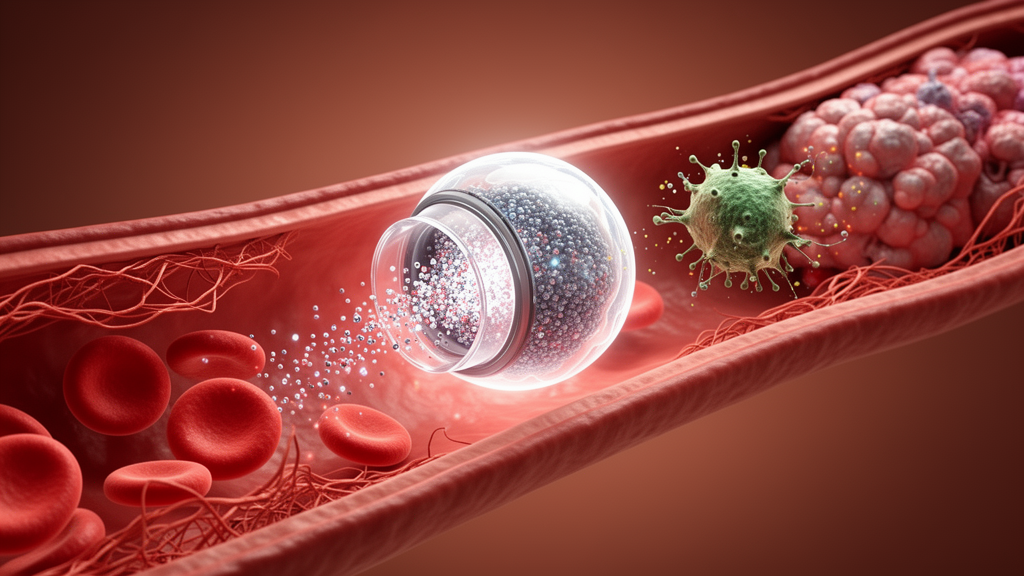
A review of stimulus-responsive nanoplatforms concludes that experimental sepsis treatments could become more precise by detecting biochemical changes in the body and releasing drugs only when and where they are needed. The proposed systems combine molecular sensing, controlled drug delivery and immune modulation in a single carrier, with the aim of matching treatment to the shifting biology of sepsis. The evidence discussed comes largely from laboratory experiments and animal models; the review does not establish that any of these platforms has improved outcomes in patients.
Sepsis is a systemic syndrome driven by infection and a profound failure of immune regulation. The source estimates that it affects about 49 million people annually and contributes to roughly one in five deaths worldwide. Its pathology is not adequately described as persistent inflammation alone. Early disease may feature intense cytokine and reactive oxygen species signaling, endothelial injury and impaired microcirculation, while some patients later develop immune exhaustion, impaired antigen presentation and susceptibility to secondary infection. These states can overlap rather than following a rigid sequence, creating a difficult therapeutic problem: broadly suppressing inflammation may worsen immune paralysis, whereas insufficient anti-inflammatory treatment may leave organ damage unchecked.
Current management combines antibiotics with supportive care for organ dysfunction, while attempts to block individual cytokines or signaling pathways have not consistently produced clinical benefit. Conventional nanocarriers can improve the stability, circulation and accumulation of drugs, but most release their cargo according to a predetermined schedule. That static approach may be poorly matched to a disease whose signals vary among patients, organs and disease stages. Stimulus-responsive platforms instead encode chemical or biological switches into a carrier, allowing oxidation, acidity, enzymes, microbial molecules or externally applied physical energy to alter its structure and release therapeutic cargo.
The most direct endogenous trigger is local acidification. Ischemia, impaired microcirculation, increased glycolysis and microbial metabolism can lower extracellular pH from the physiological range of 7.4 to approximately 6.5–6.8 at infected or injured sites. Hydrazone, acetal and ketal bonds can be hydrolyzed under mildly acidic conditions, while protonatable groups can reverse a carrier’s charge and weaken hydrophobic interactions. One preclinical system delivered a glucose transporter 1 inhibitor through a pH-responsive nanoparticle. Acid-triggered disassembly reduced macrophage glycolytic flux and shifted macrophages away from a pro-inflammatory phenotype, with reported improvements in organ injury and survival in septic animals. Such findings show the proposed mechanism in animals, not clinical efficacy.
Oxidative stress provides another controllable switch. Reactive oxygen species generated by activated neutrophils, macrophages and endothelial cells can reach micromolar concentrations in acute infection, compared with less than 100 nM in healthy tissue according to the review. Oxidation-sensitive thioketals, thioethers, selenium-containing bonds and boronate esters can therefore cleave or transform carriers in heavily oxidative environments. Some platforms have a dual function: their matrix scavenges reactive species while the carrier simultaneously releases an antioxidant, anti-inflammatory or immunomodulatory drug. A mouse model of sepsis-associated acute kidney injury, for example, used atorvastatin-loaded, mitochondria-targeted cerium oxide nanoparticles coated with an oxidation-sensitive polymer. The researchers reported reduced tubular-cell death, oxidative stress and inflammation, but no corresponding human trial was described.
Enzymes and microbial molecules can provide more infection-specific triggers. Matrix metalloproteinases, phospholipase A2, neutrophil proteases and bacterial lipases can destabilize peptide linkers or lipid matrices. A vancomycin-loaded solid lipid nanoparticle designed to bind bacterial lipase and hyaluronidase reduced the reported minimum inhibitory concentration against Staphylococcus aureus by twofold relative to free vancomycin and increased MRSA biofilm eradication fivefold in vitro. Other platforms recognize lipopolysaccharide, bacterial nucleic acids or pathogen enzymes. A phosphocholine-functionalized magnetic nanoadsorbent captured lipopolysaccharide in a septic rabbit model, while an inhalable DNase I and human serum albumin nanomotor cleared cell-free mitochondrial DNA from mouse lungs. These are preclinical results using model-specific signals, and the review cautions that accessibility, abundance and strain dependence vary among pathogens and infection sites.
External controls such as ultrasound offer precise release at a selected location but cannot readily cover the whole circulation of a systemic disease. In one sepsis-associated kidney injury model, a kidney-targeted liposome released the Toll-like receptor 4 inhibitor TAK-242 after low-intensity focused ultrasound, suppressing inflammatory and pyroptosis-related pathways in the animals. Another ultrasound-responsive formulation combined iron oxide particles and the compound FOT to support sonodynamic treatment in local infection and sepsis models. These systems are best suited, the review argues, to localized infection or protection of a particular organ. Light has limited penetration in deep tissue, while magnetic triggering faces difficulty in uniformly controlling particles throughout the body. Combining external control with endogenous sensing may therefore offer a more practical compromise.
The therapeutic cargo matters as much as the release mechanism. Responsive carriers have been used in preclinical studies to deliver antibiotics and antimicrobial peptides, anti-inflammatory and antioxidant drugs, small interfering RNA, microRNA and other immune-regulating agents. One infection-responsive nanoparticle co-loaded ciprofloxacin with an anti-inflammatory compound and used acidic pH and bacterial enzymes as release triggers; in a lethal bacterial challenge model, the researchers reported improved survival compared with controls. A separate hydrazone-linked prodrug combined the antimicrobial peptide omiganan with dexamethasone and was released through acidic conditions and hyaluronidase activity in infection and sepsis animals. Such designs can couple pathogen suppression with control of host inflammation, but they do not bypass the need for antibiotics or establish superiority in human sepsis.
Translation remains the central obstacle. Patient-derived cecal-ligation-and-puncture and endotoxin models reproduce important features of sepsis but do not fully reproduce the heterogeneous immune trajectories, multi-organ interactions and individual progression seen in patients. Nanoparticles must also avoid complement activation and rapid clearance, remain stable long enough to reach their targets, and then degrade into nontoxic, excretable products. Researchers need standardized production, pharmacokinetic and biodistribution studies, organ-specific clearance data and longer-term safety assessments. The review identifies manufacturing consistency as a particular problem for carriers combining multiple linkers, sensing elements and biological cargo, and it presents closed-loop systems combining real-time biosensing with artificial intelligence as a future concept rather than an established treatment.
The most plausible route described by the review is therefore not a single universal nanoparticle but a family of state-aware systems. A platform might sense acidity, oxidative stress and enzyme activity together, suppress inflammation early, and deliver immune-stimulating or gene-regulating cargo when signs of immunosuppression predominate. Boolean logic gates, adjustable linker density and sequential core-shell structures could reduce premature release and synchronize treatment with changing conditions. The central claim is that matching nanocarrier behavior to the biology of sepsis may improve the therapeutic window compared with static delivery. That benefit has been observed in selected animal and laboratory studies, while human validation, reliable endotype classification, closed-loop control, scalable manufacture and long-term safety remain unresolved.
Subject of Research: Review of stimulus-responsive nanoplatforms for targeted drug delivery and immune modulation in sepsis
Article Title: Pathological Signal‐Responsive Nanoplatforms for Sepsis: Integrating Biomarker Sensing With Spatiotemporal Drug Delivery and Immunomodulation
Article References: Liu, Y., Wang, K., Yan, K. K., Xu, Z., Zhao, X., Bai, X., Li, Z., & Wang, Y. (2026). Pathological Signal‐Responsive Nanoplatforms for Sepsis: Integrating Biomarker Sensing With Spatiotemporal Drug Delivery and Immunomodulation. Advanced Science, 13(58), Article e77718. https://doi.org/10.1002/advs.77718
Image Credits: AI Generated
DOI: 10.1002/advs.77718
Keywords: sepsis, stimulus-responsive nanoparticles, precision drug delivery, immunomodulation, nanomedicine, pH-responsive release, oxidative stress, microbial targeting, animal models, Pathological, Signal, Responsive
News Source: Denise Maddox. (October 20, 2026). Smart nanoplatforms aim to make sepsis therapy responsive to disease stage. Scienmag.