Fucoidan-coated zein nanoparticles carrying psoralen increased uptake of the drug in 4T1 breast-cancer cells, remained associated with tumors for longer than uncoated particles, and slowed tumor growth in female BALB/c mice, according to a preclinical study. Researchers at Guangxi University of Chinese Medicine tested the nanoparticles against free psoralen, uncoated psoralen-loaded zein particles, and blank carrier particles in cell cultures and a subcutaneous mouse tumor model. Psoralen is a natural furanocoumarin with reported anti-inflammatory, immunomodulatory, antitumor, and drug-resistance-reversing properties.
Earlier breast-cancer studies have associated it with cell-cycle arrest, apoptosis, inhibition of invasion and angiogenesis, and reduced expression of matrix metalloproteinases. The investigators selected zein, a plant protein derived from maize, as the nanoparticle core because it is biodegradable, inexpensive, and able to encapsulate hydrophobic compounds without toxic chemical crosslinkers. Fucoidan, a sulfated polysaccharide obtained from marine algae, was attached to the particle surface through electrostatic attraction between its negatively charged groups and positively charged zein.
Particles were assembled by antisolvent precipitation: a zein and psoralen mixture in dimethyl sulfoxide was added dropwise to an aqueous fucoidan solution under rapid stirring. Centrifugation then removed excess drug. Transmission electron microscopy showed that the resulting particles were nearly spherical.
Their hydrodynamic diameter was 129.23 ± 0.18 nanometers, compared with 92.13 ± 0.74 nanometers for uncoated PSO-Z nanoparticles. Coating reversed the particles’ zeta potential from positive to negative, with the fucoidan-coated formulation measuring −24.8 ± 0.02 millivolts. High-performance liquid chromatography determined an encapsulation efficiency of 73.13 ± 0.98% and a drug-loading capacity of 5.40 ± 0.35%.
Several analytical methods supported the presence of psoralen and the successful attachment of fucoidan. Fourier-transform infrared spectroscopy showed shifts in bands associated with sulfate-related groups, hydrogen bonding, and interactions between the polysaccharide and zein. X-ray photoelectron spectroscopy detected a distinct sulfur 2p signal at 168.52 electronvolts after coating, while shifts in oxygen and nitrogen signals were consistent with hydrogen bonding and electrostatic attraction.
X-ray diffraction and differential scanning calorimetry showed neither the characteristic crystalline peaks nor the 135–145 degrees Celsius melting peak of free psoralen, supporting an amorphous or molecularly dispersed state in the zein matrix. Circular dichroism and infrared evidence indicated changes in zein’s secondary structure, including diminished alpha-helical signals and increased beta-sheet-rich aggregation interpreted by the authors as consequences of hydrophobic interactions and pi–pi stacking. The coating also altered drug-release behavior across pH conditions.
In dialysis experiments performed at 37 degrees Celsius, cumulative psoralen release after 48 hours was 92.4 ± 3.3% at pH 5.5, 52.4 ± 1.0% at pH 6.5, and 39.1 ± 1.3% at pH 7.4. The authors proposed that acidity weakened electrostatic interactions between fucoidan and zein, loosening the combined barrier around the drug. Incubation in 50% serum at 37 degrees Celsius produced little change in the particle size or polydispersity index of PSO-Z/F nanoparticles over seven days.
Uncoated PSO-Z particles initially increased to approximately 800 nanometers before gradually declining. Coated particles released less than 10% of their psoralen during seven days in both tested storage conditions. In red-blood-cell assays using blood from healthy female BALB/c mice, hemolysis rates for blank Z/F particles, uncoated PSO-Z particles, and coated PSO-Z/F particles were each below 3%.
In 4T1 murine breast-cancer cells, all drug treatments were evaluated at an equivalent psoralen concentration of 105 micrograms per milliliter for 48 hours. A CCK-8 assay showed greater cytotoxicity for the nanoparticle formulations than for free psoralen, with the fucoidan-coated particles producing the strongest suppression of cell viability; the blank Z/F carrier had negligible cytotoxicity. Fluorescence microscopy and flow cytometry found that uptake of FITC-labeled PSO-Z/F particles was 1.6-fold higher than uptake of corresponding uncoated particles, a statistically significant difference.
The results associate the fucoidan shell with improved cellular internalization, but the experiments did not resolve whether the increase arose from tumor-associated binding, altered surface properties, or another uptake mechanism. The coated particles also reduced several measured behaviors associated with movement of 4T1 cells. In the scratch-wound assay, the grayscale-derived wound closure rate was 29.13 ± 3.33% in untreated cultures, 18.34 ± 2.52% after free psoralen, and 5.02 ± 2.86% after PSO-Z/F treatment; the coated-particle result was significantly lower than both comparisons.
In transwell assays, migrated cells declined from 220 ± 33 with free psoralen to 146 ± 20 with PSO-Z/F nanoparticles, while invasive cells fell from 144 ± 21 to 90 ± 8. Annexin V-FITC and propidium iodide staining measured total apoptosis at 6.45% in control cells, 9.86% with blank carrier particles, and 17.98% with PSO-Z/F nanoparticles, with most of the drug-associated increase occurring in late apoptotic cells. These laboratory measurements concern proliferation, migration, invasion, and cell death in one cell line and do not establish that the formulation prevents metastasis in patients.
Near-infrared fluorescence imaging in 4T1 tumor-bearing mice indicated differences in distribution and retention between coated and uncoated particles. Both formulations produced signals in tumors, liver, and lung. Tumor fluorescence from PSO-Cy5.5@Z/F nanoparticles rose to a peak at 24 hours and remained detectable at 96 hours, whereas fluorescence from uncoated PSO-Cy5.5@Z particles peaked at 12 hours and was lower throughout the observation period.
The researchers described the pattern as consistent with enhanced tumor accumulation and retention under the experimental conditions. They also noted that strong liver fluorescence may reflect uptake by the mononuclear phagocyte system, while lung signals could represent distribution or retention in pulmonary microvasculature; neither mechanism was tested directly. The imaging results alone did not establish active tumor targeting or prolonged systemic circulation.
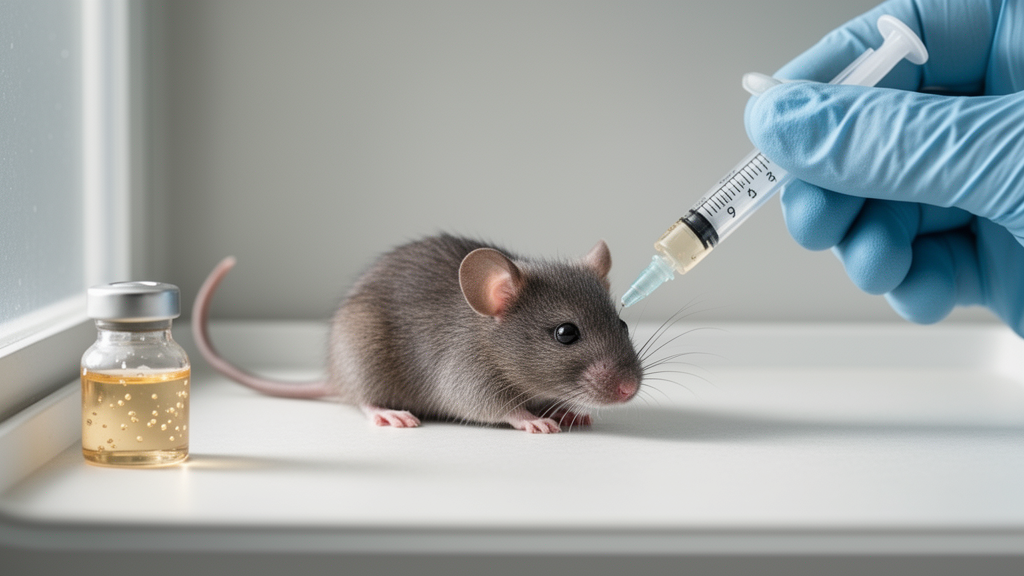
For the therapeutic experiment, mice with 4T1 tumors received intravenous PBS, paclitaxel at 3 milligrams per kilogram, free psoralen at 3 milligrams per kilogram, blank Z/F nanoparticles, or PSO-Z/F nanoparticles at a psoralen-equivalent dose of 3 milligrams per kilogram. Treatments were administered every three days for 14 days, with five animals per group. The researchers reported random allocation and allocation concealment.
PSO-Z/F nanoparticles inhibited tumor growth significantly more than PBS and free psoralen, and treated mice had the smallest final tumor volumes and weights among the groups. The blank carrier did not significantly change tumor growth relative to PBS. TUNEL staining showed prominent apoptotic signals in tumors from the coated-particle group, stronger than those in the free-psoralen group, while control tumors had no evident TUNEL-positive signal.
No significant body-weight loss occurred during treatment. Histological examinations of the heart, liver, spleen, lungs, and kidneys found no apparent treatment-related inflammatory-cell infiltration, hemorrhage, necrosis, cellular degeneration, or disruption of tissue architecture. These observations, together with the body-weight and red-blood-cell results, support preliminary tolerability under the tested conditions but are not a comprehensive safety assessment.
The antitumor experiment used a single murine 4T1 tumor model, small groups, and a short treatment period, while metastasis was evaluated in vitro rather than in a dedicated metastatic model. The authors also identified incomplete control groups as a limitation.
Subject of Research: Fucoidan-coated zein nanoparticles for delivering psoralen in preclinical breast-cancer models
Article Title: Sulfated polysaccharide-coated protein nanoparticles for enhanced delivery of psoralen in breast cancer therapy
Article References: Guo, H., Liang, J., Huang, H., Zhang, Z., Huang, X., Sun, Z., & Huang, Y. (2026). Sulfated polysaccharide-coated protein nanoparticles for enhanced delivery of psoralen in breast cancer therapy. Frontiers in Pharmacology, 17, Article 1888270. https://doi.org/10.3389/fphar.2026.1888270
Image Credits: AI Generated
DOI: 10.3389/fphar.2026.1888270
Keywords: breast cancer, psoralen, fucoidan, zein nanoparticles, drug delivery, nanomedicine, 4T1 cells, tumor accumulation, cellular uptake, preclinical research, Sulfated, polysaccharide-coated
News Source: Nathaniel Bowman. (October 20, 2026). Fucoidan-coated psoralen nanoparticles show promise in breast-cancer mouse models. Scienmag.