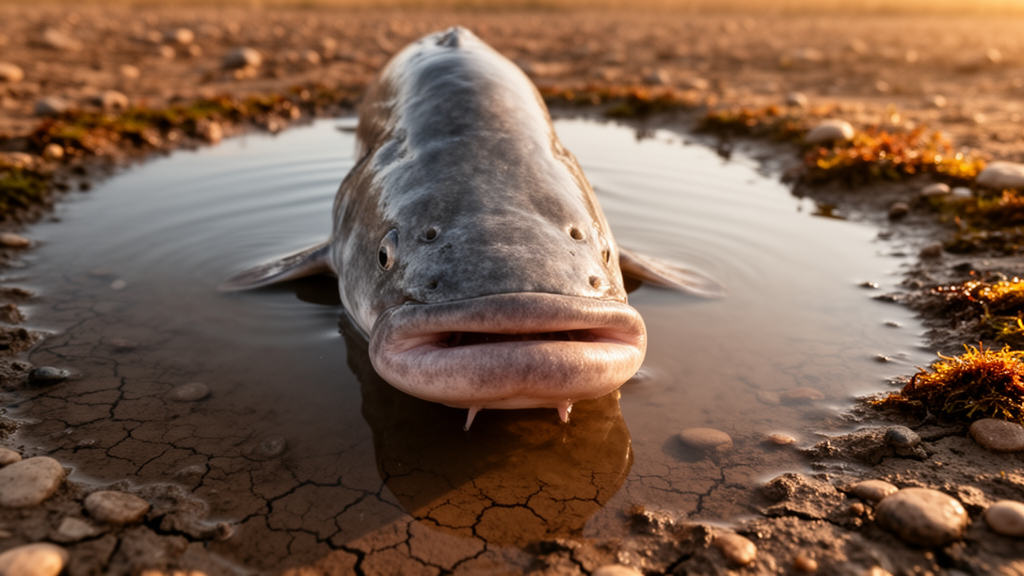
Three trahira, or wolf fish (Hoplias malabaricus), found incidentally in a temporary pool in Brazil’s semiarid region had developed pronounced lip protuberances, according to a case-study report. The fish were encountered during dry-season fieldwork in November 2020 rather than collected as part of a planned experiment, limiting the investigators’ ability to establish when or why the structures formed.
The pool, located in an intermittent stream at 04°26′55.707″S, 40°02′55.161″W, was drying during the dry season. In situ measurements indicated low dissolved oxygen there, whereas the comparison specimens had been collected from other temporary pools in the same region under normal temperature and dissolved-oxygen conditions. Intermittent dryland streams can contract during extended dry periods into isolated pools with high temperatures, low oxygen, rapid organic-matter decomposition, algal blooms, high parasite levels and limited space.
Fish in such environments may respond by moving into deeper, cooler water, reducing activity, taking oxygen from surface layers where gas diffusion is greater, or altering physiological processes. Protruding lips are one structural response described in the literature, but the case study did not directly test the function of the structures observed in the trahira. The investigators proposed that the protuberances may channel more oxygenated surface water toward the mouth chamber, allowing the established gills to absorb oxygen from that flow rather than serving as sites of direct atmospheric gas exchange. They explicitly described this interpretation as a hypothesis requiring testing.
The three affected fish were the only trahira found inhabiting the study pool. As comparisons, researchers examined three trahira collected in November 2010 from other temporary pools in the same Brazilian semiarid region. Those fish lacked lip protuberances. All six specimens were fixed in 10% formalin for approximately two weeks and stored in 70% ethanol before examination of external anatomy, internal organs, stomach contents, gonadal development and selected tissues.
The specimens ranged from 18.1 to 42.2 cm in total length. The gonadosomatic index, calculated as gonad weight divided by body weight, ranged from 0.07 to 1.69 in males and from 0.77 to 2.66 in females. Macroscopic and microscopic examination found that gonads were at similar developmental stages within each sex: females were at maturation stages II and III, while males were mainly at stage II. No signs of gonadal stress were identified, including early spawning, oocyte reabsorption or filamentous structures indicating hemorrhagic vascularization. Every stomach was empty, a pattern the authors associated with reduced feeding during reproductive maturation.
Histological comparisons of the gills found no compromise of their structure or external morphology in either group. Primary lamellae, cartilage, mucous cells, pillar cells, chloride cells, lamellar epithelial cells, marginal blood channels and lamellar venous sinuses were visible in fish with and without protuberances and were consistent with healthy gills. The liver, dorsal muscle and heart likewise showed no observed signs of damage, increased metabolism or muscle absorption, and the heart’s macroscopic and microscopic organization was comparable between groups. These observations applied specifically to the organs and tissues examined rather than to every tissue in the fish.
The lips showed the principal histological distinction. A specimen without a protuberance had loose, edematous connective tissue, while a specimen with a protuberance had thicker collagen fibers organized more densely, consistent with greater collagenization. The researchers cautioned that the difference could reflect the area sampled in each image. They also reported that the protuberances lacked the developed vascularization expected if they were additional sites of oxygen exchange, and that lip development did not appear associated with the hemosiderin function discussed in relation to dermal edema in other fish species. Some slides retained precipitated formalin after prolonged fixation despite washing.
The authors offered one possible explanation for the absence of broader physiological damage: the trahira may have been recently trapped in the drying pool for only a few weeks and may not yet have developed responses described under more sustained stress, including germ-cell reabsorption or liver, heart and muscle damage. This possibility was not tested directly. The healthy appearance of the gills in fish with protuberances was consistent with the proposed surface-water channeling function, but the study did not directly measure water flow into the mouth or respiratory performance.
Overall, the case report found that the examined male and female trahira appeared healthy, with no tissue-stress indicators in the gonads, gills, liver, heart and muscle assessed. The authors interpreted the results as a positive indication of the species’ adaptability under the observed conditions. The small sample, incidental discovery of the affected fish, comparison with specimens collected 10 years earlier and absence of a planned experimental design prevent firm conclusions about the origin or function of the lip protuberances. The authors called for experimental studies of environmental stress to clarify the physiological responses of H. malabaricus to changing conditions.
Subject of Research: A case report of lip protuberances and tissue health in six trahira from temporary pools in Brazil’s semiarid region
Article Title: Development of lip protrusion in trahira, Hoplias malabaricus (Bloch, 1794), associated with aquatic surface respiration
Article References: Medeiros, E. S. F., Monteiro, M. M. D. S., Lustosa-Costa, S. Y., Falkenberg, J. M., & Anselmo Ramos, T. P. (2025). Development of lip protrusion in trahira, Hoplias malabaricus (Bloch, 1794), associated with aquatic surface respiration. Neotropical Biology and Conservation, 20(2), 103-113. https://doi.org/10.3897/neotropical.20.e146972
Image Credits: AI Generated
DOI: 10.3897/neotropical.20.e146972
Keywords: Hoplias malabaricus, trahira, lip protuberances, temporary pools, hypoxia, fish respiration, histology, Brazilian semiarid region, case report, Development, protrusion, Hoplias
News Source: Ophelia Keating. (October 20, 2026). Case report of lip protrusions in three trahira found in a drying Brazilian pool. Scienmag.