• HOME
  • NEWS
  • EXPLORE
    • CAREER
      • Companies
      • Jobs
    • EVENTS
    • iGEM
      • News
      • Team
    • PHOTOS
    • VIDEO
    • WIKI
  • BLOG
  • COMMUNITY
    • FACEBOOK
    • INSTAGRAM
    • TWITTER
Tuesday, October 20, 2026
BIOENGINEER.ORG
No Result
View All Result
  • Login
  • HOME
  • NEWS
  • EXPLORE
    • CAREER
      • Companies
      • Jobs
        • Lecturer
        • PhD Studentship
        • Postdoc
        • Research Assistant
    • EVENTS
    • iGEM
      • News
      • Team
    • PHOTOS
    • VIDEO
    • WIKI
  • BLOG
  • COMMUNITY
    • FACEBOOK
    • INSTAGRAM
    • TWITTER
No Result
View All Result
Bioengineer.org
No Result
View All Result
Home NEWS Science News Technology

Machine learning-assisted hydrothermal process optimization yields carbon quantum dots from tea waste

by
October 20, 2026
in Technology
Reading Time: 2 mins read
0
Machine learning-assisted hydrothermal process optimization yields carbon quantum dots from tea waste

Machine Learning Turns Tea Waste Into Glowing Carbon Quantum Dots With Near-Perfect Yield Prediction

Share on FacebookShare on TwitterShare on LinkedinShare on RedditShare on Telegram

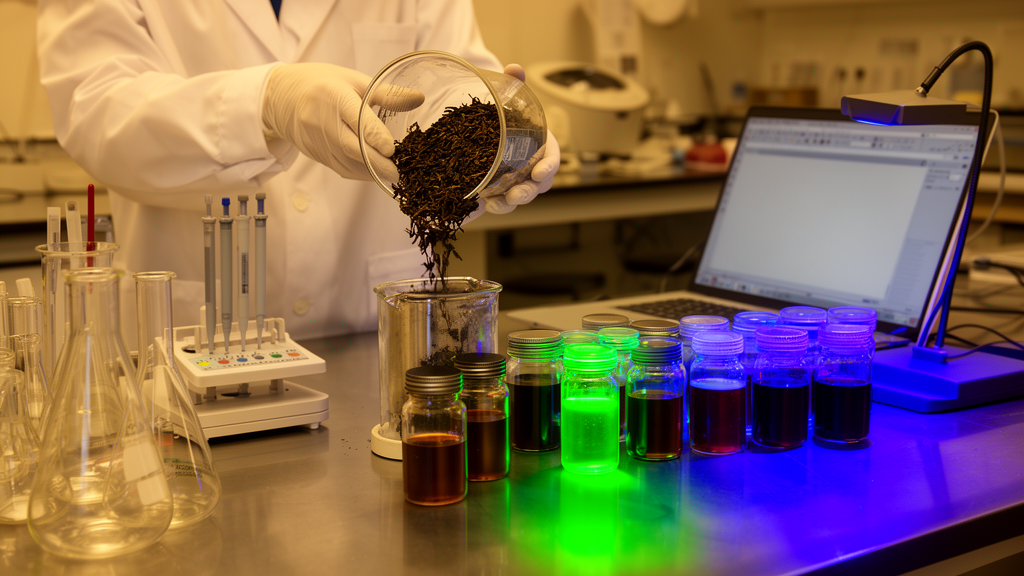
A laboratory optimization study reported a 12.67% yield of carbon quantum dots produced by one-pot hydrothermal carbonization of tea processing waste under conditions selected with a machine-learning model. The researchers developed a process using waste biomass as the carbon precursor and evaluated 14 algorithms against data from 55 experimental runs. Extra Trees performed best, with a training coefficient of determination, R², of 0.7992 on augmented training data and a validation R² of 0.7696 using 11 independent variables. The available evidence comes from the article abstract, rather than the full subscription article.

The model predicted optimized conditions of 179 °C, 5.06 hours, 30 bar and a biomass-to-water ratio of 1:30. Researchers then experimentally tested these conditions and reported a 12.67% carbon quantum dot yield, with a model prediction error of 0.16%. SHAP feature-importance analysis assigned temperature the largest normalized contribution, at 47.7%, followed by pressure at 25.6%, reaction time at 14.5% and biomass-to-water ratio at 12.2%. The abstract does not provide a comparison yield, confidence intervals or other measures of uncertainty for the experimental result, so the reported yield should not be interpreted as a demonstrated increase over an unoptimized baseline.

Characterization described the resulting material as quasi-spherical carbon quantum dots measuring 2–8 nm. The particles contained graphitic domains with an approximate interplanar spacing of 0.34 nm and a mesoporous structure spanning 2.8–3.6 nm. Photoluminescence analysis found excitation-dependent blue fluorescence, which the researchers interpreted as evidence for the formation of fluorescent carbon quantum dots. These findings characterize the material produced under the tested laboratory conditions but do not establish its performance in a particular device or application.

The abstract identifies energy storage, LEDs, catalysis, sensors and biomedicine as possible areas of interest for carbon quantum dots and describes biomass-derived dots as highly biocompatible. However, it reports no application-specific testing and no direct biocompatibility assay results. The study therefore supports a laboratory synthesis and optimization result for waste-derived carbon quantum dots, rather than demonstrated biomedical or energy-storage performance. Its scope is also bounded by the 55-run dataset, the selected process variables and the single set of experimentally validated conditions described in the abstract.

Subject of Research: Machine learning optimization of tea-waste carbon quantum dot production

Article Title: Machine learning-based optimization of hydrothermal carbonization for CQDs production

Article References: Thaha, A. N., Subburamu, K., Paravaikkarasu Pillai, S., Maduraimuthu, D., Devasahayam, J. S. S., & Desikan, R. (2026). Machine learning-based optimization of hydrothermal carbonization for CQDs production. Journal of Materials Science, 61(42), 32939-32961. https://doi.org/10.1007/s10853-026-13733-5

Image Credits: AI Generated

DOI: 10.1007/s10853-026-13733-5

Keywords: carbon quantum dots, hydrothermal carbonization, machine learning, tea processing waste, Extra Trees, process optimization, SHAP analysis, nanomaterials, biomass valorization, Machine, learning-based, optimization

News Source: Teresa Odom. (October 20, 2026). Machine learning-assisted hydrothermal process optimization yields carbon quantum dots from tea waste. Scienmag.


Tags: Biomass valorizationCarbon quantum dotsExtra TreesHydrothermal Carbonizationlearning-basedmachineMachine Learningnanomaterialsoptimizationprocess optimizationSHAP analysistea processing waste
Share12Tweet7Share2ShareShareShare1

Related Posts

Expert-based AHP-cloud assessment finds average AI development in Yangtze River Delta construction cost management

Expert-based AHP-cloud assessment finds average AI development in Yangtze River Delta construction cost management

October 20, 2026
DETR-CLIP study evaluates detection, semantics and creativity scoring in 5,000 children’s drawings

DETR-CLIP study evaluates detection, semantics and creativity scoring in 5,000 children’s drawings

October 20, 2026

Triggered Methylselenol Donors Enable Light- and Enzyme-Controlled Delivery

October 20, 2026

Syngeneic mouse study links CNS lymphoma location to broader immune dysfunction

October 20, 2026

POPULAR NEWS

  • Genomic and transcriptomic study links A. oryzae to multiple A. flavus domestication events

    Genomic and transcriptomic study links A. oryzae to multiple A. flavus domestication events

    29 shares
    Share 12 Tweet 7
  • Phytohormone and transcriptome analyses reveal the mechanisms underlying branch inclination angle formation in narrow-crowned Chamaecyparis hodginsii

    29 shares
    Share 12 Tweet 7
  • Trajectories of the double burden of malnutrition and social inequality in 6–12-year-old South African children: The NW-child study

    29 shares
    Share 12 Tweet 7
  • Machine learning-assisted hydrothermal process optimization yields carbon quantum dots from tea waste

    29 shares
    Share 12 Tweet 7

About

We bring you the latest biotechnology news from best research centers and universities around the world. Check our website.

Follow us

Recent News

Genomic and transcriptomic study links A. oryzae to multiple A. flavus domestication events

Phytohormone and transcriptome analyses reveal the mechanisms underlying branch inclination angle formation in narrow-crowned Chamaecyparis hodginsii

Trajectories of the double burden of malnutrition and social inequality in 6–12-year-old South African children: The NW-child study

Subscribe to Blog via Email

Enter your email address to subscribe to this blog and receive notifications of new posts by email.

Join 85 other subscribers
  • Contact Us

Bioengineer.org © Copyright 2023 All Rights Reserved.

Welcome Back!

Login to your account below

Forgotten Password?

Retrieve your password

Please enter your username or email address to reset your password.

Log In
No Result
View All Result
  • Homepages
    • Home Page 1
    • Home Page 2
  • News
  • National
  • Business
  • Health
  • Lifestyle
  • Science

Bioengineer.org © Copyright 2023 All Rights Reserved.