A plant study reported in BMC Plant Biology found that exogenous sucrose treatment was associated with two responses in cool-season turfgrasses: shorter coleoptiles and changes in pigment composition. The researchers examined creeping bentgrass, tall fescue and perennial ryegrass, and identified differences in their sensitivity to sucrose. Creeping bentgrass was described as hyposensitive, while tall fescue was the most sensitive of the three species.
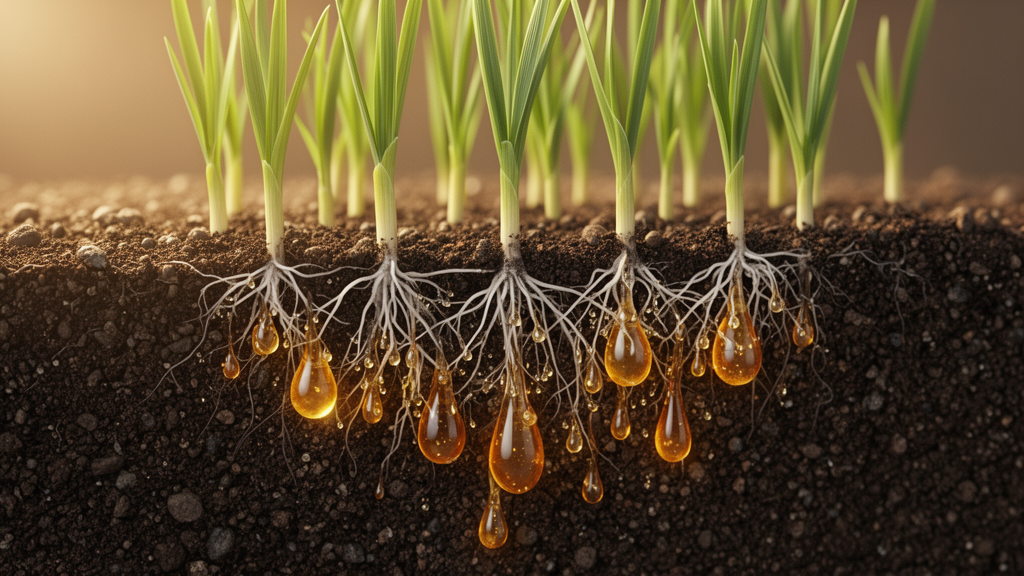
Under sucrose treatment, creeping bentgrass produced an unidentified mucilage-like exudate in root tissue. The abstract reports that this exudate was more abundant under etiolation conditions than under normal short-day conditions, indicating an association between the light environment and secretion of the material. Light therefore appeared to inhibit its production in the experimental system, although the available abstract does not provide concentrations, sample sizes, statistical estimates or details of the experimental procedures.
The study also examined the two grasses when creeping bentgrass and tall fescue were co-cultured with sucrose. In that condition, tall fescue displayed a more tolerant phenotype than it did in the reported single-species comparison, in which it was characterized as the most sucrose-sensitive species. Together, the results indicate that the presence of bentgrass was associated with reduced sucrose sensitivity in tall fescue. The available evidence does not establish the mechanism responsible for that response or demonstrate that the effect extends beyond the tested conditions.
The findings describe treatment-associated physiological and developmental responses rather than a field trial of turfgrass establishment. The authors summarized the work as the first analysis of how grass species respond to exogenous sucrose and proposed a putative treatment for excessive sucrose exposure. Based on the abstract alone, the mucilage-like substance remains unidentified, and the relationship between root exudation and seedling establishment is reported as a correlation rather than a demonstrated causal pathway. Further conclusions are limited by the absence of full methods, numerical results and statistical information in the supplied material.
Subject of Research: Effects of exogenous sucrose on root exudation and seedling-establishment traits in three cool-season turfgrass species
Article Title: Exogenous sucrose induces the mucilage-like exudates in the roots of bentgrass and is correlated with seedling establishment
Article References: Jung, J. G., Bae, E., & Kim, J. (2026). Exogenous sucrose induces the mucilage-like exudates in the roots of bentgrass and is correlated with seedling establishment. BMC Plant Biology. https://doi.org/10.1186/s12870-026-09897-6
Image Credits: AI Generated
DOI: 10.1186/s12870-026-09897-6
Keywords: creeping bentgrass, tall fescue, perennial ryegrass, sucrose treatment, root exudates, mucilage, seedling establishment, cool-season turfgrass, plant physiology, light conditions, Exogenous, sucrose
News Source: Alan Morgan. (October 20, 2026). Experimental sucrose treatment linked to mucilage-like root exudates in bentgrass. Scienmag.