• HOME
  • NEWS
  • EXPLORE
    • CAREER
      • Companies
      • Jobs
    • EVENTS
    • iGEM
      • News
      • Team
    • PHOTOS
    • VIDEO
    • WIKI
  • BLOG
  • COMMUNITY
    • FACEBOOK
    • INSTAGRAM
    • TWITTER
Tuesday, October 20, 2026
BIOENGINEER.ORG
No Result
View All Result
  • Login
  • HOME
  • NEWS
  • EXPLORE
    • CAREER
      • Companies
      • Jobs
        • Lecturer
        • PhD Studentship
        • Postdoc
        • Research Assistant
    • EVENTS
    • iGEM
      • News
      • Team
    • PHOTOS
    • VIDEO
    • WIKI
  • BLOG
  • COMMUNITY
    • FACEBOOK
    • INSTAGRAM
    • TWITTER
No Result
View All Result
Bioengineer.org
No Result
View All Result
Home NEWS Science News Agriculture

Tomato stalk waste growing media show mixed effects on postharvest quality and antioxidant measures in stored tomatoes

by
October 20, 2026
in Agriculture
Reading Time: 2 mins read
0
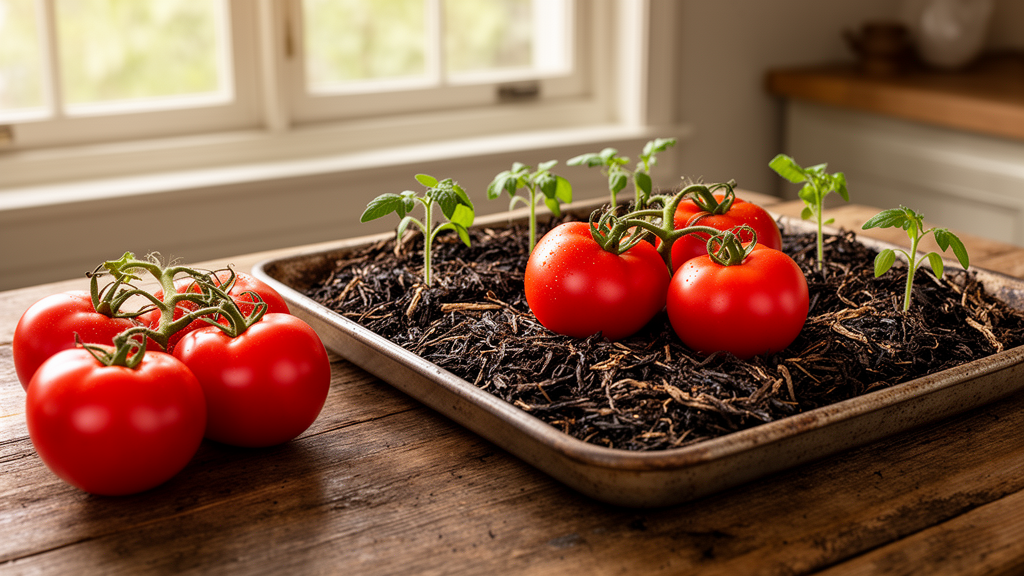
Tomato stalk waste growing media show mixed effects on postharvest quality and antioxidant measures in stored tomatoes

Tomato Waste Turned Growing Medium Keeps Fruit Fresher for Longer

Share on FacebookShare on TwitterShare on LinkedinShare on RedditShare on Telegram

A controlled factorial experiment found that raw tomato stalk waste used as a soilless growing medium was associated with lower fruit weight loss and higher values for selected antioxidant measures after 14 days of cold storage, while other outcomes depended on the trait examined. The findings are summarized in the abstract of an early-access research article published in BMC Plant Biology; the article states that it remains subject to further editorial revisions before the final version of record.

Researchers compared four growing media: raw tomato stalk waste, tomato stalk waste composted for two months, cocopeat, and a mixture of peat and perlite. The experiment used the tomato cultivar ‘Bandita F1’ and followed a 4 × 3 factorial design combining the four media with three storage periods. It was conducted in a completely randomized design with three independent crate replicates for each combination. Fruit was held in modified-atmosphere packaging at 8 ± 0.5 °C and 90 ± 5% relative humidity for 14 days, allowing the researchers to compare postharvest quality and antioxidant measurements among treatments.

On day 14, tomatoes grown in raw tomato stalk waste had approximately 54% less weight loss than those grown in cocopeat. The raw-waste treatment also retained relatively high titratable acidity and had the highest measured vitamin C concentration, 206.5 mg kg−1 fresh weight, and ferric reducing antioxidant power, 35.82 mmol Trolox equivalents kg−1 fresh weight. Composted tomato stalk waste had the highest DPPH antioxidant activity. Cocopeat produced the firmest fruit and the highest soluble solids content, while peat plus perlite had the lowest respiration rate. Raw and composted tomato stalk waste maintained higher a* values than cocopeat, and all three media other than cocopeat had higher total phenolic and total flavonoid contents. Principal component analysis and hierarchical clustering identified treatment-associated patterns, while false-discovery-rate-adjusted correlations showed coordinated relationships among quality-preservation attributes.

The results indicate that the influence of the growing medium varied by measured trait rather than favoring one medium across every outcome. The authors identified raw tomato stalk waste as a possible alternative soilless medium for limiting selected postharvest quality losses, but the evidence comes from one tomato cultivar, one specified production system, four media and one 14-day storage regime. The article’s abstract calls for validation across additional cultivars and production conditions. The reported results therefore do not establish longer storage life, broad effects across tomato varieties or a single mechanism explaining the differences among treatments.

Subject of Research: Effects of tomato stalk waste-based growing media on selected postharvest quality and antioxidant measures in cold-stored tomatoes

Article Title: Effects of tomato stalk waste–based growing media on postharvest quality and antioxidant capacity of tomato fruit during cold storage

Article References: Yoruk, E., Ozer, H., Ozer, M. O., Ates, U., & Ozturk, B. (2026). Effects of tomato stalk waste–based growing media on postharvest quality and antioxidant capacity of tomato fruit during cold storage. BMC Plant Biology. https://doi.org/10.1186/s12870-026-09999-1

Image Credits: AI Generated

DOI: 10.1186/s12870-026-09999-1

Keywords: tomato, tomato stalk waste, soilless cultivation, growing media, postharvest quality, cold storage, antioxidant capacity, vitamin C, FRAP, DPPH, Effects, stalk

News Source: Alan Morgan. (October 20, 2026). Tomato stalk waste growing media show mixed effects on postharvest quality and antioxidant measures in stored tomatoes. Scienmag.

Tags: antioxidant capacitycold storageDPPHeffectsFRAPgrowing mediapostharvest qualitySoilless cultivationstalktomatotomato stalk wastevitamin C
Share12Tweet7Share2ShareShareShare1

Related Posts

Comparative organellar genomics places two East Asian simple-leaved Sorbus species within the East Asian lineage

Comparative organellar genomics places two East Asian simple-leaved Sorbus species within the East Asian lineage

October 20, 2026
Knowledge-distilled multispectral model classifies wheat stripe mosaic virus stages

Knowledge-distilled multispectral model classifies wheat stripe mosaic virus stages

October 20, 2026

Field experiment links lime and GA3 applications with improved stevia growth in northern Bangladesh

October 20, 2026

Fine mapping refines chromosome 3 QTL associated with heat tolerance in maize tassels

October 20, 2026

POPULAR NEWS

  • Magnetic probes reveal chemical environments inside molecular framework pores

    Magnetic probes reveal chemical environments inside molecular framework pores

    29 shares
    Share 12 Tweet 7
  • Hydrogen Molecules Join Atoms in Palladium Membrane Reactors

    29 shares
    Share 12 Tweet 7
  • Tomato stalk waste growing media show mixed effects on postharvest quality and antioxidant measures in stored tomatoes

    29 shares
    Share 12 Tweet 7
  • Hybrid deep-learning model shows favorable hourly PM2.5 prediction performance in modeling study

    29 shares
    Share 12 Tweet 7

About

We bring you the latest biotechnology news from best research centers and universities around the world. Check our website.

Follow us

Recent News

Magnetic probes reveal chemical environments inside molecular framework pores

Hydrogen Molecules Join Atoms in Palladium Membrane Reactors

Tomato stalk waste growing media show mixed effects on postharvest quality and antioxidant measures in stored tomatoes

Subscribe to Blog via Email

Enter your email address to subscribe to this blog and receive notifications of new posts by email.

Join 85 other subscribers
  • Contact Us

Bioengineer.org © Copyright 2023 All Rights Reserved.

Welcome Back!

Login to your account below

Forgotten Password?

Retrieve your password

Please enter your username or email address to reset your password.

Log In
No Result
View All Result
  • Homepages
    • Home Page 1
    • Home Page 2
  • News
  • National
  • Business
  • Health
  • Lifestyle
  • Science

Bioengineer.org © Copyright 2023 All Rights Reserved.