• HOME
  • NEWS
  • EXPLORE
    • CAREER
      • Companies
      • Jobs
    • EVENTS
    • iGEM
      • News
      • Team
    • PHOTOS
    • VIDEO
    • WIKI
  • BLOG
  • COMMUNITY
    • FACEBOOK
    • INSTAGRAM
    • TWITTER
Tuesday, October 20, 2026
BIOENGINEER.ORG
No Result
View All Result
  • Login
  • HOME
  • NEWS
  • EXPLORE
    • CAREER
      • Companies
      • Jobs
        • Lecturer
        • PhD Studentship
        • Postdoc
        • Research Assistant
    • EVENTS
    • iGEM
      • News
      • Team
    • PHOTOS
    • VIDEO
    • WIKI
  • BLOG
  • COMMUNITY
    • FACEBOOK
    • INSTAGRAM
    • TWITTER
No Result
View All Result
Bioengineer.org
No Result
View All Result
Home NEWS Science News Agriculture

Research report: Synergistic effect of biostimulants and nitrogen fertilization on crop performance of barley (Hordeum vulgare L.) under rainfed conditions

by
October 20, 2026
in Agriculture
Reading Time: 2 mins read
0
Research report: Synergistic effect of biostimulants and nitrogen fertilization on crop performance of barley (Hordeum vulgare L.) under rainfed conditions

Research report: Synergistic effect of biostimulants and nitrogen fertilization on crop performance of barley (Hordeum vulgare L.) under rainfed conditions

Share on FacebookShare on TwitterShare on LinkedinShare on RedditShare on Telegram

Foliar applications of glycine betaine and zeatin significantly improved measured agronomic traits in a two-year field experiment on rainfed barley, with zeatin generally producing the highest values. Across six varieties, the treatments increased average grain yield by 3.64% and 8.01%, respectively, compared with the control. The study therefore identified measurable benefits from both biostimulants when evaluated with different nitrogen application rates under rainfed conditions.

The researchers tested five nitrogen rates—0, 80, 160, 240 and 320 kg N ha−1—alongside three foliar treatments: a control, glycine betaine and zeatin. These combinations were evaluated in six barley varieties: Ramata, Placidia, Nonius, Sultan, Kıral-97 and Altıkat. The factorial field design examined the individual and combined effects of nitrogen fertilization and biostimulant treatment on growth, yield formation and agronomic nitrogen use efficiency.

Nonius recorded the highest grain yield among the six varieties, at 6.33 t ha−1, while Altıkat produced the lowest, at 5.17 t ha−1. Nitrogen rate produced a different result for total yield than for efficiency. Grain yield at 240 kg N ha−1 was reported as 116.71% higher than the unfertilized control, and the researchers identified this rate as providing the best overall balance for yield contribution.

By contrast, 80 kg N ha−1 was optimal for both agronomic nitrogen use efficiency and partial factor productivity of nitrogen. The comparison shows that the nitrogen rate associated with the highest yield response was not the same as the rate associated with the strongest efficiency measures. The full experimental range also included 320 kg N ha−1, but the abstract does not report its yield percentage or efficiency values relative to the other rates.

The findings support the tested combination of foliar biostimulants and nitrogen management as an approach for improving barley productivity and agronomic nitrogen use efficiency under rainfed field conditions, with zeatin producing the larger average grain-yield increase. Their scope remains bounded by the two-year experiment, six varieties and five nitrogen rates, and the supplied results do not establish whether the same treatment effects would occur in other environments or production systems. The research also does not show that one nitrogen rate should replace the others: 240 kg N ha−1 was associated with the strongest reported overall yield contribution, whereas 80 kg N ha−1 gave the best reported values for the two nitrogen-efficiency measures.

Within this experimental framework, the clearest result is that adding glycine betaine or zeatin improved overall measured agronomic performance, while the balance between total yield and nitrogen-use efficiency depended on the nitrogen application rate.

Subject of Research: Effects of foliar biostimulants and nitrogen rates on rainfed barley yield and agronomic nitrogen use efficiency

Article Title: Synergistic effect of biostimulants and nitrogen fertilization on crop performance of barley (Hordeum vulgare L.) under rainfed conditions

Article References: ÖZTÜRK AY, E., AKAY, H., SEZER, İ., & AY, A. (2026). Synergistic effect of biostimulants and nitrogen fertilization on crop performance of barley (Hordeum vulgare L.) under rainfed conditions. BMC Plant Biology. https://doi.org/10.1186/s12870-026-09911-x

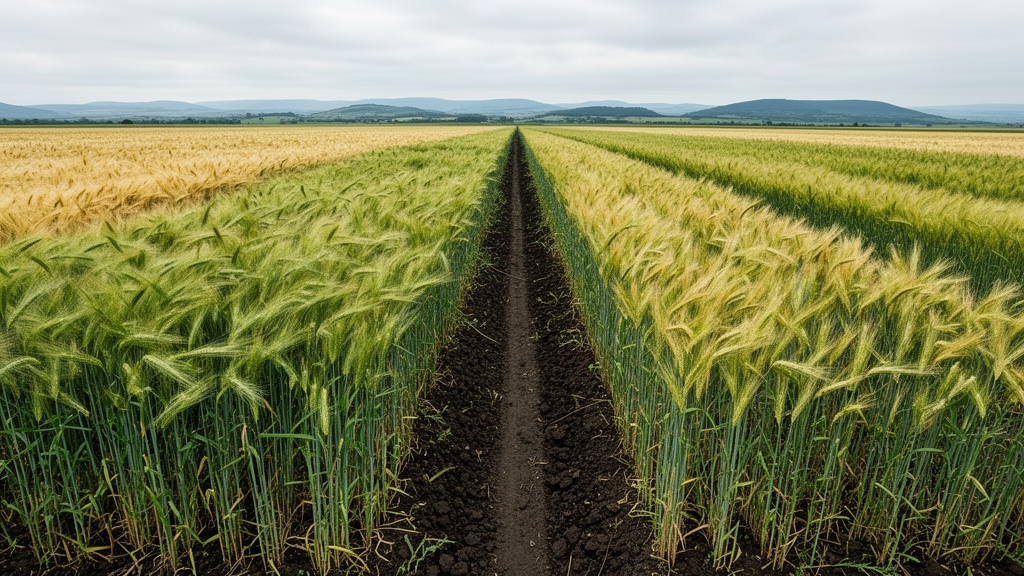
Image Credits: AI Generated

DOI: 10.1186/s12870-026-09911-x

Keywords: barley, rainfed agriculture, biostimulants, glycine betaine, zeatin, nitrogen fertilization, grain yield, nitrogen-use efficiency, crop performance, field experiment, Synergistic, effect

News Source: Alan Morgan. (October 20, 2026). Research report: Synergistic effect of biostimulants and nitrogen fertilization on crop performance of barley (Hordeum vulgare L.) under rainfed conditions. Scienmag.


Tags: barleyBiostimulants**crop performanceeffectfield experimentglycine betainegrain yieldnitrogen fertilizationnitrogen use efficiencyrainfed agricultureSynergisticzeatin
Share12Tweet7Share2ShareShareShare1

Related Posts

Research report: Optimization of nitrogen source ratios for somatic embryo maturation in Pinus elliottii

Research report: Optimization of nitrogen source ratios for somatic embryo maturation in Pinus elliottii

October 20, 2026
Research report: Quantification of soil loss by using RUSLE model under different land use and land cover conditions in AKANYARU catchment in Rwanda

Research report: Quantification of soil loss by using RUSLE model under different land use and land cover conditions in AKANYARU catchment in Rwanda

October 20, 2026

Research report: Nano-encapsulation of peppermint essential oil in chitosan nanoparticles improves salinity tolerance in lettuce

October 20, 2026

Soybean seed pigmentation is associated with oil and lipid differences

October 20, 2026

POPULAR NEWS

  • Prototype augmented vision sensor cuts perception data by over 96%

    Prototype augmented vision sensor cuts perception data by over 96%

    29 shares
    Share 12 Tweet 7
  • Research report: Incidence of intra-axial brain metastases in Eastern Finland

    29 shares
    Share 12 Tweet 7
  • Research report: Synergistic effect of biostimulants and nitrogen fertilization on crop performance of barley (Hordeum vulgare L.) under rainfed conditions

    29 shares
    Share 12 Tweet 7
  • Totally endoscopic mitral replacement: outcomes when repair is infeasible

    29 shares
    Share 12 Tweet 7

About

We bring you the latest biotechnology news from best research centers and universities around the world. Check our website.

Follow us

Recent News

Prototype augmented vision sensor cuts perception data by over 96%

Research report: Incidence of intra-axial brain metastases in Eastern Finland

Research report: Synergistic effect of biostimulants and nitrogen fertilization on crop performance of barley (Hordeum vulgare L.) under rainfed conditions

Subscribe to Blog via Email

Enter your email address to subscribe to this blog and receive notifications of new posts by email.

Join 85 other subscribers
  • Contact Us

Bioengineer.org © Copyright 2023 All Rights Reserved.

Welcome Back!

Login to your account below

Forgotten Password?

Retrieve your password

Please enter your username or email address to reset your password.

Log In
No Result
View All Result
  • Homepages
    • Home Page 1
    • Home Page 2
  • News
  • National
  • Business
  • Health
  • Lifestyle
  • Science

Bioengineer.org © Copyright 2023 All Rights Reserved.