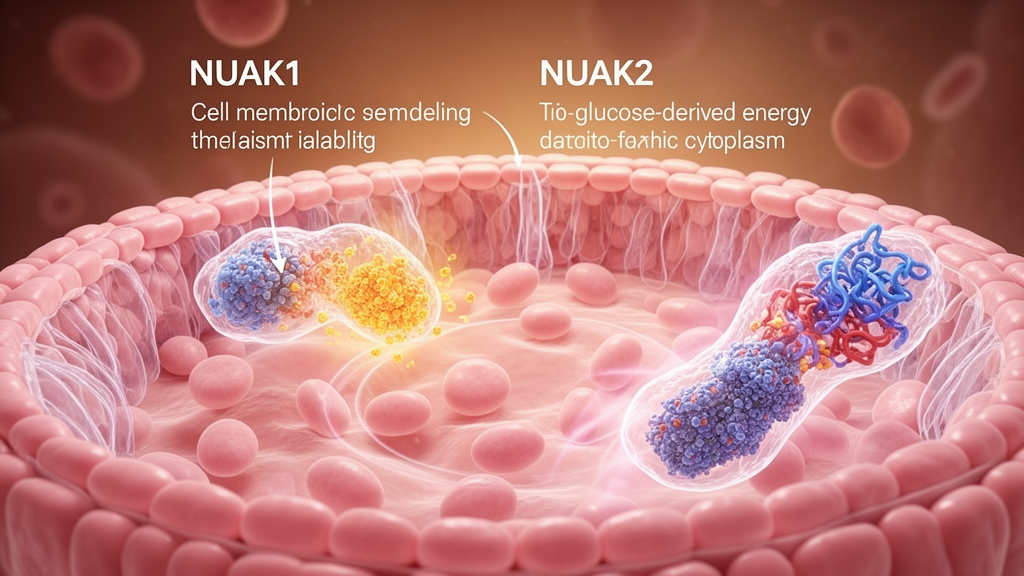
NUAK1 and NUAK2 were overexpressed in human colorectal cancer tissues, and their elevated expression was associated with increased tumor metastasis and poorer patient survival. In cell experiments, depletion of the two kinases reduced colorectal cancer cell growth and migration while disrupting aerobic glycolysis, the pentose phosphate pathway and glutamine metabolism. The study further indicates that NUAK1 and NUAK2 support these changes by suppressing AMPK activity and facilitating mTOR-driven metabolic reprogramming.
Published in the Journal of Molecular Medicine, the research combined analysis of human colorectal cancer tissues with experiments in colorectal cancer cells. The investigators examined how the two NUAK kinase isoforms influence the metabolic pathways that the study associated with tumor growth and movement. Their reported findings identify a direct role for NUAK1 and NUAK2 in maintaining cancer-cell metabolism: depleting them markedly reduced cell growth and migratory capacity, while knockout of NUAK1/2 disrupted key glucose- and glutamine-related metabolic pathways.
The molecular results connect NUAK activity to the balance between AMPK and mTOR signaling. NUAK1/2 depletion impaired metabolic function, cellular growth and migration, and the researchers reported that these effects were enhanced when AMPK was pharmacologically activated with AICAR and mTOR was inhibited with rapamycin. These findings support the conclusion that the kinases promote mTOR-driven metabolic reprogramming and colorectal cancer cell growth and migration by repressing AMPK activity. The compound experiments were performed in the cellular model and do not establish a treatment effect in patients.
The human tissue findings provide a separate level of evidence. NUAK1 and NUAK2 expression was higher in colorectal cancer samples than in the study’s comparison material, while expression of the isoforms was associated with metastatic disease and reduced survival. These are observational associations: the available summary does not report effect sizes, cohort characteristics or multivariable analyses, so it cannot show that NUAK1 or NUAK2 alone causes metastasis or independently predicts survival. The depletion experiments supply the more direct mechanistic evidence by showing that removing NUAK1/2 changed metabolic pathways and reduced proliferation and migration in the tested cells.
NUAK1 and NUAK2 were investigated as a kinase family, and the supplied study summary does not quantify their separate contributions. The results therefore support their combined role rather than establishing that one isoform is the dominant regulator. Overall, the study positions NUAK1 and NUAK2 as regulators of colorectal cancer progression and migration through AMPK/mTOR-mediated metabolic reprogramming. The work is a cell-based mechanistic study with supporting human tissue associations; it identifies the kinases as potential therapeutic targets but does not yet establish whether targeting them safely or effectively improves outcomes in people with colorectal cancer.
Subject of Research: NUAK1 and NUAK2 regulation of colorectal cancer cell metabolism, growth and migration
Article Title: NUAK isoforms promote glucose and glutamine metabolic reprogramming driven colon cancer progression and migration through regulation of AMPK/mTOR signaling
Article References: Raj, A. S. W. W., Babu, J. Y. M., Sabanayagam, R., Muthusami, S., & Manoharan, R. (2026). NUAK isoforms promote glucose and glutamine metabolic reprogramming driven colon cancer progression and migration through regulation of AMPK/mTOR signaling. Journal of Molecular Medicine, 104(1), Article 122. https://doi.org/10.1007/s00109-026-02730-5
Image Credits: AI Generated
DOI: 10.1007/s00109-026-02730-5
Keywords: colorectal cancer, NUAK1, NUAK2, cancer metabolism, AMPK, mTOR, aerobic glycolysis, glutamine metabolism, cell migration, tumor progression, NUAK, isoforms
News Source: Nathaniel Bowman. (October 20, 2026). NUAK1 and NUAK2 drive colorectal cancer metabolic changes in cells. Scienmag.