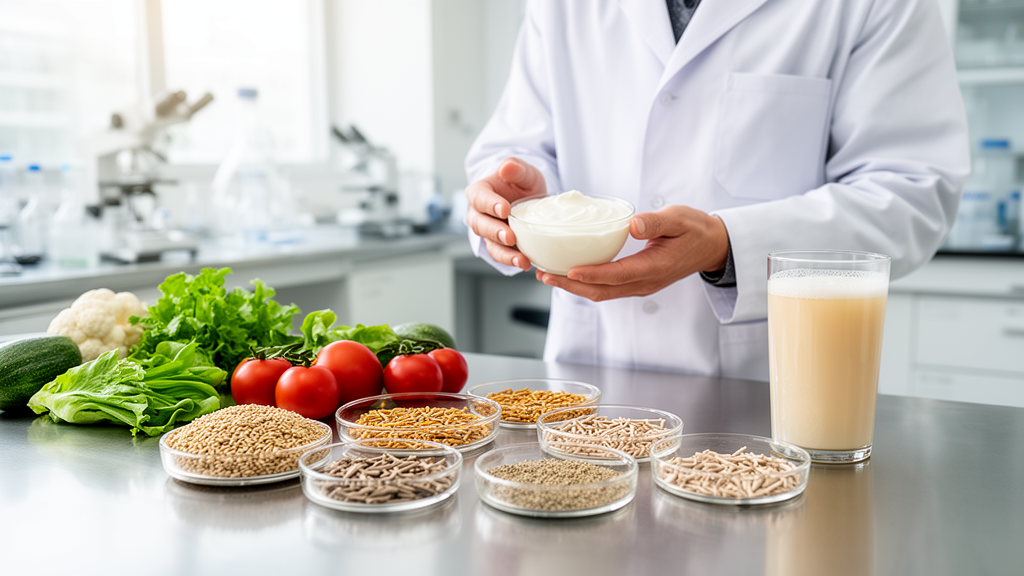
A comprehensive review finds that postbiotics are moving beyond fermentation by-products toward deliberately produced ingredients for functional foods, supplements and other applications, but their health effects remain unevenly demonstrated. The strongest human signals identified by the review involve selected allergy, stress, mood and early metabolic outcomes, while many claims across immunity, obesity, gut–brain signaling, antioxidant activity, anemia and mineral status still come from cell cultures or animal experiments. Differences among microbial strains, manufacturing methods, compositions and doses make comparisons difficult, and the authors call for standardized products, clearer reporting and larger, longer human trials before broad claims can be justified.
The review synthesized English-language, peer-reviewed research identified through PubMed and Google Scholar, with searches spanning the databases’ coverage from inception through a final refresh in 2026. It describes postbiotics as preparations of nonliving microorganisms or their components that confer a health benefit on the host, following terminology developed by an International Scientific Association for Probiotics and Prebiotics expert panel. The category can include cell-free fermentation supernatants, purified microbial metabolites, bacterial lysates and heat-inactivated cells, the latter often called paraprobiotics or “ghost probiotics.” Unlike live probiotics, postbiotics do not require viable organisms. That can simplify storage and transport and avoids the microbial-translocation and gene-transfer concerns that can accompany live preparations, although the review notes that safety still must be assessed for each product.
Postbiotic preparations may contain short-chain fatty acids such as acetate, propionate and butyrate, as well as peptides, enzymes, exopolysaccharides, vitamins, organic acids, teichoic acids and bacterial cell-wall fragments. Lactic acid bacteria and bifidobacteria are common sources. These compounds arise while microorganisms grow in food, laboratory media or the gut, but manufacturing can also separate soluble products from cells or disrupt cells to release structural components. Heat treatment, high pressure, sonication, ultraviolet or ionizing radiation, solvent extraction, enzymatic treatment, pulsed electric fields, ohmic heating, supercritical carbon dioxide, drying and pH adjustment are among the methods used. The choice of method is consequential: it can alter the concentration, structure and biological activity of the resulting preparation, so a strain name alone does not identify a finished product.
Production is becoming more deliberate rather than simply recovering what is left over from fermentation. The review describes experiments using defined media, optimized temperatures, feeding strategies and in situ product removal to increase biomass or accumulate selected metabolites. One process involving Bifidobacterium animalis reported a yield of 2.9 × 10^10 colony-forming units per milliliter, while an exopolysaccharide fraction from that culture reduced Toll-like receptor 4 and nuclear factor-kappa B activation in lipopolysaccharide-treated human intestinal cells. Other laboratory studies produced postbiotic powders containing combinations of lactic acid, short-chain fatty acids, phenolics, proteins and sugars that showed antimicrobial, antioxidant, anti-inflammatory or wound-healing activity in experimental assays. These results demonstrate what different manufacturing routes can generate, but they do not by themselves establish clinical benefit.
Analytical standardization is central to separating a reproducible preparation from a vague product category. Flow cytometry can quantify intact but inactivated cells, while quantitative and digital PCR can be used in analysis of microbial material. Chromatographic, spectrometric, biochemical, microbiological and immunological assays can characterize cell fragments and metabolites. The appropriate approach depends on whether the measurement is intended for research, manufacturing-process control, regulatory compliance or consumer labeling. The review reports that consensus reference methods and complete reporting standards remain unavailable. As a result, two products described by the same strain name may contain different fractions and produce different effects, frustrating comparison, dose-response analysis and regulatory evaluation.
Immune effects are among the areas in which the review identifies evidence across experimental systems and selected clinical studies. Cell-surface proteins, lipoteichoic acids, peptidoglycan fragments and short-chain fatty acids can interact with pattern-recognition receptors, alter cytokine signaling and influence regulatory T-cell differentiation. A surface-layer protein from Lactobacillus acidophilus has been reported to bind C-type lectin receptors on dendritic cells and promote regulatory-cell differentiation in an experimental setting. Proteins secreted by Lactobacillus rhamnosus GG have also been associated with protection of tight-junction proteins in experimental systems. In clinical research, a heat-inactivated Lactobacillus rhamnosus preparation was reported to alleviate atopic-dermatitis symptoms and reduce serum IgE, while a heat-killed Lactobacillus paracasei preparation was studied for common-cold symptoms in older adults. These findings do not establish a uniform effect across strains, products or clinical settings.
Metabolic research shows some encouraging but still limited human evidence. In an exploratory trial reported in the review, pasteurized Akkermansia muciniphila was given to a modest group of overweight or obese adults with insulin resistance, and the investigators reported improved insulin sensitivity, lower insulinemia and reduced total cholesterol. A reported 28.6% improvement in insulin sensitivity came from a proof-of-concept study, not a large, long-term test of obesity treatment. Most other metabolic findings in the review are preclinical. Short-chain fatty acids can signal through G-protein-coupled receptors and influence release of peptide YY and glucagon-like peptide 1, while butyrate and related metabolites have altered adiposity, thermogenesis and liver glucose production in mice. These pathways are biologically relevant, but the review emphasizes the substantial extrapolation required when animal findings are treated as evidence of durable human benefit.
Gut–brain applications have produced striking findings in animal studies and several small human trials. Heat-killed bacteria have reduced anxiety-like or depression-like behavior and altered neurotransmitter-related gene expression in stressed mice. Other rodent experiments report changes in brain-derived neurotrophic factor, serotonin, gamma-aminobutyric acid, dopamine and inflammatory markers. In a randomized controlled trial involving 60 chronically stressed students, heat-inactivated Lactobacillus gasseri CP2305 was associated with reduced anxiety and improved sleep, along with changes in n-valeric acid and the abundance of Bifidobacterium. Smaller human studies have reported mood, sleep or infection-resilience effects from other heat-killed preparations, while studies in depression and irritable bowel syndrome have examined changes in tryptophan metabolism, cortisol and mood. The review also notes contrary signals: a separate assessment of post-, pre- and probiotic interventions reported improvements in cortisol, sleep latency or sleep duration without discernible changes in stress, anxiety or sleep. The overall pattern remains heterogeneous and strain-specific.
Artificial intelligence and machine learning are emerging as tools for linking fermentation chemistry with biological function. Systems such as antiSMASH, PRISM4 and DeepBGC are being used to detect biosynthetic gene clusters associated with secondary metabolites, while protein-structure prediction can help characterize candidate molecules. Biosensors, internet-of-things equipment and analytical methods integrated with machine learning are also being explored for real-time fermentation monitoring, including prediction of volatile metabolites during sourdough fermentation. These applications are developmental rather than clinically established. The review highlights privacy, algorithmic transparency and equitable access as concerns when artificial intelligence is used to support individualized recommendations. Controlled fermentation, chemical characterization and human trials remain necessary to establish whether a predicted bioactive can be manufactured consistently and produce a meaningful effect.
Regulation remains fragmented because postbiotics range from a single purified metabolite to a complex whole-cell lysate and may fall under food, supplement, novel-food or pharmaceutical frameworks. Europe has authorized pasteurized A. muciniphila for use as a novel food, while other jurisdictions have addressed particular nonviable products without creating a general postbiotic category. Commercial products already include fermented infant formulas, inactivated bacterial preparations and cell-free preparations, and the review cites a body of randomized-trial literature involving 1,740 infants that suggests potential for managing infections in children younger than five. Some trials of heat-inactivated Lactobacillus acidophilus with micronutrients reported mild adverse effects, including abdominal distension, dehydration and vomiting. The field’s central challenge is therefore no longer establishing that microbial products can be bioactive. It is determining which molecules, produced by which methods and doses, exert which effects in which populations, with preparation-specific safety, allergenicity and long-term data to match them.
Subject of Research: Review of postbiotic production, biological activities, human evidence and regulatory challenges
Article Title: Postbiotics Unveiled: The Next Emerging Trend in Functional Foods
Article References: Wahid, Z., Ahmad, A. M. R., Zulfiqar, F., Shah, S. H. B. U., & Mohammadi, N. (2026). Postbiotics Unveiled: The Next Emerging Trend in Functional Foods. Food Science & Nutrition, 14(10), Article e72485. https://doi.org/10.1002/fsn3.72485
Image Credits: AI Generated
DOI: 10.1002/fsn3.72485
Keywords: postbiotics, functional foods, fermentation, microbiome, probiotics, short-chain fatty acids, immune modulation, gut-brain axis, food biotechnology, clinical evidence, Unveiled, Next
News Source: Morgan Morrow. (October 20, 2026). Postbiotics Gain Ground as Functional Foods, but Human Evidence Varies. Scienmag.