• HOME
  • NEWS
  • EXPLORE
    • CAREER
      • Companies
      • Jobs
    • EVENTS
    • iGEM
      • News
      • Team
    • PHOTOS
    • VIDEO
    • WIKI
  • BLOG
  • COMMUNITY
    • FACEBOOK
    • INSTAGRAM
    • TWITTER
Friday, July 10, 2026
BIOENGINEER.ORG
No Result
View All Result
  • Login
  • HOME
  • NEWS
  • EXPLORE
    • CAREER
      • Companies
      • Jobs
        • Lecturer
        • PhD Studentship
        • Postdoc
        • Research Assistant
    • EVENTS
    • iGEM
      • News
      • Team
    • PHOTOS
    • VIDEO
    • WIKI
  • BLOG
  • COMMUNITY
    • FACEBOOK
    • INSTAGRAM
    • TWITTER
  • HOME
  • NEWS
  • EXPLORE
    • CAREER
      • Companies
      • Jobs
        • Lecturer
        • PhD Studentship
        • Postdoc
        • Research Assistant
    • EVENTS
    • iGEM
      • News
      • Team
    • PHOTOS
    • VIDEO
    • WIKI
  • BLOG
  • COMMUNITY
    • FACEBOOK
    • INSTAGRAM
    • TWITTER
No Result
View All Result
Bioengineer.org
No Result
View All Result
Home NEWS Science News Biology

Some birds better than others at adjusting to habitat degradation

Bioengineer by Bioengineer
August 30, 2017
in Biology
Reading Time: 2 mins read
0
Share on FacebookShare on TwitterShare on LinkedinShare on RedditShare on Telegram
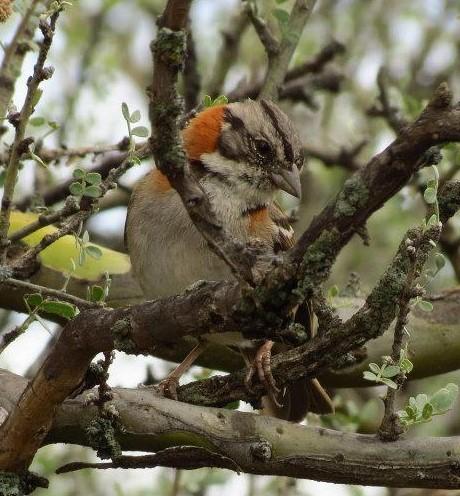
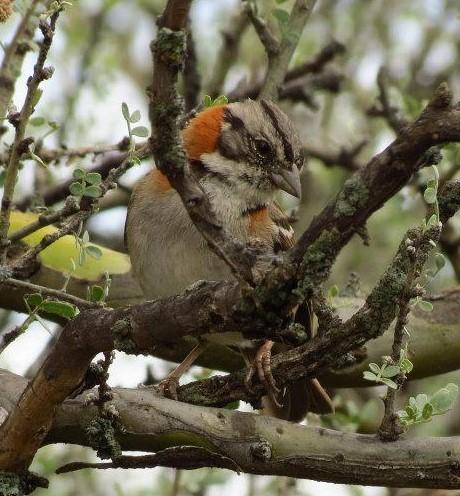
IMAGE

Credit: M.C. Sagario

Before habitat degradation from impacts like grazing begins to cause population declines, the first response by wildlife usually comes in the form of behavioral changes–for example, switching their diets in response to changes in food availability. A new study from The Condor: Ornithological Applications looks at the diets of seed-eating birds in a South American desert and finds that while some can switch between seed types when grazing alters local plant communities, others continue to stick to old favorites, limiting their options.

Luis Marone of the Argentine Arid Zones Research Institute (IADIZA-CONICET) and his colleagues collected soil samples at grazed and ungrazed sites in Argentina's Monte Desert to assess the composition of the seed bank in each area, finding fewer of the large grass seeds that birds prefer in the grazed areas. Flushing the digestive tracts of captured birds revealed that two seed generalists, Common Diuca-Finch and Rufous-collared Sparrow, adjusted their diet accordingly and ate more forb seeds at grazed sites, while grass seed specialists Many-colored Chaco Finch and Ringed Warbling-Finch did not.

Studies like this one could enable us to predict which species will be most vulnerable to population declines due to habitat changes, as the inflexible specialist species are more likely to suffer when they can't find enough of their preferred food. "Given that cattle breeders usually sow grass species as fodder, our results should be used for managing cattle stocks with bird conservation in mind by selecting the fodder species that are most consumed by the most specialized seed-eating birds," says Marone. "This kind of management could help prevent reductions of bird abundance in grazed areas."

"Although birds in this study were shown to compensate by switching to other seed types, the findings suggest that the capacity of grazed lands to support similar numbers of birds as ungrazed lands may be compromised," according to the Vermont Center for Ecostudies' Rosalind Renfrew, an expert on grassland bird conservation who was not involved in the study. "Grazed lands play a major, essential role in grassland bird conservation in South America, and this important research reveals that specialized birds may be limited by habitat quality. The findings underscore the need for a diverse approach to grassland bird conservation in Argentina that considers quality as well as area."

###

"Diet switching of seed-eating birds wintering in grazed habitats of the central Monte Desert, Argentina" will be available August 30, 2017, at http://www.bioone.org/doi/abs/10.1650/CONDOR-17-61.1 (issue URL http://www.bioone.org/toc/cond/119/4).

About the journal: The Condor: Ornithological Applications is a peer-reviewed, international journal of ornithology. It began in 1899 as the journal of the Cooper Ornithological Club, a group of ornithologists in California that became the Cooper Ornithological Society, which merged with the American Ornithologists' Union in 2016 to become the American Ornithological Society.

Media Contact

Rebecca Heisman
[email protected]

http://americanornithologypubs.org/

Share12Tweet8Share2ShareShareShare2

Related Posts

Temperature Fluctuations Have Greater Impact Than Previously Believed

July 10, 2026
New Study Uncovers Biology Behind Glioma Cancer Progression

New Study Uncovers Biology Behind Glioma Cancer Progression

July 10, 2026

Ecological Limits and Functions in Microbiome-Based Integrative Medicine

July 10, 2026

New Therapy Accelerates Bone Marrow Recovery by Targeting Microenvironment

July 10, 2026
Please login to join discussion

POPULAR NEWS

  • Detection of EDCs in Breast Milk and Infant Urine Up to Six Months Highlights Early Exposure Risks

    77 shares
    Share 31 Tweet 19
  • New Drug Candidate Developed at McMaster Shows Potential for Treating Brain Cancer

    58 shares
    Share 23 Tweet 15
  • KTU Researchers Explore Ultrasound’s Role in Enhancing Blood Flow Beyond Diagnostics

    53 shares
    Share 21 Tweet 13
  • 高齢者の骨粗鬆症治療の持続性比較

    51 shares
    Share 20 Tweet 13

About

We bring you the latest biotechnology news from best research centers and universities around the world. Check our website.

Follow us

Recent News

Uremic Toxins Drive Kidney Fat Synthesis and Fibrosis Through AhR Activation

Durable CNT@Ag-MXene Sensor Resists Corrosion Under High Strain

IBEC Joins Major European Grant on Living Matter Physics

Subscribe to Blog via Email

Enter your email address to subscribe to this blog and receive notifications of new posts by email.

Join 84 other subscribers
  • Contact Us

Bioengineer.org © Copyright 2023 All Rights Reserved.

Welcome Back!

Login to your account below

Forgotten Password?

Retrieve your password

Please enter your username or email address to reset your password.

Log In
No Result
View All Result
  • Homepages
    • Home Page 1
    • Home Page 2
  • News
  • National
  • Business
  • Health
  • Lifestyle
  • Science

Bioengineer.org © Copyright 2023 All Rights Reserved.