Antiviral drug development has long followed a familiar and increasingly precarious path: identify a viral protein, design a molecule to disable it, and hope the pathogen does not simply evolve its way around the attack. The problem is that viruses mutate quickly, and every drug aimed directly at a viral target applies evolutionary pressure that can select for resistant strains. A research team at Korea University has now demonstrated an alternative route, using artificial intelligence to design and experimentally validate small molecules that inhibit a human enzyme exploited by a broad range of viruses, including HIV-1 and SARS-CoV-2. The study, published online in the Journal of Cheminformatics on August 5, 2026, offers an early but carefully documented proof of concept for AI-guided, host-directed antiviral drug discovery.
The strategy rests on the principles of host-directed therapy, an emerging approach that treats infections by targeting the host’s own biological pathways rather than the pathogen itself. Because host proteins do not mutate at the pace of viral genomes, drugs aimed at host factors are theoretically far less susceptible to the resistance problems that erode the usefulness of direct-acting antivirals. The Korea University team, led by Professor Kwang Yeon Hwang of the College of Life Sciences and Biotechnology and Associate Professor Hong-Rae Kim of the College of Medicine, focused on deoxyhypusine synthase, or DHPS, a human enzyme central to a peculiar biochemical modification known as hypusination.
Hypusination is the process by which eukaryotic translation initiation factor 5A, or eIF5A, is activated through a unique post-translational modification. Once activated, eIF5A supports the replication of a wide spectrum of viruses, which makes DHPS an attractive point of intervention. As Professor Hwang explained, DHPS activates eIF5A through hypusination, a process important for the replication of a broad range of viruses including HIV-1 and SARS-CoV-2, making the enzyme a potential target for host-directed antiviral drug discovery. Inhibiting DHPS would, in principle, starve multiple viruses of a host function they depend upon, without the pathogen being able to escape through simple mutation of its own proteins.
What distinguishes this study from many recent AI drug-discovery efforts is its systematic benchmarking and its insistence on laboratory validation. Rather than showcasing a single algorithm and reporting only computational scores, the researchers evaluated 13 machine-learning models for predicting molecular binding scores and 10 methods for generating entirely new molecules, all against DHPS as a common target. Among the prediction models, an approach called Out-of-Fold Stacking, or OOF-Stacking, achieved the strongest overall performance. Among the generative methods, a technique named RL-Design achieved the highest predicted hit rate, at 92.02 percent, and 98.0 percent of its top-ranked molecules passed a standard drug-likeness threshold, a filter that assesses whether compounds possess physicochemical properties compatible with oral drug development.
The critical test came when the team moved from silicon to the bench. Six fragments, defined as small compounds in the 140 to 190 dalton range, were selected for experimental assessment: three predicted to be active and three predicted to be inactive. The result was a complete agreement between computation and experiment. All three predicted-active fragments inhibited DHPS, and none of the predicted-inactive fragments showed inhibition. Two of the active fragments yielded measurable IC50 values of 31.2 and 49.1 micromolar, concentrations within the range at which fragment hits typically begin to show activity. In fragment-based drug discovery, where starting molecules are deliberately tiny and weakly potent, such values represent a credible starting point rather than a disappointment.
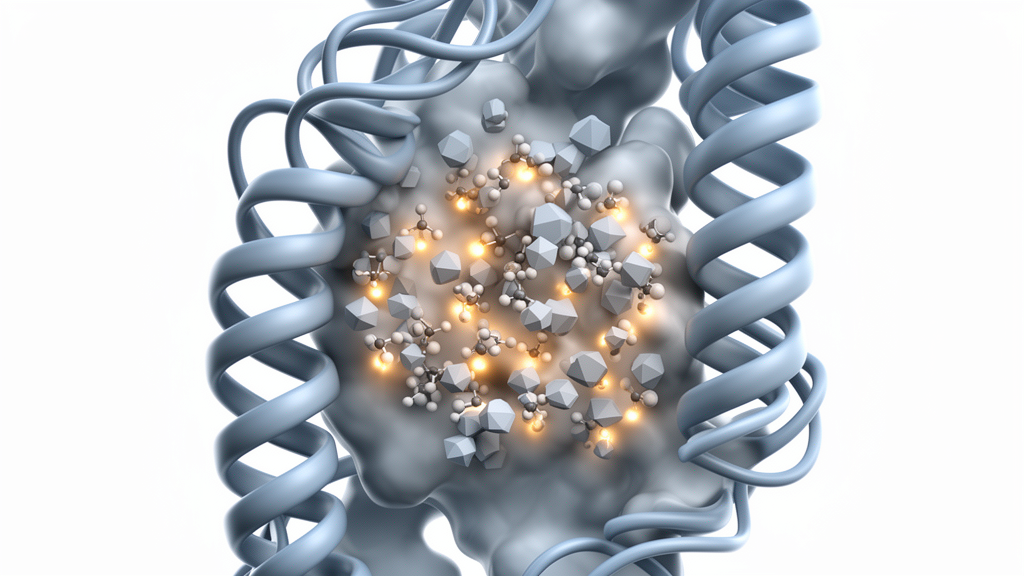
Structural biology provided further confirmation. The researchers obtained an X-ray co-crystal structure showing one of the AI-generated compounds bound at the entrance of the DHPS substrate and NAD-binding pocket, giving direct physical evidence that the computational design had produced a molecule capable of occupying the enzyme’s functional site. This combination of predicted binding, biochemical inhibition, and crystallographic verification forms a chain of evidence that is rarely assembled so completely in early-stage AI drug-discovery studies, which more often stop at docking scores and molecular dynamics simulations without ever synthesizing the proposed compounds.
Professor Kim emphasized that the new fragments differ meaningfully from the best-known DHPS inhibitor, which closely mimics a natural cellular molecule and therefore carries a risk of off-target activity. The AI-generated hits, by contrast, are fragments built on scaffolds unrelated to the known inhibitor. In fragment-based discovery, Kim noted, this is exactly where one wants to start: the molecules are small and bind efficiently for their size, which leaves considerable room to grow them into more potent compounds. He was careful, however, to frame the results appropriately, stressing that these molecules are early-stage hits rather than drug candidates and that further studies will be needed to establish their inhibition mechanisms, selectivity, cellular activity, toxicity, and performance in animal models.
The implications extend well beyond DHPS itself. The pipeline developed by the Korea University team is freely available, meaning that other laboratories could apply the same benchmarked workflow of model comparison, molecular generation, and experimental validation to entirely different disease targets. Equally notable are the pipeline’s modest computing requirements. Many AI-driven discovery efforts depend on enormous computational infrastructure that places them out of reach for smaller academic groups, particularly in resource-limited settings. By demonstrating that meaningful, experimentally validated results can be achieved without such resources, the study suggests a path toward making experimentally grounded, AI-assisted drug discovery far more accessible across the global research community.
The work also arrives at a moment when the lessons of recent pandemics have sharpened interest in antiviral strategies that are harder for pathogens to evade. Host-directed approaches targeting factors such as DHPS could, in principle, yield broad-spectrum antivirals effective against multiple viruses at once, a valuable property when facing emerging pathogens whose identities cannot be predicted in advance. Because the host target remains constant, a single inhibitor might serve as a starting point for therapies against unrelated viral families, something direct-acting antivirals rarely achieve.
For now, the Korea University study stands as a methodological milestone rather than a therapeutic one. It shows that computational predictions can be systematically benchmarked, that generative models can produce chemically plausible and drug-like molecules, and that those molecules can be synthesized and validated in the laboratory with results that match the predictions exactly. The road from a micromolar fragment hit to a selective, non-toxic, clinically useful drug is long and uncertain, and the authors themselves are explicit about the work that remains. Yet the study demonstrates a reproducible route from AI-based molecular design to experimental validation, and in doing so it offers a template that other laboratories, targeting other host factors and other diseases, can now follow.
Subject of Research: AI-guided design and experimental validation of inhibitors targeting the human enzyme DHPS for host-directed antiviral drug discovery
Article Title: Korea University study uses artificial intelligence to design potential antiviral compounds
Article References: Korea University study uses artificial intelligence to design potential antiviral compounds. Original publication (Bibliographic details unavailable.)
Image Credits: AI Generated
DOI: Not provided
Keywords: artificial intelligence, drug discovery, host-directed therapy, DHPS, hypusination, antiviral compounds, fragment-based design, machine learning, Korea University, eIF5A, SARS-CoV-2, HIV-1
News Source: Louis Brooks. (October 19, 2026). AI-Designed Molecules Show Promise as Host-Directed Antiviral Hits Against DHPS. Scienmag.