Every year, thousands of older adults undergoing cancer treatment lose their footing…
The correspondence by Afzal, Khan, and Alam, published in Supportive Care in Cancer, engages with a prospective observational study by Levard and colleagues that examined falls among older patients receiving cancer treatment in French outpatient departments. Correspondence of this kind occupies an important niche in the medical literature: it allows clinicians and researchers to interrogate the methods, interpretations, and practical implications of published work without waiting for the slow cycle of new primary studies. In this case, the letter writers, based at Bannu Medical College in Pakistan, chose to respond to a study conducted in a very different health system, which itself highlights how fall risk among older adults with cancer is a concern that crosses borders and resource settings.
Falls among older adults are a well-recognized geriatric syndrome, but their significance is amplified in the oncology population. Cancer and its treatments impose a distinctive set of stressors on aging bodies: chemotherapy can cause peripheral neuropathy, anemia, and fatigue; targeted agents and hormonal therapies may produce dizziness, weakness, or cognitive slowing; and the disease itself can erode muscle mass, appetite, and general resilience. Radiation, surgery, and prolonged hospitalization add further layers of deconditioning. When these treatment-related vulnerabilities converge with the ordinary hazards of aging—diminished vision, sarcopenia, impaired balance, polypharmacy, and home environments not designed for safety—the probability of a fall rises substantially. A fall in a patient with cancer is rarely a trivial event. It can precipitate fractures, head injuries, hospital admissions, treatment interruptions, dose reductions, and in some cases abandonment of potentially curative therapy. For older patients, a hip fracture or a subdural hematoma can mark the beginning of a steep functional decline from which full recovery is uncommon.
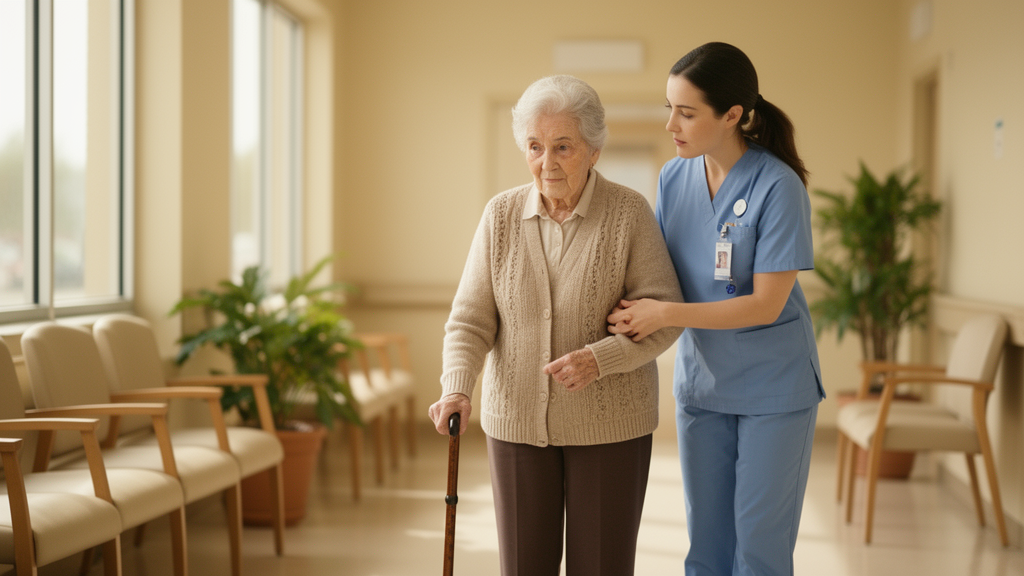
The outpatient setting, which is the focus of the French study, deserves particular attention. Much of modern cancer care has shifted from inpatient wards to ambulatory day units, where patients receive infusions, consultations, and supportive treatments and then return home the same day. This shift has many advantages, including reduced infection risk, lower cost, and greater patient comfort, but it also means that clinicians observe patients for only a few hours at a time and may miss the circumstances under which falls actually occur—at home, on stairs, in bathrooms, or while getting up at night. Screening for fall risk in the outpatient department therefore serves as a structured opportunity to surface a problem that patients themselves may not volunteer, either because they underestimate its importance, feel embarrassed, or assume that falling is simply an inevitable part of growing older while on treatment.
The letter writers frame their response around several methodological and conceptual considerations that are worth unpacking for a general readership. One recurring theme in correspondence about observational studies is the tension between what a study can demonstrate and what readers hope to conclude. Prospective observational designs, in which patients are enrolled and followed forward in time, are considerably stronger than retrospective chart reviews because data collection can be planned, definitions can be standardized, and the direction of time is clear. Nevertheless, such studies remain observational: they can identify associations between patient characteristics and fall occurrence, but they cannot by themselves prove that modifying one factor would prevent falls. Confounding is an ever-present concern. A patient who falls may differ in many ways from one who does not—disease stage, treatment intensity, comorbidity burden, medication count, living situation, baseline mobility—and disentangling which of these variables is causally consequential requires careful statistical strategy and, ultimately, interventional testing.
The correspondents also draw attention to reporting and analytic standards, referencing the STROBE statement and published guidance on variable selection. STROBE, the Strengthening the Reporting of Observational Studies in Epidemiology, is a checklist developed to improve the transparency and completeness of observational research. It asks authors to specify how participants were selected, how exposures and outcomes were defined, what confounding variables were measured, and how missing data were handled. When correspondence letters invoke STROBE, they are typically nudging the original authors to clarify one or more of these elements, because the credibility of any reported association depends on them. Similarly, the cited review on variable selection by Heinze and colleagues addresses a subtle but consequential issue in regression modeling: how investigators choose which predictors to include. Naive automated selection procedures can produce unstable models, overfit the data, and yield estimates that fail to replicate in new populations. Thoughtful, prespecified variable selection—guided by clinical knowledge, penalized regression methods, or adequate sample-size-to-parameter ratios—is now considered best practice, and its absence is a legitimate target for correspondence.
Another anchor of the letter is the ASCO guideline update on practical assessment and management of vulnerabilities in older patients receiving systemic cancer therapy. This reference situates the discussion within an established clinical framework. The American Society of Clinical Oncology has promoted the use of geriatric assessment tools—covering function, comorbidity, cognition, psychological status, social support, nutrition, and medication review—to identify older patients at risk of treatment-related harm and to guide interventions. Falls screening fits naturally within this architecture. Simple instruments, such as asking whether a patient has fallen in the past year, checking gait and balance with a timed up-and-go test, and reviewing medications for fall-risk-increasing drugs, can be administered in minutes and do not require specialized equipment. The guideline context matters because it suggests that the question raised by the French study is not merely academic: professional societies have already concluded that vulnerability assessment, of which fall risk is a core component, should be part of standard care for older adults beginning systemic therapy.
The correspondents additionally cite methodological literature on feasibility study design, which suggests they view the French work partly through the lens of implementation. Feasibility studies, as articulated by Bowen and colleagues, are preliminary investigations designed to answer questions about whether a larger trial or a clinical program is practical: Can patients be recruited and retained? Is the screening instrument acceptable to them? Do clinicians comply with the protocol? Are the outcome measures sensitive to change? Reading the French study through this framework reframes its contribution. Even if the observational data cannot definitively establish which interventions prevent falls, demonstrating that systematic screening can be embedded in busy outpatient oncology workflows is itself valuable evidence, because the gap between guideline recommendations and bedside practice remains wide in geriatric oncology.
It is also worth considering the epidemiological backdrop against which this correspondence appears. Population aging is reshaping oncology worldwide. A growing majority of cancer diagnoses occur in people over sixty-five, and many patients are living with cancer as a chronic condition for years or decades. As treatment durations lengthen and survival improves, the cumulative exposure to fall hazards—neuropathic agents, bone-weakening therapies, fatigue, and deconditioning—accumulates. Health systems in France, with its structured ambulatory oncology network, and in countries with far fewer resources, such as Pakistan where the correspondents practice, face the same underlying biology but very different logistical realities. International correspondence of this sort quietly testifies to the global nature of the problem: a screening gap identified in a French day unit is plausibly relevant to a chemotherapy suite in Khyber Pakhtunkhwa, even if staffing, space, and patient expectations differ.
The practical stakes of falls screening deserve emphasis. Falls are among the most preventable causes of injury in older adults, and evidence from geriatric medicine shows that multifactorial interventions—combining exercise programs focused on strength and balance, medication review and deprescribing of sedatives and antihypertensives where appropriate, vision correction, home hazard modification, and vitamin D repletion in deficient patients—can reduce fall rates. Translating these interventions into oncology settings requires knowing which patients to target, which is precisely what screening provides. A positive screen can trigger referral to physiotherapy, a medication reconciliation with a pharmacist, an orthostatic blood pressure check, or a conversation about home safety with family members. None of these actions is expensive relative to the cost of a single fall-related hospitalization, which makes the economic argument for screening nearly self-evident once the risk is identified.
Correspondence also plays a role in shaping the research agenda that follows a study. By questioning the sample size, the screening instruments used, the follow-up duration, or the handling of patients who dropped out, letter writers signal to the field where the evidentiary gaps lie. The natural next step after a prospective observational study of falls is a controlled trial of a screening-and-intervention pathway: randomizing clinics or patients to systematic fall risk assessment with tailored prevention versus usual care, and measuring falls, injuries, treatment interruptions, and quality of life. Such trials are challenging—falls are common, heterogeneous, and partly random events, so large samples and long follow-up are needed—but they are the only way to convert association into actionable prevention. The correspondents’ engagement with feasibility literature suggests they see the French study as a stepping stone toward exactly this kind of interventional research.
Finally, the administrative details of the correspondence itself illustrate the normal rhythms of scientific dialogue. Submitted at the end of August 2026, accepted within roughly six weeks, and published in mid-October, the letter appeared in the same volume as the original article it discusses, allowing readers to encounter both sides of the conversation together. The authors declare no funding and no conflicts of interest, and they state that no datasets were generated or analyzed in the correspondence, which is consistent with the genre: a commentary grounded in the published record rather than new data. The transparency and guarantor statements reflect journal policies designed to ensure accountability for published claims. For readers, the value of such a letter lies not in dramatic new findings but in the questions it sharpens—questions about how fall risk should be measured, which patients deserve the most intensive assessment, and how a busy outpatient clinic can fold one more preventive task into an already crowded encounter. Those questions, once posed clearly, tend to find their answers in the studies that follow.
Subject of Research: Falls screening and prevention in older patients treated for cancer in French outpatient departments.
Article Title: A correspondence: falls in older patients treated for cancer in French outpatient departments: screening and prevention a prospective observational study
Article References: Afzal, A., Khan, W., & Alam, F. (2026). A correspondence: falls in older patients treated for cancer in French outpatient departments: screening and prevention a prospective observational study. Supportive Care in Cancer, 34(11), Article 1104. https://doi.org/10.1007/s00520-026-11369-4
Image Credits: AI Generated
DOI: 10.1007/s00520-026-11369-4
Keywords: falls, older adults, cancer, outpatient care, screening, prevention, supportive care, oncology, geriatric assessment, observational study, France, patient safety
News Source: Nathaniel Bowman. (October 19, 2026). Falls in Older Cancer Patients: French Outpatient Study Puts Screening and Prevention in the Spotlight. Scienmag.