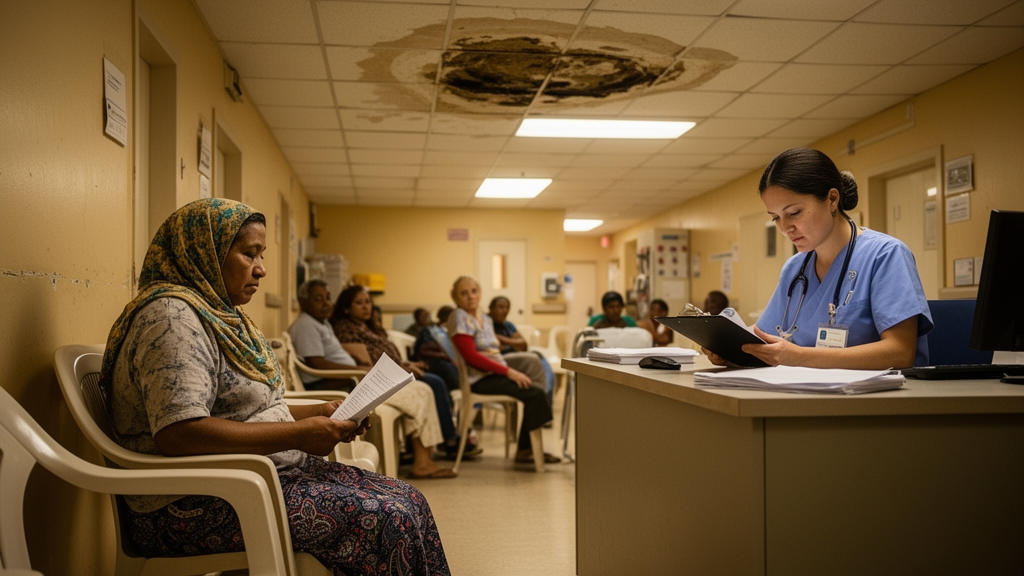
When a woman is diagnosed with breast cancer, the medical battle is only part of the story. Whether she can afford treatment, reach the clinic, keep her home, or put food on the table can shape her survival as powerfully as any tumor biology. A new retrospective study from Parkland Health, the county safety-net system serving Dallas, Texas, offers one of the most detailed looks yet at how a large hospital system actually tracks these social vulnerabilities over time, and the results expose striking gaps in how that monitoring is carried out.
The research, published in Breast Cancer Research and Treatment, examined electronic medical record data for 566 women diagnosed with newly invasive breast cancer between January 2021 and January 2024. The team, led by researchers at the University of Texas Southwestern and Parkland Health, set out to characterize patterns of social determinants of health (SDOH) screening and to measure how health-related social needs, or HRSNs, changed over the course of care. Parkland is the main provider of cancer treatment for uninsured patients in Dallas County, which has one of the highest uninsured rates in the United States, making it an ideal setting to study how social hardship intersects with cancer care.
The screening instrument at the center of the study is embedded in the Epic electronic medical record and consists of 28 questions that feed into 11 HRSN risk domains: alcohol use, food insecurity, housing instability, physical activity, tobacco use, financial resource strain, stress, social connections, transportation, depression, and interpersonal violence. Each domain draws on a clinically validated questionnaire, from the AUDIT-C alcohol screening test to the Children’s HealthWatch Hunger Vital Signs for food insecurity and the HARK tool for intimate partner violence. Medical assistants administer the surveys during routine patient intake, and the system grades responses to assign a risk level for each domain.
The cohort itself reflects the population Parkland serves. The mean age at diagnosis was 55.0 years, and 62 percent of patients were uninsured at the time of diagnosis. Sixty-one percent identified as Hispanic, and nearly half were primarily Spanish speakers. Most patients, 69.3 percent, presented with Stage I disease, while 9.5 percent had already progressed to Stage IV by the time of diagnosis. On average, patients were initially at risk in 1.36 of the 11 HRSN domains, and the most commonly flagged risks were alcohol use, identified in 55.5 percent of patients, and food insecurity, flagged in 49.5 percent.
One finding stands out as a near-total screening failure: not a single patient in the cohort was screened for interpersonal violence, despite the tool including a validated instrument for it and an electronic prompt asking staff whether they can screen for abuse or neglect. The authors point to prior evidence that interpersonal violence screening rates are generally low, driven by provider discomfort, lack of knowledge, or missing organizational policies. They also note that patients may not feel comfortable disclosing abuse to a staff member they have just met, preferring instead to confide in a trusted provider, and that the prevalence of interpersonal violence is known to be higher among breast cancer patients than in the general population, with the emotional and physical strain of treatment potentially increasing vulnerability.
The temporal data proved equally revealing. The median time from a patient’s initial survey to the first change in risk level for any domain was 8.7 months, with changes typically appearing within the first few months after baseline evaluation. Yet most patients were not reassessed until roughly a year and a half after their first screening, a cadence slower than the annual screening goals adopted by other large health systems. Based on this pattern, the authors argue that screening at six-month intervals would better capture shifts in social needs and allow the system to evaluate whether resource interventions are actually working. Prior research supports this rhythm, suggesting social needs remain reasonably stable over three-to-six-month windows, making semiannual reassessment a practical compromise.
Survey engagement itself changed over time in an encouraging direction. Patients answered an average of 17.3 of the 28 questions on their initial survey, but the number of questions answered increased by an estimated 8.04 questions per year of follow-up, a statistically significant rise that the authors interpret as growing patient comfort and engagement as rapport with the clinic develops. This dynamic matters, because incomplete initial surveys may leave needs undetected, and the data suggest that repeated, relationship-based screening gradually fills in the picture.
Regression analysis uncovered a troubling inequity in who gets rescreened. Older age at diagnosis negatively predicted the total number of SDOH screenings, and patients with Stage IV disease underwent significantly fewer re-screenings than those with earlier-stage disease, a difference that held at p less than 0.001 in group comparisons. The authors attribute this to competing demands: advanced cancer requires intensive, interdisciplinary treatment that crowds out time for social needs assessment, and the screening tool does not specifically address geriatric concerns such as functional status or caregiver needs. Notably, insurance status, race, language, and survival status did not predict screening frequency, suggesting the gap is driven by clinical workflow rather than patient characteristics.
Alcohol use presented its own paradox. It was the most frequently identified risk domain, yet no patient’s alcohol risk level ever changed across follow-up screenings. The authors caution this may reflect documentation practices rather than true stability, since alcohol use can be recorded in social history tabs or clinical notes outside the structured screening tool, which only reads certain fields. The system is now working to centralize this documentation, and the authors cite evidence that electronic clinical decision support paired with standardized rescreening workflows can boost completion rates. Unhealthy alcohol consumption is not a trivial concern in this population, as it has been associated with breast cancer recurrence.
The study’s broader message is that screening for social needs is not a checkbox but a longitudinal process, one that safety-net systems are still learning to operationalize. The authors recommend that every patient be screened at least once for interpersonal violence, ideally within two years of entering the system, and suggest borrowing protocol-driven approaches from obstetric care, such as the CUES framework of confidentiality, universal education, empowerment, and support, which educates all patients about resources rather than relying on a single trusted provider to elicit disclosure. Delegating screening to oncology social workers and trained staff could ease provider time constraints, and standardized six-month rescreening could shift the burden from individual clinicians to the system itself. For the 62 percent of patients who arrived uninsured, the difference between a detected need and a missed one may determine whether cancer treatment is even possible, making the mechanics of these questionnaires a matter of survival as much as data quality.
Subject of Research: Social determinants of health screening patterns among newly diagnosed breast cancer patients in a safety-net hospital system
Article Title: Patterns of social determinants of health screening and health-related social needs among patients with newly diagnosed breast cancer in a safety-net system
Article References: Su, M., Klatzkow, H., Bass, R., Bhat, S., Oaks, T., Person, M., Kanjwal, S., Syed, S., Hong, A. S., Freeland, D. G., & Sadeghi, N. (2026). Patterns of social determinants of health screening and health-related social needs among patients with newly diagnosed breast cancer in a safety-net system. Breast Cancer Research and Treatment, 220(1), Article 1. https://doi.org/10.1007/s10549-026-08095-0
Image Credits: AI Generated
DOI: 10.1007/s10549-026-08095-0
Keywords: breast cancer, social determinants of health, health-related social needs, safety-net hospital, screening, food insecurity, interpersonal violence, health disparities, electronic health records, oncology, Parkland Health, public health
News Source: Nathaniel Bowman. (October 18, 2026). Social Needs Screening Gaps Revealed in Breast Cancer Patients at Safety-Net Hospital. Scienmag.