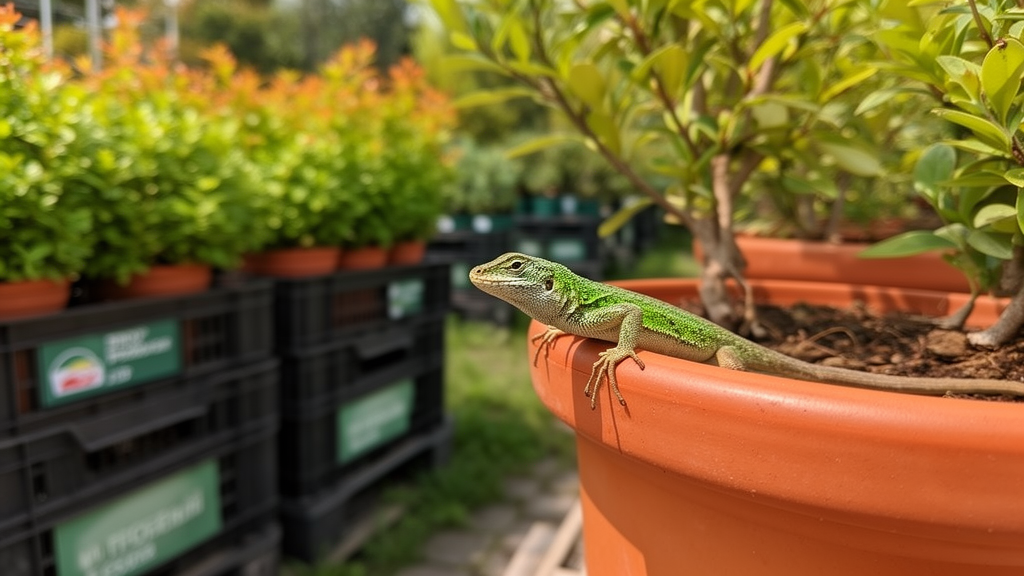
Researchers have identified the first genetically confirmed population of the common wall lizard, Podarcis muralis, in Slovakia that originated from the western Balkans. This discovery, located in the village of Imeľ in the southwestern Danubian Lowland, marks a significant shift in the understanding of reptile distribution in Central Europe. The population was likely introduced through the international horticultural trade, specifically via the import of Mediterranean plants and soil from northern Albania. This case highlights the complex interplay between global commerce, climate change, and the spread of non-native species into new geographic regions. The finding underscores the need for rigorous monitoring of biological introductions that can alter local genetic diversity and ecosystem dynamics.
The common wall lizard is a widespread species across southern, central, and western Europe, as well as northwestern Anatolia. Its evolutionary history includes several phylogenetic lineages that diverged approximately six million years ago. While natural dispersal has shaped its range, human-mediated introductions have significantly altered its distribution during the Anthropocene. These artificial introductions have often moved the species from southern parts of its natural range into northern areas, creating a complex pattern of native and introduced populations. Determining the origin of specific populations is crucial for conservation efforts, as introduced lineages may pose risks to native genetic integrity through hybridization or competition.
The discovery in Imeľ began with observations at a horticultural site specializing in the sale of Mediterranean plants, many of which were sourced from northern Albania. Since the initial sighting in 2020, individuals of all age stages, including adults, subadults, and juveniles, have been documented, indicating a reproducing population. The site, covering approximately 2,200 square meters, provides a rocky and garden-like environment suitable for the lizards. On June 25, 2024, tissue samples were collected from two individuals for DNA analysis. These samples were compared with reference sequences from northern Albania, specifically from Shkodër and Theth, to determine the genetic affinity of the Slovak population.
Mitochondrial DNA analysis revealed distinct haplotypes in the Imeľ population that closely cluster with those from northern Albania. This genetic differentiation is stark when compared to native Slovak populations, which belong to the Central Balkan clade. The uncorrected p-distance between the native Central Balkan clade and the introduced Imeľ population is 4.6%, a significant genetic gap. In contrast, native populations within the Central Balkan clade typically differ by only one to four mutation steps. The Imeľ population is separated by more than 43 mutation steps from other native Slovak populations, confirming its allochthonous origin. Phylogenetic trees place the Imeľ sequences within clades 11 and 12, as defined in previous studies, further supporting the hypothesis of an exotic origin from the Balkans.
Species distribution modeling provided additional context for this introduction. The model indicated that the Danubian Lowland is generally not a suitable habitat for native Slovak populations of Podarcis muralis, which prefer hilly areas with moderate humidity. Key bioclimatic variables influencing the native distribution include elevation, precipitation seasonality, and precipitation of the wettest quarter. However, a spatial similarity model identified environmental conditions in the Danubian Lowland that are similar to those in the lowlands of northern Albania and southern Montenegro. This suggests that while the area is unsuitable for native lineages, it may support the establishment of introduced populations from the Mediterranean region. The warming climate in the Danubian Lowland, characterized by rising average temperatures and milder winters, may be facilitating this shift.
Climate change plays a critical role in the potential success of such introductions. The southern part of Slovakia, including the Danubian Lowland, ranks among the warmest regions in the country. Recent decades have seen a significant increase in average annual temperatures, with the Hurbanovo meteorological station recording an average of 11.5 °C after 2000, up from 11.2 °C in the 1991-2023 period. Extreme heat events, with temperatures exceeding 38 °C, have become more frequent, while winters have become milder, with a 36% reduction in days below -10 °C. These climatic shifts create conditions that may favor the establishment of species from southern Europe, which are adapted to warmer environments. The ability of Podarcis muralis to thrive in diverse ecological conditions further enhances its potential for successful introduction in these warming areas.
The presence of introduced populations poses potential risks to native genetic diversity. Although the Imeľ population is currently small and located several dozen kilometers from native populations in Bratislava and Kováčov, there is a potential for genetic admixture if the populations come into contact. The spatial similarity model suggests that the area suitable for introduced populations could extend to overlap with native populations in the Kováčov region. This overlap could lead to hybridization, which may dilute the genetic integrity of native lineages. Given that Podarcis muralis is a protected species in Slovakia, even introduced populations are granted protection under existing legislation, complicating conservation management strategies. Balancing the protection of native genetic diversity with the legal status of the species is a significant challenge for conservation authorities.
This case is not isolated; similar introductions of Podarcis muralis have been reported in Austria, Germany, and Poland, often linked to human activities such as the transportation of building materials or horticultural products. However, this is the first confirmed record from Slovakia involving a Balkan source, contrasting with introductions in western Europe that often originate from the Apennine Peninsula. The global impact of such introductions on ecosystems is well-documented, and this finding adds to the growing body of evidence that international trade is a major vector for the spread of non-native species. Further genotyping of populations in neighboring countries, including Austria, the Czech Republic, and Hungary, may reveal additional cases of allochthonous origin, providing a broader picture of the species’ distribution and the extent of human-mediated dispersal.
Future research should focus on monitoring the spread of the Imeľ population and assessing its potential impact on native species. Combining distribution data with genetic analysis will provide a deeper understanding of the dynamics of allochthonous Podarcis muralis in the region. Citizen science initiatives can play a vital role in tracking the presence of lizards in other areas of the Danubian Lowland and the wider Pannonian Basin. Collaboration between local research institutions and conservation authorities is essential to implement effective monitoring and management strategies. Public education and engagement through citizen science can help raise awareness about the risks of biological introductions and the importance of protecting native genetic diversity. Regular monitoring will be crucial to evaluate the implications of these findings for conservation and to safeguard the ecological balance in the region.
Subject of Research: Genetic confirmation of an introduced Podarcis muralis population in Slovakia originating from the Balkans via horticultural trade.
Article Title: The Balkans in Central Europe: a case of introduced lineage of Podarcis muralis in Slovakia highlighting the impact of international trading and climate change
Article References: Jablonski, D., Raffaj, M., & Senko, D. (2025). The Balkans in Central Europe: a case of introduced lineage of Podarcis muralis in Slovakia highlighting the impact of international trading and climate change. Herpetozoa, 38, 97-102. https://doi.org/10.3897/herpetozoa.38.e139307
Image Credits: AI Generated
DOI: 10.3897/herpetozoa.38.e139307
Keywords: Podarcis muralis, biological introduction, genetic analysis, climate change, horticultural trade, Slovakia, Balkans, conservation genetics, species distribution, Danubian Lowland, Central, Europe
News Source: Patricia Pace. (October 18, 2026). Balkan Lizards Found in Slovakia via Plant Trade. Scienmag.