Credit: Courtesy of MSU
EAST LANSING, Mich. – A doctor in Nigeria and a professor at Michigan State University have teamed up to reduce infant mortality in the African nation.
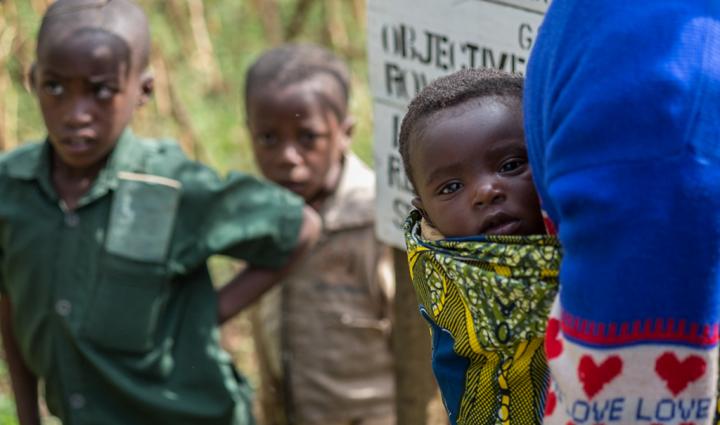
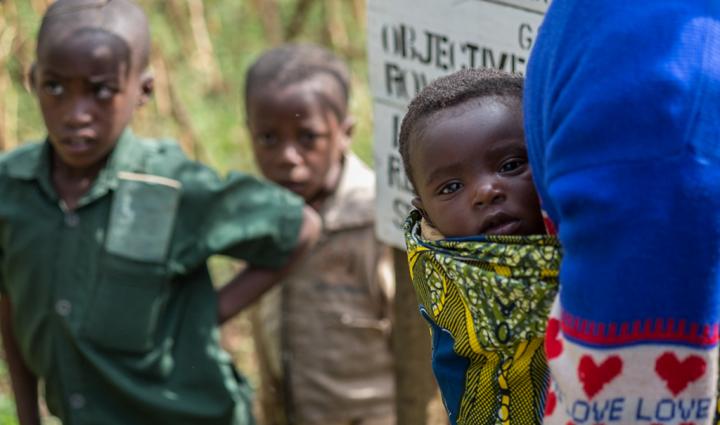
In the U.S., September is National Newborn Screening Month. In developing nations, however, lack of infant screening leads to unusually high rates of infant mortality. In the current issue of Clinical Microbiology and Infection, Dr. Nubwa Medugu and Shannon Manning, MSU Foundation Professor of microbiology and molecular genetics, documented high rates of Group B Streptococcus — the first large-scale study to document the presence and effects of GBS, an often deadly pathogen.
Their effort established the baseline of colonization and transmission frequencies of GBS in Nigeria. Equally important, Medugu and Manning identified new risk factors that are allowing doctors to effectively treat more women and infants at risk.
"Nigeria has one of the highest rates of mortality of pregnant mothers, and GBS and other pathogens contribute to these deaths," Manning said. "GBS can cause stillbirth, premature birth and, after the baby is born, it can cause meningitis and sepsis."
When Medugu began her residency program, it was common knowledge that GBS was the most-common cause of sepsis in infants worldwide. She, however, had never seen a single case during her early medical training in her home country.
"I hypothesized that lack of active surveillance and poor laboratory methods might be the reason as to why we weren't detecting cases," Medugu said. "I decided that my dissertation was going to answer those questions."
Her hypothesis was right.
Medugu's research led to Manning, a leading authority on decoding deadly pathogens. There were no labs in Nigeria that could run the necessary experiments needed to publish a paper. So, Medugu agreed to do the legwork while Manning supervised the lab work.
The seemingly indefatigable Medugu collected all of the necessary samples — from 500 women and infants — from four different hospitals while completing her residency and raising her three children. The samples were sent to MSU to be examined. Eventually, Medugu also traveled to East Lansing, Michigan, to learn new molecular methods, such as Manning's advanced genotyping technique.
The partnership proved successful. Medugu finished her dissertation, and the scientists navigated the necessary steps to publish a peer-reviewed paper, which showed that 34 percent of mothers and 19 percent of their newborns were colonized with GBS with 1 of the 500 babies developing disease. (Compare this to the U.S., where a pregnant woman who receives standard antibiotics has only a 1 in 4,000 chance of delivering a baby infected with GBS.)
"Our results showed high rates of colonization and transmission in a population that doesn't use antibiotics to prevent neonatal infections — a strategy that should be considered in the future," Manning said.
The World Health Organization estimates that 3 million of all babies that die annually can be saved with low-tech, low-cost care. Medugu agrees — and she has already sparked many changes at her hospital in Abuja, Nigeria. Today, Medugu and her colleagues routinely check for GBS infections.
"This study has been one of the principal drivers of infection prevention and control programs that have drastically reduced infant mortality," Medugu said.
Klebsiella pneumoniae also has claimed its share of Nigerian babies. Working with an NGO, Medugu facilitated training that emphasized hand hygiene, which has effectively reduced the disease's impact, Medugu added.
She believes that even more improvements will spread countrywide — and beyond — now that the paper has published.
###
Michigan State University has been working to advance the common good in uncommon ways for more than 150 years. One of the top research universities in the world, MSU focuses its vast resources on creating solutions to some of the world's most pressing challenges, while providing life-changing opportunities to a diverse and inclusive academic community through more than 200 programs of study in 17 degree-granting colleges.
For MSU news on the Web, go to MSUToday. Follow MSU News on Twitter at twitter.com/MSUnews.
Media Contact
Layne Cameron
[email protected]
517-353-8819
@MSUnews
http://msutoday.msu.edu/journalists/
Original Source
http://go.msu.edu/CTz