A Master Switch in Salmonella May Link Sticky Biofilms to Bacterial “Social” Signals
A gene regulator best known for helping Salmonella build its tough, adhesive biofilms may also influence how the pathogen interprets chemical messages from neighboring bacteria. In a study published in Molecular Genetics and Genomics, researchers report that CsgD sits at a previously underappreciated junction between biofilm formation, small regulatory RNAs and quorum-sensing pathways in Salmonella enterica serovar Typhimurium. The findings suggest that changing the activity of a single regulatory protein can reshape both the physical structure of a bacterial community and its response to autoinducer-2, a signaling molecule used by many bacterial species. The work, by Melih Aşan, Fatma Neslihan Özdemir and Nefise Akçelik, could help explain why Salmonella communities behave differently depending on their surroundings, and may eventually point toward strategies for disrupting persistent contamination in food-processing environments.
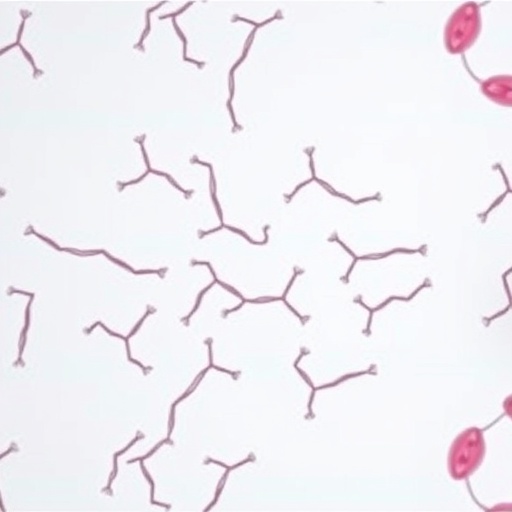
Biofilms are not simply piles of bacteria stuck to a surface. They are organized communities embedded in an extracellular matrix, a protective material that can limit the penetration of disinfectants, reduce exposure to environmental stresses and help cells remain attached to equipment, food-contact surfaces or host tissues. In Salmonella Typhimurium, two major matrix components are curli fimbriae and cellulose. Curli are thin protein fibers with amyloid-like properties that help cells adhere to one another and to surfaces, while cellulose is a polysaccharide that contributes mechanical strength and affects the architecture of the growing community. CsgD is a central transcriptional regulator of these traits. When CsgD activity rises under conditions favorable to a biofilm lifestyle, it activates or coordinates genetic programs that promote matrix production and suppress aspects of a free-swimming existence.
The new study examines whether that structural role is connected to quorum sensing, a form of chemical communication in which bacteria adjust gene expression in response to signal concentrations. Salmonella participates in LuxS-dependent signaling involving autoinducer-2, or AI-2. The compound is produced through the activated methyl cycle, a metabolic pathway that links cellular chemistry to communication, and can act as a broadly shared signal in mixed microbial communities. In Salmonella, AI-2 is imported and processed through the Lsr system. LsrA forms part of the transporter that brings AI-2-related molecules into the cell, LsrK phosphorylates the imported signal, and LsrR functions as a regulator that responds to the signaling state. This arrangement allows the bacterium to connect the extracellular chemical environment with changes in transcription, behavior and community organization.
To probe the relationship between CsgD and this signaling network, the researchers altered csgD expression in Salmonella Typhimurium and measured the effects on several small regulatory RNAs. These molecules, often called sRNAs, do not usually encode proteins. Instead, they can bind messenger RNAs, recruit RNA chaperones or influence translation and RNA stability, allowing bacteria to reprogram their physiology quickly. The study focused on MicA, CsrB, CsrC and RyeE, four sRNAs implicated in regulatory pathways associated with stress responses, metabolism, biofilm development or quorum-sensing-linked behavior. Using quantitative real-time polymerase chain reaction, or qRT-PCR, the team quantified changes in RNA abundance after CsgD levels were perturbed. The analyses showed that expression of all four sRNAs increased following changes to CsgD, indicating that the biofilm regulator is connected to a broader post-transcriptional control system rather than acting only on matrix-associated genes.
That result is important because bacterial regulation is often distributed across several layers. A transcription factor such as CsgD can alter the production of messenger RNAs, but sRNAs can then fine-tune whether those messages are translated into proteins. CsrB and CsrC, for example, are associated with the Csr regulatory system, in which RNA molecules can sequester the RNA-binding protein CsrA and thereby influence metabolism, motility and biofilm formation. MicA can affect the expression of target genes through base-pairing interactions, while RyeE, also known as CyaR, has been linked to nutritional status and collective bacterial behavior. The researchers did not establish that every observed RNA change is a direct physical interaction with CsgD. Instead, the results identify coordinated shifts consistent with CsgD influencing, directly or indirectly, a regulatory network that reaches far beyond the genes encoding curli and cellulose.
The strongest signal emerged when the researchers measured AI-2 activity. Salmonella strains engineered to overexpress csgD showed a 277 percent increase in relative AI-2 activity compared with the wild-type strain. In practical terms, the measured activity was approximately 3.77 times the wild-type reference under the study conditions. This does not necessarily mean that CsgD directly produces AI-2 or that the signal is increased by exactly the same amount in every environment. Rather, it indicates that elevated CsgD changes the cellular state in a way that substantially alters the detectable AI-2 signaling output. The effect could involve AI-2 production, processing, transport, signal turnover or the balance among these processes. By linking a biofilm-state regulator to a chemical communication readout, the result suggests that the decision to form a surface-associated community may be coupled to how Salmonella senses neighboring cells and nutrient conditions.
Gene-expression measurements of the Lsr system provided a more detailed view of that connection. In the strain with elevated AI-2 activity, lsrK expression increased markedly. Because LsrK phosphorylates AI-2-related molecules after uptake, greater production of this enzyme could change the rate at which the signal is processed inside the cell and could influence feedback through the Lsr pathway. The researchers also found a contrasting pattern after csgD deletion: lsrA, lsrK and lsrR were all upregulated, while measured AI-2 activity remained largely unchanged. This apparent mismatch is biologically informative. More transcript does not automatically produce more functional signal, because transport, enzymatic processing and regulatory feedback must all remain coordinated. The authors propose that the inhibitory influence of LsrR on quorum-sensing signaling may be counterbalanced by increased expression of the transporter and kinase genes, helping to keep overall AI-2 activity relatively stable despite major changes in transcription.
The deletion experiments also reinforced CsgD’s established role in biofilm biology. Loss of csgD reduced biofilm-associated phenotypes, including curli- and cellulose-related traits and total biofilm biomass. When csgD was reintroduced in a complemented strain, these traits were partially restored. Complementation is a useful test because it helps distinguish effects caused by the targeted gene from unrelated changes that might arise during strain construction. The partial, rather than necessarily complete, restoration may reflect differences in gene dosage, regulatory context or the precise physiological state of the engineered cells. Together, the phenotype data and gene-expression results support a model in which CsgD integrates the construction of the extracellular matrix with signaling pathways that help bacteria coordinate group behavior. The work does not show that quorum sensing alone determines whether a Salmonella biofilm forms, but it does indicate that the two systems are functionally entangled.
That entanglement could matter in real-world settings where Salmonella encounters diverse microbial communities. Food-processing facilities, soil, animal production systems and the intestinal tract contain mixtures of organisms that release metabolites and signaling molecules. AI-2 is particularly relevant in such environments because it is produced by many bacteria, making it less like a private password and more like a shared chemical indicator of microbial activity. A Salmonella cell that simultaneously detects conditions favorable for matrix production and elevated community signaling may adopt a more persistent lifestyle. Conversely, disrupting the regulatory links between CsgD, sRNAs and the Lsr system might weaken biofilm formation or make established communities more vulnerable to cleaning measures. The present study does not test a treatment, disinfectant or therapeutic compound, and it does not demonstrate that targeting CsgD would be safe or effective in animals or humans. Its significance is mechanistic: it maps a possible control point that could be investigated in future intervention studies.
The findings also add nuance to the idea of bacterial “conversation.” Quorum sensing is often described as a simple population-density switch, but AI-2 activity depends on metabolism, transport and feedback, while biofilm development depends on stress, nutrient availability, second messengers such as cyclic-di-GMP and multiple RNA regulators. CsgD appears to participate in this layered decision-making process, helping Salmonella balance movement, attachment, matrix production and communication. The authors emphasize that some links in their proposed network, particularly the connections between CsgD and curli or cellulose, were established by previous research, whereas the CsgD–sRNA–AI-2/Lsr relationships were investigated in the new work. Further experiments will be needed to determine which connections are direct, how they change across temperatures and nutrient conditions, and whether the same regulatory architecture operates in clinical isolates or mixed-species biofilms. Even so, the study offers a compelling explanation for how a pathogen can turn a genetic biofilm program into a coordinated community response—and why a microscopic regulatory shift may have consequences for the persistence of contamination.
Subject of Research: The regulatory links between CsgD, small regulatory RNAs, AI-2 quorum sensing and biofilm formation in Salmonella Typhimurium
Article Title: The regulatory network of Salmonella biofilm formation: the role of CsgD on autoinducer-2 activity and expression of quorum-sensing-related genes in Salmonella Typhimurium
Article References: Aşan, M., Özdemir, F.N. & Akçelik, N. Molecular Genetics and Genomics 301, 175 (2026). Original research article
Image Credits: AI Generated
DOI: 10.1007/s00438-026-02508-x
Keywords: Salmonella Typhimurium, CsgD, biofilm formation, autoinducer-2, quorum sensing, small regulatory RNAs, Lsr system, curli, cellulose
Tags: bacterial autoinducer-2 signaling pathwaysbacterial social signaling and community behaviorbiofilm resistance to disinfectants and environmental stressesCsgD gene function in bacterial community formationextracellular matrix components in Salmonella biofilmsimpact of CsgD on biofilm structure and pathogenicitymolecularquorum sensing mechanisms in Salmonellarole of small regulatory RNAs in biofilm developmentSalmonella Typhimurium biofilm regulationstrategies to disrupt Salmonella biofilms in food processing