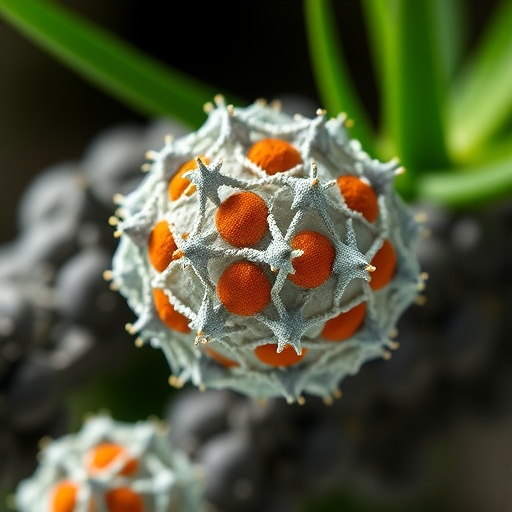
A new “green” nanocomposite assembled from turmeric-derived curcumin, chitosan, aloe vera and graphite nanopowder has shown a striking combination of antimicrobial, anti-inflammatory and anticancer activity in laboratory tests. The material inhibited the growth of clinically important microbes, reduced indicators of inflammation and killed cultured liver-cancer cells in a dose-dependent manner, according to a study published in Applied Nanoscience. The researchers describe the formulation as a multifunctional platform designed to address several problems at once: infection, inflammation, oxidative stress and tumour progression. Yet the results remain confined to in-vitro experiments, meaning that the promising material is still far from being proven safe or effective in patients.
The appeal of the formulation lies in the way its ingredients are intended to complement one another. Curcumin is a polyphenolic compound responsible for turmeric’s characteristic yellow colour and has been widely investigated for antioxidant, anti-inflammatory and anticancer properties. Its medical use, however, is limited by its extremely low water solubility, chemical instability and poor bioavailability: much of an orally administered dose may be degraded or eliminated before it reaches target tissues. Chitosan, a biodegradable polymer derived from chitin, can act as a carrier and stabilizing matrix while also displaying intrinsic antimicrobial activity. Aloe vera was incorporated as a natural stabilizer, while graphite nanosheets supplied a carbon-based reinforcement that may improve the composite’s physical properties and interactions with biological surfaces.
Rather than relying on a single active molecule, the researchers sought to create a nanoscale assembly in which each component contributes a different function. Chitosan contains amino groups that can become positively charged in acidic environments. This positive charge can promote adhesion to negatively charged microbial cell membranes and biological tissues, potentially improving local retention. Curcumin provides a reservoir of bioactive molecules, while aloe vera contains polysaccharides and other plant-derived constituents that can help stabilize dispersed particles. Graphite’s layered carbon structure contributes a large surface area and electronic properties that may influence molecular adsorption and redox reactions. The concept reflects a growing trend in nanomedicine: combining natural compounds with engineered materials to overcome the weaknesses of conventional formulations.
Characterization tests indicated that the resulting particles had hydrodynamic diameters of approximately 700 to 850 nanometres. Hydrodynamic size is the effective diameter of a particle as it moves through liquid, including the layer of solvent and molecules associated with its surface. The reported size is therefore not necessarily identical to the dimensions of an individual graphite sheet or a dry particle observed under microscopy. The composite also carried a strongly positive surface charge of +51.1 millivolts. In colloidal systems, the magnitude of zeta potential is commonly used as an indicator of electrostatic stability: particles with substantial like charges repel one another, reducing the tendency to clump together. The positive charge could also help the material interact with microbial membranes, although the same feature may affect how it behaves with blood proteins and healthy cells inside the body.
Fourier-transform infrared spectroscopy provided chemical evidence that the ingredients had been incorporated into a shared structure. FTIR works by measuring how a sample absorbs infrared light at different frequencies. Chemical bonds vibrate at characteristic frequencies, producing peaks associated with functional groups such as hydroxyl, carbonyl and amino groups. Changes in peak position or intensity can indicate hydrogen bonding, electrostatic interactions or other forms of association between components. In this case, the researchers reported signals corresponding to the constituent materials, supporting successful formation of the curcumin–chitosan–aloe vera–graphite composite. FTIR can confirm chemical signatures and interactions, but it does not by itself establish the precise architecture of the particles or prove that every ingredient is distributed uniformly throughout them.
The biological testing began with microorganisms relevant to human disease. The nanocomposite showed antimicrobial activity against Staphylococcus aureus, a bacterium associated with skin, wound and hospital infections, and Candida albicans, a yeast that can cause mucosal and invasive infections, particularly in vulnerable patients. Several mechanisms could contribute to the observed effect. Positively charged chitosan may bind to microbial membranes, disrupting their permeability and causing leakage of intracellular contents. Curcumin and plant-derived molecules may interfere with microbial metabolism or increase oxidative damage, while graphite nanosheets can provide a physical surface capable of interacting with cell envelopes. The study demonstrates inhibition under the experimental conditions used, but it does not yet show how the material would perform against resistant clinical strains, mixed-species biofilms or infections inside living tissue.
The composite also displayed anti-inflammatory activity in assays based on red blood cells. One test examined membrane stabilization, while another measured inhibition of haemolysis, the rupture of erythrocytes that releases haemoglobin. These experiments are often used as preliminary screens because inflammatory processes can involve destabilization of cellular membranes and the release of intracellular signals. A material that protects erythrocyte membranes under damaging conditions may possess membrane-stabilizing or anti-inflammatory properties. Curcumin is known to influence inflammatory signalling pathways in experimental systems, while chitosan and aloe vera have also been studied for effects on tissue responses. However, erythrocyte assays are indirect. They cannot reproduce the coordinated activity of immune cells, blood vessels, cytokines and organs that determines inflammation in a human body.
The most attention-grabbing result came from experiments using HepG2 cells, a widely used human liver-carcinoma cell line. Exposure to increasing concentrations of the nanocomposite produced progressively greater loss of cell viability, with a reported half-maximal inhibitory concentration, or IC50, of about 60 micrograms per millilitre. The IC50 is the concentration required to reduce the measured viability signal by 50 per cent under a defined set of laboratory conditions. Microscopic examination revealed morphological changes associated with apoptosis, the programmed form of cell death that involves cell shrinkage, membrane alterations and fragmentation rather than the uncontrolled rupture typical of necrosis. Curcumin may promote apoptosis through oxidative and mitochondrial pathways, while the composite structure could increase cellular uptake or prolong contact with the cancer cells. Still, activity against HepG2 cultures does not establish selective toxicity toward tumours, and the study’s abstract does not indicate equivalent testing across a broad panel of healthy human liver cells.
The researchers present the material as an eco-friendly alternative to more chemically intensive nanoplatforms. Green synthesis generally aims to reduce the use of hazardous solvents, high-energy processing and toxic reducing or stabilizing agents by relying on biological materials such as plant extracts, biopolymers or naturally occurring compounds. That approach can improve sustainability, but “green” does not automatically mean harmless. Graphite nanoparticles and other carbon-based materials can behave differently depending on particle size, shape, surface chemistry, aggregation state and dose. Chitosan’s biodegradability may vary with molecular weight and degree of deacetylation, while aloe vera extracts can differ substantially according to cultivation and processing. Before clinical development, researchers would need to measure release and degradation of curcumin, particle stability in blood and physiological fluids, uptake by immune and liver cells, effects on normal tissues, pharmacokinetics, immune reactions and long-term toxicity.
The study therefore offers an intriguing proof of concept rather than a ready-made cancer treatment. Its strongest feature is the attempt to combine several biological functions in one material: antimicrobial action for infection control, membrane protection for inflammatory conditions and cytotoxicity against liver-cancer cells. The formulation’s positive charge and nanoscale organization may help keep otherwise poorly soluble curcumin dispersed and biologically available in laboratory media. The next steps would include rigorous comparisons with each individual ingredient and with simpler composites, tests against drug-resistant pathogens and three-dimensional tumour models, experiments in animals, and detailed assessments of biodistribution and safety. If those studies confirm that the composite can damage tumours and microbes without harming healthy organs, the turmeric-and-carbon material could become part of the expanding field of plant-based nanomedicine. For now, its viral potential rests on compelling laboratory chemistry—and on the considerable scientific work still required to translate that chemistry into medicine.
Subject of Research: Graphite nanopowder-enhanced curcumin–chitosan–aloe vera nanocomposite for antimicrobial, anti-inflammatory and liver-cancer applications
Article Title: Graphite nanopowder-enhanced curcumin-chitosan-aloe vera nanocomposite as a green multifunctional platform for anti inflammatory and liver cancer therapy
Article References: Santhanam, S., Bhattacharya, T. & Das, T. “Graphite nanopowder-enhanced curcumin-chitosan-aloe vera nanocomposite as a green multifunctional platform for anti inflammatory and liver cancer therapy.” Applied Nanoscience 16, 7 (2026). Original research article
Image Credits: AI Generated
DOI: 10.1007/s13204-025-03141-7
Keywords: green synthesis, curcumin nanocomposite, chitosan, graphite nanopowder, aloe vera, antimicrobial activity, anti-inflammatory activity, liver cancer, HepG2 cells
Tags: aloe vera in biomedical applicationsantimicrobial and anticancer nanomaterialsbioavailability enhancement of curcuminchitosan-based drug delivery systemsgraphite nanopowder in nanomedicinegreen nanomaterials for cancer therapyin-vitro testing of nanocompositesmultifunctional nanoplatforms for infection and tumor treatmentNanocomposite for inflammation and liver cancernatural compounds for anti-inflammatory therapyoxidative stress reduction in nanomedturmeric-derived curcumin in nanotechnology