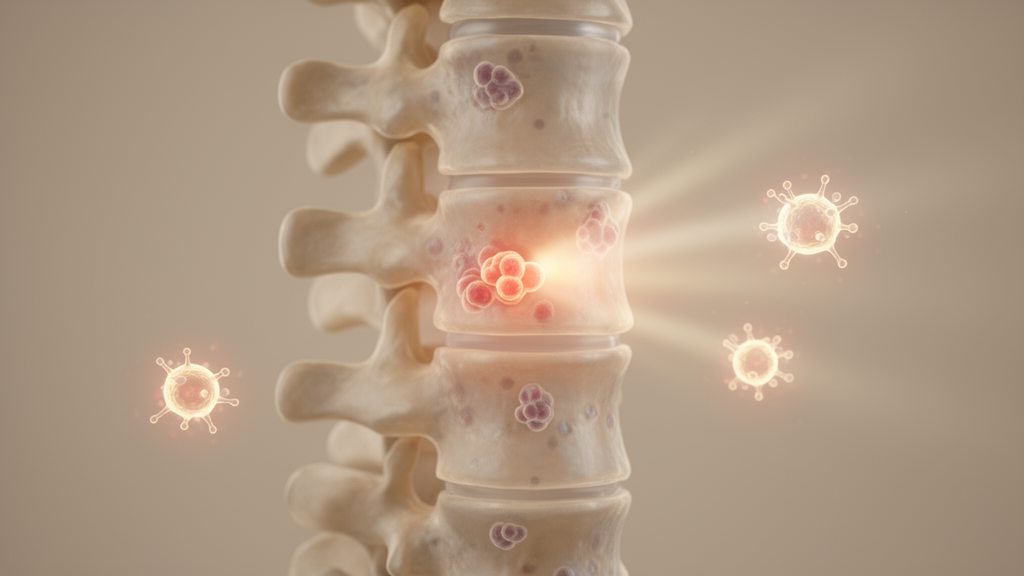
A remarkably gentle form of radiation therapy is emerging as a powerful tool against one of the most punishing symptoms of multiple myeloma. In a multi-institutional phase 2 clinical trial, a short course of ultra-low-dose radiation delivered in just one or two treatment sessions relieved painful bone lesions for most patients, according to findings presented at the American Society for Radiation Oncology (ASTRO) Annual Meeting in Boston. The results suggest that a lower-intensity approach could ease suffering without interrupting other cancer treatments and with almost no side effects, a combination that could reshape how clinicians think about palliative care for this disease.
The numbers tell a striking story. Among 63 evaluable patients, 81 percent achieved pain control without needing any additional radiation. Three in five patients reported relief within the first month of treatment, and by six months that figure had grown to four in five. Patient-reported pain reduction measured 66 percent four weeks after treatment, 64 percent at eight weeks, and an impressive 86 percent at six months. The median time to pain relief was 36 days, and the median duration of relief stretched to 148 days. Notably, outcomes were essentially identical whether patients received the dose in a single session or spread across two, offering flexibility in how clinics schedule care.
Multiple myeloma is a cancer of plasma cells, a type of white blood cell that resides in the bone marrow. As malignant plasma cells accumulate, they disrupt normal bone remodeling, carving out destructive lesions that cause deep, persistent pain, fractures, and a steep decline in quality of life. Bone disease is one of the defining complications of the illness, and painful lesions are among the most common reasons patients with myeloma are referred for radiation therapy. For many patients, these lesions multiply over time, meaning palliative radiation may be needed on several separate occasions throughout the course of the disease.
Despite how effective radiation can be for these lesions, patients are often referred late in their care, after symptoms have already worsened. The hesitation stems partly from concerns about damaging healthy bone marrow, which is already compromised in myeloma and is critical for producing blood cells. There are also practical hurdles: coordinating radiation sessions around systemic therapies such as chemotherapy, immunotherapy, and targeted agents can be logistically complicated, and clinicians worry that a course of radiation might force interruptions in drug treatment. The new trial directly addresses both concerns by demonstrating that far less radiation than conventionally used can still do the job.
Multiple myeloma is exceptionally sensitive to radiation, a property that allows lower doses to effectively treat painful lesions while limiting exposure to healthy marrow. The trial’s design drew on longstanding experience using ultra-low-dose radiation therapy for similarly radiosensitive lymphomas. Principal investigator Leslie Ballas, MD, FASTRO, a professor of radiation oncology at Cedars Sinai in Los Angeles, explained the underlying strategy: start with a dose sufficient to relieve pain but low enough to preserve bone marrow and leave room to add more radiation if needed. That flexibility, she noted, may help patients access radiation earlier in their disease course while keeping future treatment options open.
The prospective, single-arm phase 2 trial enrolled patients at seven institutions. Eligible participants had bone lesions that were painful but not causing spinal cord compression, pathologic fracture of a long bone, or other urgent complications requiring more aggressive intervention. Each patient received 4 Gy of radiation, either as one 4 Gy treatment or two treatments of 2 Gy each. For context, conventional palliative radiation courses for bone metastases often deliver considerably higher total doses across multiple fractions, making 4 Gy a genuinely ultra-low prescription by standard practice.
Researchers assessed pain response at four weeks, eight weeks, and six months using patient-reported Brief Pain Inventory scores alongside oral morphine equivalent dosing, applying international consensus criteria for palliative radiation therapy. The primary endpoint was patient-reported pain response at four weeks. Importantly, patients who did not achieve adequate pain control could receive additional radiation beginning four weeks after their first treatment, creating a response-adapted framework in which escalation was available but frequently unnecessary.
The escalation data proved particularly telling. Overall, only 19 percent of patients required a second course of radiation to the same site, delivered at a median of 71 days after the initial treatment. After reirradiation, the pain response rate reached 63 percent at four weeks, showing that the low-dose starting point did not compromise the effectiveness of follow-up treatment. Side effects across the trial were rare and mild: four patients experienced grade 1 or 2 fatigue, and one patient reported mild radiation-related skin changes. No serious toxicity attributable to the low dose was reported, reinforcing the safety profile that makes the approach attractive for earlier use.
For most patients, the initial low-dose treatment alone was sufficient to control symptoms. Ballas emphasized that four out of five patients did not need more radiation after the first course, a result she said demonstrates that the strategy can provide effective pain control without interrupting other treatments and with almost no side effects. The brevity of the regimen, one or two visits rather than a protracted series, also makes radiation easier to integrate with systemic therapy and may help preserve healthy bone marrow function over time. Because patients with myeloma often live for years while cycling through multiple lines of therapy, minimizing treatment burden and protecting marrow reserves carry growing clinical weight.
Expert response to the findings has been enthusiastic. Chelsea Pinnix, MD, PhD, FASTRO, ASTRO Education Council Chair and a radiation oncologist at the University of Texas MD Anderson Cancer Center, described the study as combining patient-reported outcomes with a practical, response-adapted treatment strategy, noting that many patients can experience meaningful pain relief with a very low initial dose of 4 Gy in one or two fractions. She said the results may help clinicians consider radiotherapy earlier in the course of care for patients with myeloma experiencing painful bone disease. Ballas echoed that hope, adding that even though the study was relatively small, the prospective data from multiple institutions show the approach is a practical and flexible strategy for routine clinical care. Next steps include testing whether some patients might benefit from low-dose radiation even earlier, before pain becomes severe, and identifying which lesions are most likely to respond, work that could eventually turn this gentle therapy from a late-stage rescue into a first-line comfort measure.
Subject of Research: Ultra-low-dose palliative radiation therapy for painful bone lesions in multiple myeloma
Article Title: Ultra-low-dose radiation therapy relieves bone pain from multiple myeloma
Article References: Ultra-low-dose radiation therapy relieves bone pain from multiple myeloma. (n.d.). Original publication
Image Credits: AI Generated
DOI: Not provided
Keywords: multiple myeloma, radiation therapy, palliative care, bone lesions, clinical trial, phase 2, ASTRO, pain management, bone marrow, low-dose radiation, oncology, patient-reported outcomes
News Source: Nathaniel Bowman. (October 17, 2026). Ultra-Low-Dose Radiation in Just One or Two Sessions Eases Multiple Myeloma Bone Pain. Scienmag.