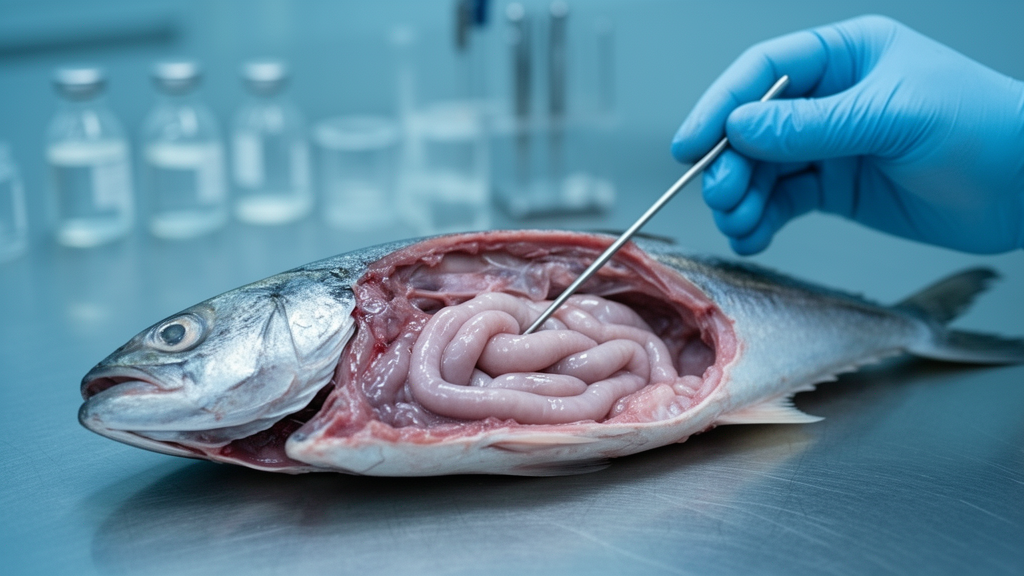
In a discovery that could reshape how scientists think about the evolution of the immune system, researchers at the Institute of Hydrobiology of the Chinese Academy of Sciences have identified germinal center-like structures in the gut of common carp, a teleost fish that diverged from our own evolutionary lineage hundreds of millions of years ago. The finding, published in Science Bulletin, suggests that the functional machinery of sophisticated mucosal antibody responses may have been assembled in vertebrate tissues long before the anatomical structures that house them in mammals and birds ever existed.
Germinal centers are among the most elegant structures in immunology. Within the secondary lymphoid organs of mammals and birds, these specialized microenvironments provide the stage on which B cells proliferate, mutate the genes encoding their antibodies, and compete for survival in a Darwinian selection process. Only the B cells that produce the highest-affinity antibodies emerge victorious, differentiating into long-lived plasma cells that secrete protective antibodies or memory B cells that stand guard against future infection. This process, known as affinity maturation, is what allows vaccines and natural infections to generate durable, high-quality immune protection.
For decades, the prevailing view held that bona fide germinal centers first appeared roughly 200 million years ago in birds, marking what many considered a critical evolutionary milestone in the development of mucosal adaptive immunity. Teleost fish, the most species-rich group of vertebrates, lack the classical lymphoid architecture found in mammals and birds. They possess no lymph nodes, no organized spleen follicles of the mammalian type, and no pre-formed anatomical niches that resemble the germinal centers of warm-blooded vertebrates. This absence raised a fundamental and long-standing question: can the mucosal tissues of fish independently organize immune responses of comparable sophistication, or are such reactions the exclusive invention of more recently evolved lineages?
The Chinese research team, led by investigators at the Institute of Hydrobiology, tackled this question by studying the gut immune response of common carp following viral infection. Their model organism was challenged with spring viremia of carp virus, a pathogen that was delivered directly into the digestive tract by oral gavage. This infection route triggered clear pathological changes in the gut and provoked a strong local immune response, providing the researchers with a window into how the fish intestinal immune system mobilizes against a real viral threat.
The technical approach combined three complementary methods: single-cell RNA sequencing to profile gene expression in individual cells, fluorescence in situ hybridization to localize specific transcripts within tissue sections, and immunofluorescence staining to visualize proteins and cell populations. Using this integrated toolkit, the researchers identified previously unknown lymphoid aggregates within the intestinal lamina propria. They named these structures gut-associated germinal center-like structures, abbreviated GaGCLs, and their molecular and cellular features turned out to be strikingly familiar.
At the molecular level, the GaGCLs displayed spatial gradients of expression for the chemokine receptors CXCR4 and CXCR5, a hallmark of the dark zone and light zone organization that characterizes mammalian germinal centers. B cells within these structures showed elevated expression of AICDA, the gene encoding activation-induced cytidine deaminase, the enzyme responsible for introducing mutations into antibody genes, and MKI67, a canonical marker of active cell proliferation. The structures also harbored IgM-positive B cells specific for spring viremia of carp virus, which accumulated in response to infection. Most tellingly, the researchers observed extensive B cell proliferation occurring alongside significant apoptosis within the GaGCLs of infected fish, a combination that mirrors the brutal selection process at the heart of genuine germinal center reactions.
Single-cell transcriptomics also revealed the communication networks that coordinate these responses. The analysis identified key ligand-receptor interactions between T cells and B cells that are known to drive germinal center reactions in mammals, including ALCAM-CD6, TNFSF14-TNFRSF14, TGFB1-TGFBR3, and TNFSF14-LTBR. The researchers further identified T follicular helper-like cells, the specialized T cell population that shepherds B cells through affinity maturation in mammalian germinal centers, and documented extensive interactions between these cells and the germinal center-like B cells of the carp gut. Together, these conserved molecular programs and cell-cell communication networks argue that the functional logic of the germinal center reaction is deeply conserved across vertebrate evolution.
The functional consequences of these structures became apparent when the researchers tracked the immune response over time. Following primary infection, germinal center-like B cells within the GaGCLs gradually gave rise to memory-like B cells. When the fish were subsequently rechallenged with the virus, these memory-like cells were associated with increased numbers of plasma cells, expanded populations of IgM-positive B cells, and stronger antibody responses. In other words, the gut-associated structures of the carp did not merely mount a one-time reaction; they appeared to contribute to the establishment and recall of mucosal B cell memory, the very property that makes germinal centers so valuable to long-term immunity.
Perhaps the most conceptually significant aspect of the study is what it implies about the relationship between immune function and anatomical form. The GaGCLs were not permanent fixtures of the carp intestine. Instead, they were dynamically assembled in response to pathogen stimulation, forming temporary organizations within the lamina propria when the viral threat demanded them. This demonstrates that a functional germinal center-like immune response can be built without the structural framework of conventional secondary lymphoid organs. The immune system, in this view, does not require a pre-existing anatomical blueprint; it can construct the necessary architecture on demand, cell by cell, in response to infection.
The researchers summarize this principle as function preceding form, a model in which the functional components of sophisticated germinal center-like responses emerged in vertebrate mucosal tissues before the evolution of highly organized secondary lymphoid structures. If correct, this reframes the evolutionary narrative of adaptive immunity. Rather than viewing germinal centers as a relatively recent innovation of birds and mammals, the carp data suggest that the core molecular and cellular machinery of affinity maturation has ancient roots, traceable to early teleost lineages, and that later evolution added the permanent anatomical housing rather than the functional program itself. The gut cell types and functional characteristics observed in the fish, the team notes, are similar to those of mammals, reinforcing the idea of a shared and deeply conserved mucosal immune toolkit. For immunologists and evolutionary biologists alike, the carp intestine now stands as a living record of how one of biology’s most refined defense systems came to be, and it may inspire new searches for germinal center-like reactions in other organisms long assumed to lack them.
Subject of Research: Germinal center-like immune structures in the teleost fish gut and the evolution of mucosal adaptive immunity
Article Title: Teleost gut harbors germinal center-like structures
Article References: Teleost gut harbors germinal center-like structures. (n.d.). Original publication
Image Credits: AI Generated
DOI: Not provided
Keywords: germinal centers, teleost fish, common carp, mucosal immunity, B cells, adaptive immunity, single-cell RNA sequencing, evolution, viral infection, IgM antibodies, memory B cells, gut-associated lymphoid tissue
News Source: Kristina Jarvis. (October 17, 2026). Fish Guts Reveal Ancient Origins of Antibody Factory Structures. Scienmag.