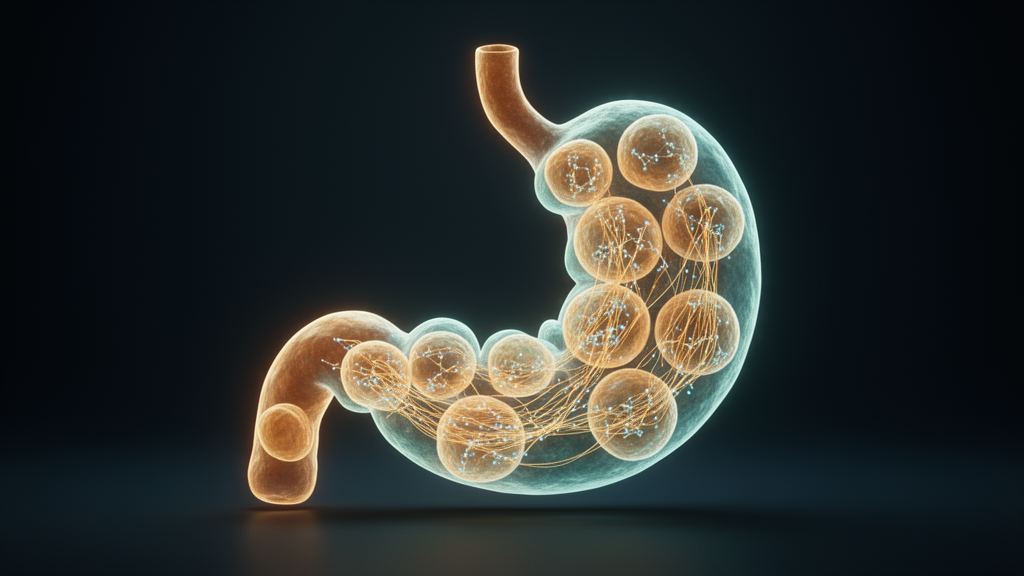
Every cell in the human body carries a hidden archive of its past. Now researchers at Erasmus University Medical Center and Leiden University Medical Center have built a tool that lets them read that archive with unprecedented precision, turning human stem cells into a kind of molecular time machine. In a study published in Genome Biology, the team describes how they introduced a system called the DCM-time machine into human induced pluripotent stem cells and used it to retrace, retrospectively, the genome-wide shifts in gene and enhancer activity that occur as stem cells differentiate into definitive endoderm and then the primitive gut tube, an early embryonic structure that gives rise to the digestive system.
The problem the researchers set out to solve is a familiar one in developmental biology. Cell state changes during development and differentiation are directed by dynamic patterns of gene and enhancer activity, but those dynamics are notoriously difficult to study in real time. Conventional single-cell RNA sequencing captures only a snapshot of which genes are active at the moment a cell is harvested. Once the sample is collected, the record is frozen, and the continuous story of how a cell’s regulatory landscape changed over hours and days is lost. The DCM-time machine offers a way around this limitation by writing a permanent, cumulative record of transcriptional activity directly into the genome itself.
The system relies on a modified version of a bacterial DNA methyltransferase, fused to a dCas9 protein, that recognizes a specific sequence motif and labels it with a distinctive methylation mark. When a gene or enhancer is active, the enzyme gains access to that stretch of DNA and deposits the mark. Crucially, these DCM methylation marks are propagated during S-phase, the stage of the cell cycle when DNA is replicated. Each time a cell divides, the marks that were laid down on the parental strand are copied onto the newly synthesized daughter strand. The result is a cumulative, heritable archive: the longer and more intensely a gene or enhancer was active over the course of differentiation, the more DCM methylation accumulates at that locus, even if the gene has since fallen silent.
To deploy this system in human cells, the researchers introduced the DCM-time machine into induced pluripotent stem cells, adult cells that have been reprogrammed back into an embryonic-like pluripotent state. They then directed these cells through a differentiation protocol that mimics early embryonic development, first pushing them toward definitive endoderm, the germ layer that forms during gastrulation, and then onward to the primitive gut tube. At each stage, the team harvested cells and performed MeD-seq, a sequencing method that enriches for the DCM-methylated fragments, allowing them to read out which genes and enhancers had been labeled over time.
The retrospective readout revealed a rich and dynamic picture of the differentiation process. By comparing the DCM methylation patterns accumulated at different stages, the researchers could distinguish genes whose activity had surged during the transition from pluripotency to definitive endoderm from those that became active only later, during the formation of the primitive gut tube. The system also captured enhancer dynamics, identifying regulatory elements that had been transiently active during specific windows of differentiation. Because the marks accumulate cumulatively, the researchers could reconstruct a timeline of regulatory activity that would be impossible to obtain from conventional snapshot measurements alone.
A key strength of the approach lies in its ability to integrate with other layers of genomic information. The researchers combined the DCM methylation data with bulk RNA sequencing, single-cell RNA sequencing, and conventional CpG methylation profiling. This integration allowed them to connect the retrospective record of enhancer and gene activity with the transcription factor networks that drive cell fate decisions. They could identify which transcription factors were likely to be binding which enhancers at which stages, and how the gradual silencing of pluripotency genes was accompanied by the progressive activation of endodermal and gut tube programs.
The team also examined how the DCM-time machine’s cumulative record relates to the cell’s endogenous epigenetic landscape. By profiling CpG methylation at promoter regions across the differentiation time course, they could compare the artificial, activity-dependent DCM marks with the natural, longer-term silencing marks that cells accumulate as they commit to a lineage. This comparison revealed how changes in transcriptional activity precede and anticipate the stable epigenetic remodeling that consolidates cell identity, providing a window into the sequence of events that transforms a pluripotent cell into a committed endodermal one.
The researchers characterize the DCM-time machine as a powerful platform for dissecting both healthy and pathogenic embryogenesis. Because the system can be introduced into human induced pluripotent stem cells, it can in principle be applied to any differentiation protocol that models early human development in a dish. This opens the door to studying congenital disorders that arise from errors in early gut tube formation, as well as to comparing normal and disease-associated differentiation trajectories at the level of individual genes and enhancers. The retrospective nature of the record means that even rare or transient regulatory events, which snapshot methods would likely miss, can be captured and quantified.
The work also highlights the broader potential of activity-dependent methylation tracing as a general strategy in developmental and stem cell biology. Rather than measuring what a cell is doing at a single moment, the approach measures what the cell has done over its entire history, accumulating a molecular memory that persists through cell division. As the technology matures, it could be combined with other retrospective recording systems, expanded to additional cell types and differentiation protocols, and used to build increasingly complete timelines of human embryonic development at genomic resolution.
For now, the human DCM-time machine stands as a demonstration that the hidden history of a cell’s regulatory activity can be written, preserved, and read back with genome-wide precision. By unraveling the cell state changes that accompany primitive gut tube differentiation, the Erasmus MC and Leiden UMC team has provided the field with both a new technical capability and a detailed case study of how early human embryonic tissues take shape, one methylated mark at a time.
Subject of Research: Cell state changes during primitive gut tube differentiation
Article Title: Human DCM-time machine unravels cell state changes during primitive gut tube differentiation
Article References: Human DCM-time machine unravels cell state changes during primitive gut tube differentiation. (n.d.). https://doi.org/10.1186/s13059-026-04306-5
Image Credits: AI Generated
DOI: 10.1186/s13059-026-04306-5
Keywords: DCM-time machine, induced pluripotent stem cells, definitive endoderm, primitive gut tube, enhancer activity, methylation tracing, Genome Biology, developmental biology, single-cell RNA sequencing, CpG methylation, cell differentiation, lineage tracing
News Source: Juliet Wilcox. (October 16, 2026). Molecular Time Machine Records How Human Stem Cells Build the Embryonic Gut. Scienmag.