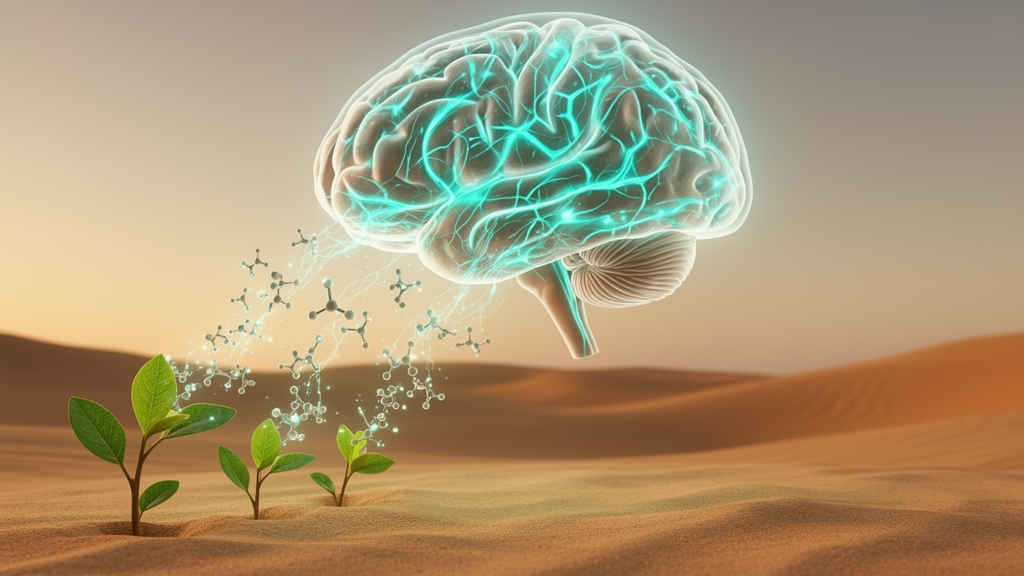
Chronic sleep loss is one of the most widespread health burdens of modern life, eroding memory, dulling attention, and accelerating the damage that precedes neurodegenerative disease. Now a team of researchers at Baotou Medical College in Inner Mongolia has shown that a botanical extract from the desert plant Cistanche can rescue sleep-deprived rat brains from cognitive decline, and they have pinpointed the precise molecular switch through which the compound works. In a study published in Frontiers in Molecular Neuroscience, glycosides of Cistanche reversed learning and memory deficits in chronically sleep-deprived rats by activating the SIRT1/PGC-1α/Nrf2 signaling pathway, a master regulatory axis that governs antioxidant defense, mitochondrial health, and synaptic plasticity.
The research team, led by Yihong Sun and Jianxin Jia, set out to answer a question that has lingered around this traditional medicinal plant for years. Cistanche glycosides, a family of phenylethanoid-rich compounds derived from a parasitic desert flower long used in Chinese medicine, had already shown antioxidant and neuroprotective effects in earlier studies, including work suggesting they could improve cognition in sleep-deprived animals. What remained unknown was whether the compound acts through this specific signaling cascade, and, crucially, whether the pathway is truly required for the benefits rather than merely changing in parallel with them.
To find out, the researchers built a rigorous experimental system. Sixty male Sprague Dawley rats were randomly assigned to six groups of ten: a normal control group, a platform control group, a sleep deprivation model group, a group receiving 50 mg/kg of the glycosides by daily gavage, a combined control-plus-glycoside group, and a group treated with the prescription sedative estazolam as a comparator. Sleep deprivation was induced with a modified multiple platform water environment method: rats stood on small platforms in shallow water for twelve hours each day over 21 consecutive days, a setup that fragments sleep without immersing the animals and that reliably produces the hallmark cognitive consequences of chronic sleep loss.
The behavioral consequences of that regimen were stark. In the Morris water maze, a standard test of spatial learning and memory in which rats must locate a hidden platform in murky water, sleep-deprived animals took significantly longer to find the platform and, when the platform was removed on the final day, crossed the target location far less often and spent less time in the target quadrant than controls. Electroencephalogram recordings, obtained from electrodes surgically implanted in the skull and neck muscles, confirmed that the model succeeded: deprived rats showed markedly increased wake time and reduced non-REM, REM, and total sleep time. Serum analysis told a parallel biochemical story, with elevated malondialdehyde, a marker of oxidative lipid damage, alongside sharply reduced activities of the antioxidant enzymes superoxide dismutase and glutathione peroxidase.
Under the microscope, the damage extended into the hippocampus, the brain’s memory hub. Nissl staining revealed that pyramidal neurons in the CA1 region of sleep-deprived rats were disorganized, shrunken, and depleted of Nissl bodies, the dense clusters of protein-making machinery that signal healthy neurons. Transmission electron microscopy went deeper still, showing mitochondria with blurred membrane boundaries, ruptured cristae, and vacuolation, the cellular equivalent of power plants falling apart. Western blot analysis then connected these structural injuries to a molecular collapse: protein levels of SIRT1, PGC-1α, and Nrf2, along with the synaptic proteins synaptophysin, PSD-95, and the neurotrophic factor BDNF, were all significantly downregulated in the deprived hippocampus.
Glycoside treatment turned this picture around. Rats receiving the compound showed shortened escape latencies, more platform crossings, and more time in the target quadrant, and they recovered a more normal sleep architecture with increased REM and NREM proportions. Their antioxidant enzyme activities rebounded, malondialdehyde levels fell, hippocampal neurons regained their organized structure and Nissl bodies, and mitochondrial morphology improved. At the molecular level, the full signaling axis, SIRT1, PGC-1α, and Nrf2, together with synaptophysin, PSD-95, and BDNF, was significantly upregulated compared with untreated sleep-deprived animals. Notably, the glycosides performed on par with estazolam across these measures, suggesting the natural extract matches a conventional sleep drug without operating through sedation alone.
The most decisive evidence came from a second cohort of forty rats in which the researchers introduced EX527, a pharmacological inhibitor that specifically blocks SIRT1. When EX527 was co-administered with the glycosides, the protective effects vanished. Treated animals again showed prolonged escape latencies, fewer platform crossings, disordered CA1 neurons, damaged mitochondria, and suppressed expression of the pathway and synaptic proteins. Statistically, the performance of the inhibitor group was indistinguishable from that of untreated sleep-deprived rats. In other words, switching off SIRT1 abolished everything the plant compound had accomplished, providing causal proof that the SIRT1/PGC-1α/Nrf2 axis is the mechanism of action rather than a bystander.
Understanding why this matters requires a look at how the pathway works. SIRT1 is an NAD+-dependent deacetylase, a longevity-linked enzyme that senses cellular energy state and removes acetyl groups from target proteins. One of its key targets is PGC-1α, the master regulator of mitochondrial biogenesis. When SIRT1 deacetylates PGC-1α, the coactivator drives Nrf2 into the nucleus, where it switches on a battery of antioxidant genes that neutralize the free radicals accumulating in stressed neurons. Sleep deprivation suppresses this entire cascade, leaving mitochondria damaged and synapses vulnerable. The new study demonstrates that glycosides of Cistanche restore the axis from its upstream gatekeeper down to its synaptic outputs, extending earlier work showing that hydrogen sulfide can protect the hippocampus by upregulating SIRT1 in sleep-deprived animals.
The authors are candid about the study’s boundaries. Only young adult male rats were tested, leaving questions about whether the findings generalize to females or aged animals. A single dose of the extract was used, so no dose-response relationship has been established. Because glycosides of Cistanche are a multi-component botanical extract, the specific constituent responsible for SIRT1 activation remains unidentified, and more rigorous phytochemical standardization will be needed before clinical translation. The researchers also note that other mechanisms, such as direct activation of Nrf2 or anti-inflammatory actions, cannot be entirely excluded, and sleep architecture was measured only in a two-hour window after deprivation sessions.
Even with those caveats, the convergence of behavioral, histological, ultrastructural, and molecular evidence, capped by pharmacological reversal, makes a compelling case. For shift workers, students, and the billions of adults who sleep less than the recommended seven to nine hours, the prospect of a natural compound that shields the sleep-deprived brain is tantalizing. The findings do not suggest that pills can substitute for sleep, but they do identify a concrete molecular target for future neuroprotective drugs aimed at the cognitive toll of sleep disorders, and they lend modern mechanistic rigor to a desert plant that traditional medicine has prized for centuries.
Subject of Research: Neuroprotective effects of Cistanche glycosides on sleep deprivation-induced cognitive dysfunction via the SIRT1/PGC-1α/Nrf2 pathway
Article Title: Glycosides of Cistanche improve cognitive dysfunction in sleep-deprived model rats by activating the SIRT1/PGC-1α/Nrf2 signaling pathway
Article References: Li, Q., Zhao, S., Huo, J., Wang, Y., Sun, Y., & Jia, J. (2026). Glycosides of Cistanche improve cognitive dysfunction in sleep-deprived model rats by activating the SIRT1/PGC-1α/Nrf2 signaling pathway. Frontiers in Molecular Neuroscience, 19, Article 1945359. https://doi.org/10.3389/fnmol.2026.1945359
Image Credits: AI Generated
DOI: 10.3389/fnmol.2026.1945359
Keywords: sleep deprivation, Cistanche glycosides, SIRT1, PGC-1α, Nrf2, oxidative stress, hippocampus, synaptic plasticity, mitochondria, Morris water maze, EX527, neuroprotection
News Source: Ophelia Keating. (October 16, 2026). Desert Plant Compound Restores Sleep-Deprived Brains by Switching On a Key Antioxidant Pathway. Scienmag.