Credit: © KAUST 2017
Researchers from KAUST have been searching locally for plants that have potential for use to combat cancer. Now, three plants used for traditional medicine in Saudi Arabia are shown to be worthy of further investigation for anticancer properties.
Cancer is a leading cause of illness and death worldwide. In 2015, the World Health Organization (WHO) recorded 8.8 million cancer-related deaths, but almost twice as many cases are diagnosed each year. And the WHO predict that the number of cancer diagnoses is likely to continue to increase by about 70% for at least the next two decades due to growing longevity.
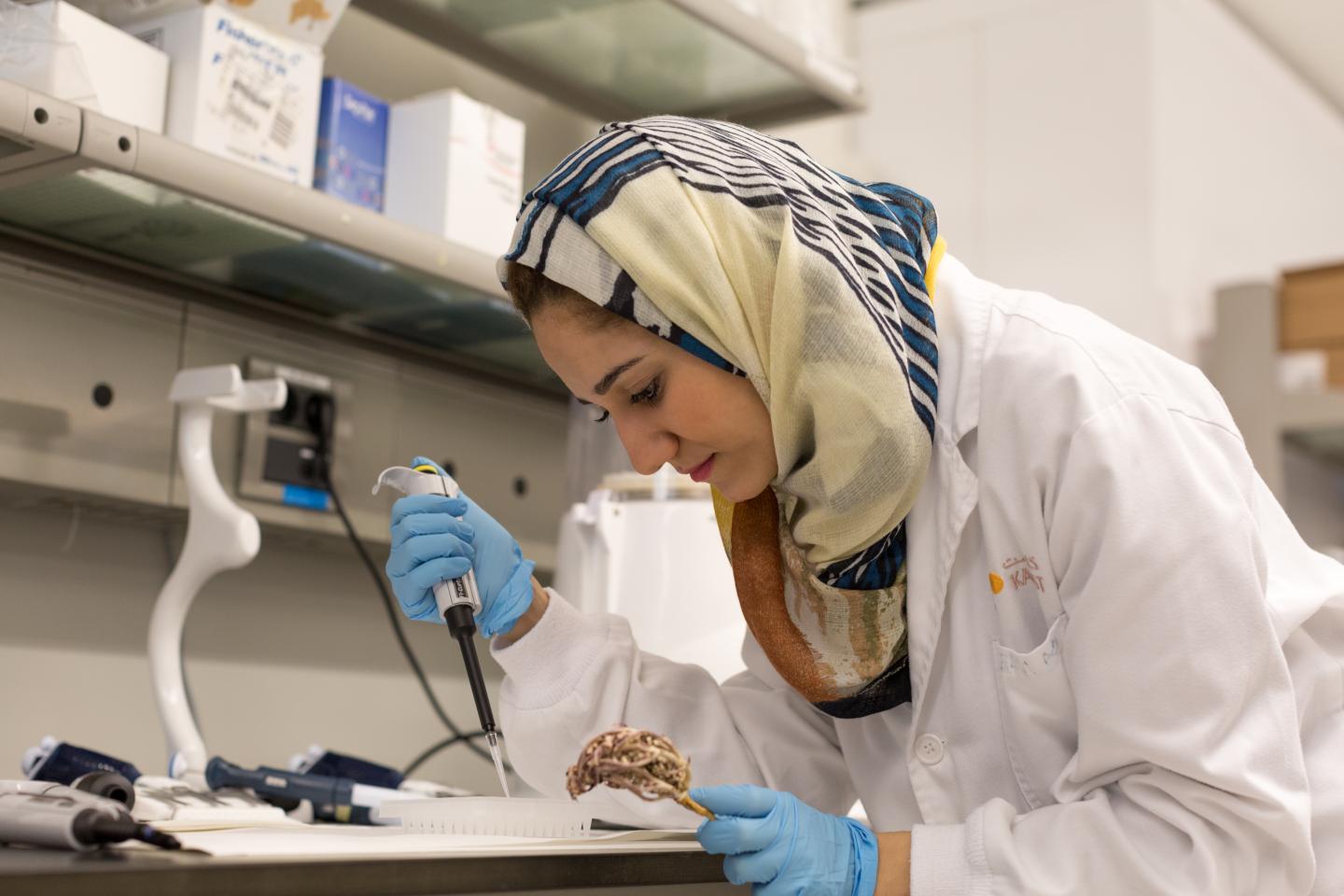
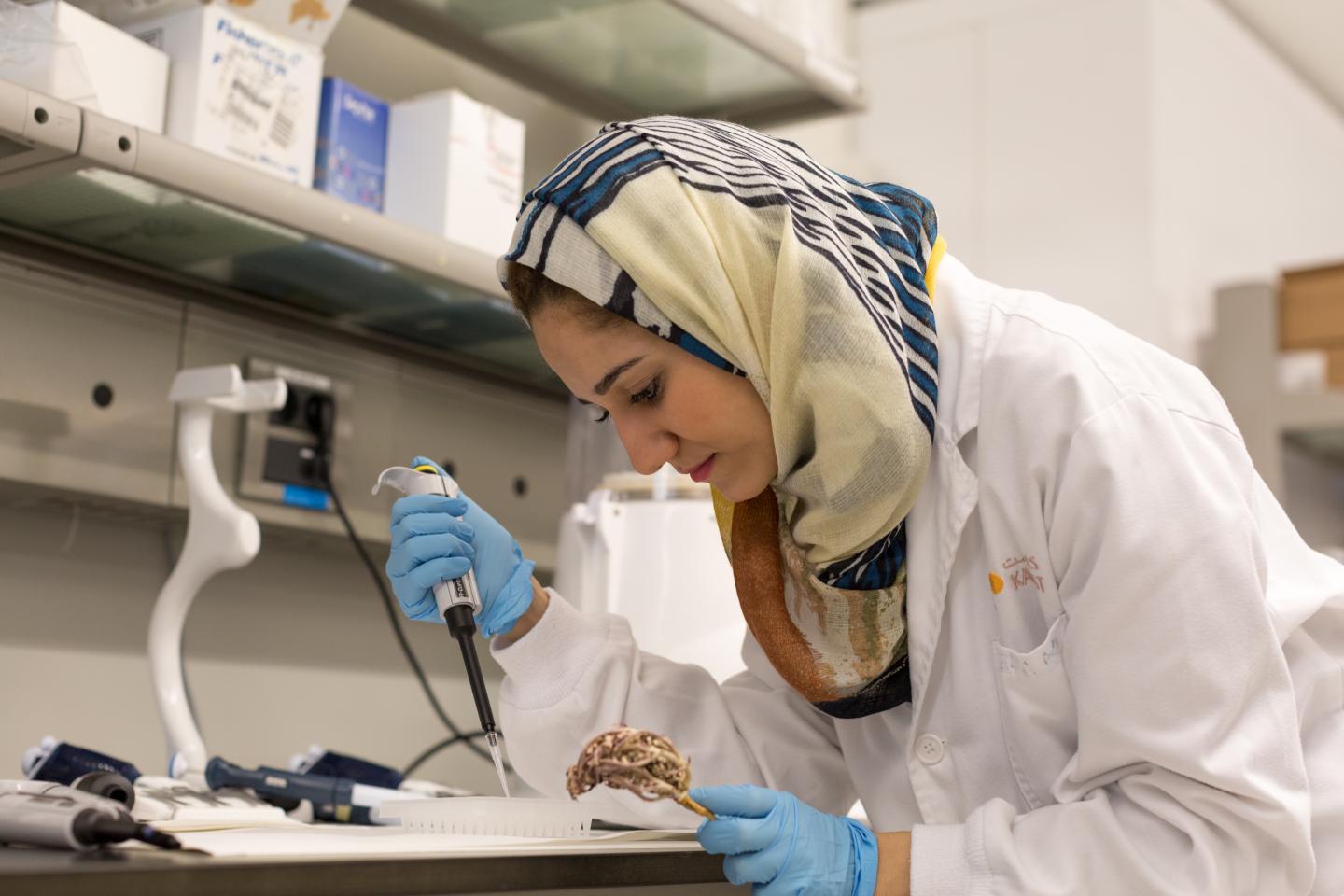
Seeking to expand the armory of cancer treatments — especially ones that are simple and inexpensive to manufacture — a team led by Timothy Ravasi and Christian Voolstra from KAUST has investigated the biological potential (bioactivity) of a range of plants used locally in traditional medicine.
Use of herbal medicines is common in Saudi Arabia, explains Ravasi's PhD student, Dina Hajjar. "However, there are almost no scientific studies," says Hajjar. "Saudi people tend to use information inherited from their families to decide about these plants without validated knowledge of their biological or chemical activity."
The team initially investigated 52 plants before they homed in on three plants that showed promise — Juniperus phoenicea (known in herbal medicine as Arar or Phoenican juniper), Anastatica hierochuntica (known as Kaff Maryam or the Jericho rose) and Citrullus colocynthis (known as Hanzal or bitter cucumber).
The team used cell-based phenotypic profiling via imaging-based high-content screening to assess anticancer activity. This approach followed a technique developed in 2016 by Stephan Kremb and Christian Voolstra that uses a comprehensive marker panel with standardized settings — an efficient process that could potentially be easily adopted by other laboratories. This meant the team compared the cytological profiles of fractions taken from the plants with a set of reference compounds with established mechanisms of action.
This enabled the team to show, for the first time, that these three plants contain potent anticancer substances — topoisomerase inhibitors, which are compounds that can block the topoisomerase enzymes that control changes in DNA — that could be used to develop novel anticancer inhibitors.
There are many steps, however, before these compounds are properly tested and available for clinical treatments for cancer. "The active compounds identified in the study will need to be evaluated and better characterized," says Hajjer. "Also, active compounds need to be synthesized and tested in vivo."
This study proves the power of using imaging-based high-content screening in revealing information about the bioactivity of unknown natural resources. Hajjar adds that it also highlights the opportunity for more exciting discoveries amongst the natural resources of Saudi Arabia.
###
Media Contact
Michelle D'Antoni
[email protected]
http://kaust.edu.sa/
Original Source
https://discovery.kaust.edu.sa/en/article/386/herbal-medicine-shows-potential-to-treat-cancer%25c2%25a0 http://dx.doi.org/10.1371/journal.pone.0177316