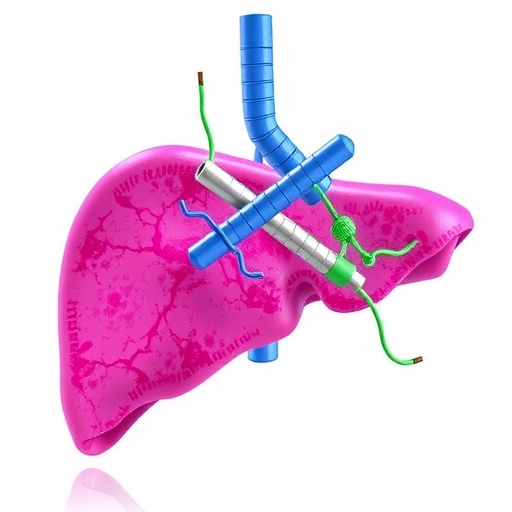
Hepatocellular carcinoma, the most common primary cancer of the liver, is often discovered at a stage when surgery or transplantation is no longer possible. For patients whose tumors remain confined to the liver but cannot be removed safely, physicians have increasingly turned to combinations of local procedures and systemic drugs. A new multicenter, open-label, phase 2 study is examining one such strategy: cadonilimab combined with lenvatinib and transarterial chemoembolization, or TACE, for people with non-metastatic, unresectable hepatocellular carcinoma. The approach brings together immune activation, targeted anti-angiogenic therapy and the direct destruction of tumor tissue, reflecting a broader shift toward coordinated treatment rather than reliance on a single intervention.
Hepatocellular carcinoma develops most often in a chronically injured liver, including livers affected by hepatitis B or C infection, alcohol-related disease, or metabolic dysfunction-associated steatotic liver disease. Its biology is complex. Tumors can receive a rich blood supply, evade immune surveillance and grow within a liver that already has limited functional reserve. “Unresectable” does not necessarily mean that the disease has spread to distant organs; it may indicate that the tumor is too extensive, too close to critical blood vessels, or located in a liver unable to tolerate major surgery. This distinction is important because patients with disease limited to the liver may still benefit from treatments designed to control or eliminate tumor deposits locally while suppressing microscopic cancer cells elsewhere in the body.
TACE is a widely used locoregional treatment for intermediate-stage liver cancer. During the procedure, an interventional radiologist threads a catheter through the arterial system into the blood vessels feeding the tumor. Chemotherapy is delivered directly into those vessels, followed by embolic material that blocks blood flow. The result is a concentrated chemical and ischemic assault on the cancer, while the liver’s normal tissue is supplied mainly through the portal vein and may be relatively spared. TACE is effective for many patients, but it does not always eradicate every malignant cell. Repeated treatment can also create a hypoxic, or oxygen-deprived, tumor environment that stimulates the release of vascular endothelial growth factor, a signal that encourages the formation of new blood vessels and may help residual tumor tissue recover.
Lenvatinib is designed to interfere with that recovery process. It is an oral multikinase inhibitor that blocks signaling pathways involving vascular endothelial growth factor receptors, fibroblast growth factor receptors and other kinases associated with tumor proliferation and angiogenesis. By restricting the tumor’s ability to recruit blood vessels, lenvatinib can slow growth and potentially alter the tumor microenvironment. The drug may also influence immune-cell trafficking and the physical barriers that prevent immune cells from entering malignant tissue. In a combination regimen, this means lenvatinib is not simply being used as an independent anticancer agent; it may also help make a tumor more accessible to immune-mediated attack after local treatment with TACE.
Cadonilimab adds a distinct immunological mechanism. Unlike conventional checkpoint inhibitors that target either the programmed cell death protein 1, or PD-1, pathway or the cytotoxic T-lymphocyte-associated antigen 4, or CTLA-4, pathway, cadonilimab is an engineered bispecific antibody intended to engage both checkpoints. PD-1 signaling can suppress T cells after they encounter cancer, while CTLA-4 regulates an earlier stage of T-cell activation and can limit the expansion of antitumor immune responses. Blocking both pathways may generate a broader immune reaction than targeting either alone, although it can also increase the risk of immune-related toxicities. In liver cancer, where immune suppression is frequently pronounced, the scientific rationale is to restore T-cell function while TACE releases tumor antigens and lenvatinib reshapes the tumor’s vascular and immunological environment.
The phase 2 study is described as multicenter and open-label, features that carry practical and interpretive significance. A multicenter design can improve the diversity of participating patients and test whether the regimen is feasible across different hospitals, interventional radiology teams and oncology practices. The open-label structure means that investigators and participants know which treatment is being administered, a common arrangement when a complex procedure such as TACE is combined with oral and intravenous medicines. Because there is no blinding, assessments such as radiological response and decisions about retreatment can be influenced by clinical judgment. For that reason, the study’s findings will be most informative when tumor imaging is evaluated according to standardized criteria, safety events are carefully documented and outcomes are compared with established benchmarks or future controlled trials.
The central question is whether combining these three modalities can produce deeper and more durable tumor control than any one component could achieve alone. Researchers typically evaluate measures such as objective response, the proportion of tumors that shrink or disappear on imaging, disease-control rate, progression-free survival and overall survival. In a liver cancer trial, however, interpretation requires additional care. Imaging after TACE can be difficult because necrosis, hemorrhage and inflammation may resemble viable tumor or obscure it. The team must distinguish tissue that remains alive and contrast-enhancing from tissue that has been successfully devascularized. Researchers also need to monitor liver function, because treatment benefit is meaningful only if patients retain sufficient hepatic reserve. Safety assessments are likely to focus on hypertension, fatigue, proteinuria and vascular complications linked to lenvatinib; bleeding and post-embolization complications associated with TACE; and immune-mediated events such as hepatitis, colitis, pneumonitis or thyroid dysfunction associated with cadonilimab.
The combination also raises questions about treatment sequencing and patient selection. TACE can release tumor proteins that potentially serve as targets for newly activated T cells, but the inflammatory response generated by the procedure may be beneficial or harmful depending on its intensity and timing. Lenvatinib may be administered before, after or around TACE to modify tumor blood flow and immune access, while cadonilimab may be scheduled to capitalize on the release of tumor antigens. The optimal sequence remains a clinical question rather than a settled principle. Patients with preserved liver function, limited tumor burden and no distant metastases may be most able to tolerate an intensive regimen, but the exact balance between potential benefit and risk will depend on vascular invasion, tumor distribution, underlying cirrhosis and previous treatments.
If the study demonstrates encouraging tumor responses without unacceptable deterioration in liver function, it could strengthen the case for integrating immunotherapy with locoregional treatment in non-metastatic unresectable disease. Such a result would not automatically establish the regimen as a new standard of care. Phase 2 studies are generally intended to explore activity, refine dosing and identify safety signals; definitive comparisons require randomized trials against currently accepted treatments. Investigators will also need to determine whether the strategy benefits all patients or only those with particular biological features, such as immune-inflamed tumors, specific viral backgrounds or molecular markers associated with angiogenesis and checkpoint sensitivity. For now, the study represents a test of a biologically ambitious idea: that physically damaging the tumor, starving its blood supply and releasing two major brakes on T-cell activity may work together to convert a difficult liver cancer into a more controllable disease. Its results will help clarify whether this multimodal strategy can extend the limits of treatment for patients whose cancer cannot be removed but has not yet spread beyond the liver.
Subject of Research: Cadonilimab, lenvatinib and transarterial chemoembolization for non-metastatic unresectable hepatocellular carcinoma
Article Title: Cadonilimab combined with lenvatinib and transarterial chemoembolization for non-metastatic unresectable hepatocellular carcinoma: a multicenter, open-label, phase 2 study
Image Credits: AI Generated
Keywords: Hepatocellular carcinoma, liver cancer, cadonilimab, lenvatinib, transarterial chemoembolization, TACE, immunotherapy, PD-1, CTLA-4, anti-angiogenic therapy, phase 2 clinical trial, locoregional treatment
Tags: cadonilimab and lenvatinib combination therapyhepatocellular carcinomaimmune activation in hepatocellular carcinomaliver cancer with complex tumor biologymanaging liver function in hepatocellular carcinomaminimally invasive treatments for liver tumorsmultimodal approach in unresectable liver cancerphase 2 clinical trial liver cancersystemic and local therapies for livertargeted anti-angiogenic therapy for liver tumorstransarterial chemoembolization in liver cancerunresectable liver cancer treatment