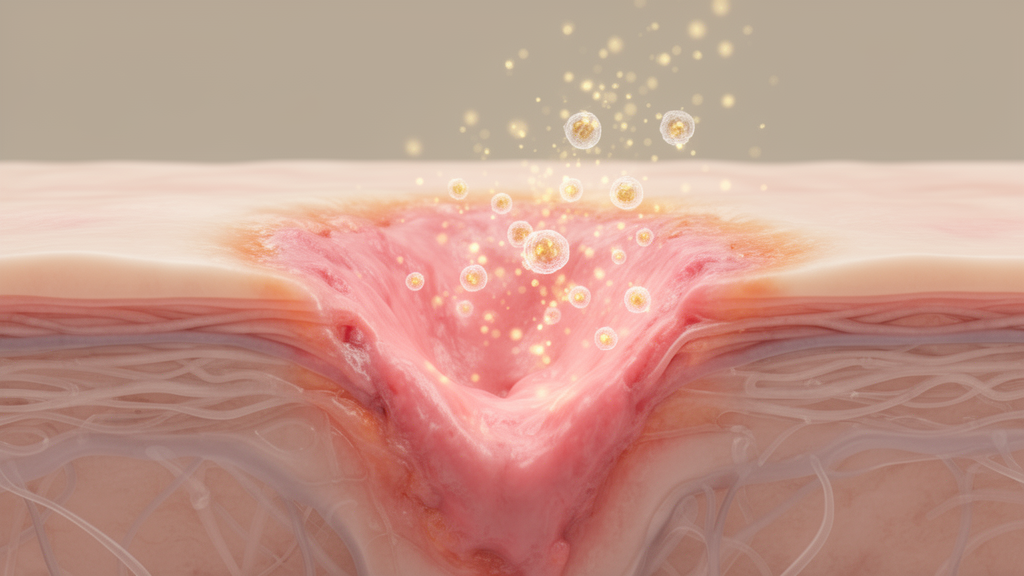
Chronic wounds are one of medicine’s quiet epidemics. An estimated one to two percent of the world’s population lives with a wound that refuses to heal, and diabetic foot ulcers alone contribute to a limb amputation roughly every thirty seconds worldwide. A new review published in Frontiers in Biomaterials Science by Munishwar Nath Gupta of the Indian Institute of Technology Delhi and Premlata Ambre of the Bombay College of Pharmacy argues that the key to unlocking these stalled wounds lies not in stronger antibiotics or smarter bandages alone, but in the immune system itself. The authors assemble what they call an immunotechnology-based toolbox: a collection of immunomodulation and immunoengineering strategies designed to reset the wound environment and restart the natural healing cascade.
To understand why wounds become chronic, the review begins with the biology of normal healing. Wound repair typically proceeds through four overlapping stages: haemostasis, inflammation, proliferation, and remodeling. Inflammation is the body’s ancient defense response, recognized since antiquity by its four cardinal signs of redness, swelling, heat, and pain. In an acute wound, this inflammatory phase is brief, driven largely by polymorphonuclear neutrophils, the first responders of innate immunity. Once their work is done, inhibitors of pro-inflammatory cytokines such as IL-1, TNF-alpha, IL-6, and IL-12 come into play, along with anti-inflammatory cytokines including IL-4, IL-10, and TGF-beta, which together shut inflammation down and hand over to the repair machinery.
In chronic wounds, that handover never happens. The review identifies several reasons why inflammation persists: damage-associated molecular patterns released by necrotic tissue, impaired microvasculature, ischemia-reperfusion injury, hyperglycemia in diabetic patients, oxidative stress, cellular senescence, and neuropathy. The result is that innate immune cells, notably neutrophils and macrophages, remain locked in pro-inflammatory forms. Biofilms compound the problem, with an estimated sixty to eighty percent of chronic wounds harboring these structured bacterial communities that resist both immune attack and antimicrobial treatment. Uncontrolled matrix metalloproteinases, normally kept in check by their tissue inhibitors, continue to digest the extracellular matrix, preventing reconstruction of new tissue.
Central to this failure is the macrophage. These versatile immune cells exist along a spectrum of functional states, classically simplified as the pro-inflammatory M1 phenotype, which secretes TNF-alpha, IL-1 beta, and IL-6, and the reparative M2 phenotype, which produces IL-10, TGF-beta, and arginase 1 to support collagen synthesis and matrix reconstruction. In a healing wound, macrophages transition from M1 to M2 as danger signals fade. In chronic wounds, particularly diabetic ulcers, this polarization switch is blocked. Hyperglycemia sustains pro-inflammatory cytokines, and TNF-alpha and IL-1 beta suppress the migration and proliferation of keratinocytes and fibroblasts, preventing wound closure. Advanced glycation end products trigger NF-kB cascades that prolong inflammation further. The authors stress that the M1/M2 binary is a simplification: single-cell studies reveal multiple M2 subtypes with distinct markers and functions, and intermediate states co-expressing both pro-inflammatory and reparative markers coexist within wounds.
The first major branch of the toolbox is immunomodulation through extracellular vesicles. These lipid-bilayer sacs, released by all cell types as part of intercellular communication, act as cell-free vectors carrying proteins, lipids, nucleic acids, and metabolites between cells. Exosomes, the most studied class, measure thirty to one hundred fifty nanometers, while microvesicles span one hundred to one thousand nanometers and apoptotic bodies range up to five micrometers. Compared with synthetic liposomes, extracellular vesicles carry complex, naturally derived membrane proteins inherited from their parent cells, an anionic surface rich in glycoproteins and phosphatidylserine that favors anti-inflammatory uptake by macrophage scavenger receptors. They can home to cells similar to their parents, offering so-called Trojan horse targeting, and they show strong stability and safety profiles. Liposome-vesicle hybrids are also being explored, and liposomes remain a proven technology in wound care, but engineered extracellular vesicles are emerging as a particularly promising platform for delivering therapeutic proteins to chronic wounds.
Stem cells form the second pillar of the immunomodulation approach. Mesenchymal stromal cells, harvestable from bone marrow, adipose tissue, and dental pulp, act mainly through paracrine signaling rather than by directly differentiating into new skin cells. They promote survival, migration, and proliferation of cells at the wound site, suppress cytotoxic T cells and B cells, secrete the antimicrobial peptide LL-37, and tolerate hypoxia remarkably well. Their anti-inflammatory cytokines IL-10 and TGF-beta downregulate NF-kB and the NLRP3 inflammasome, favoring M2 macrophage formation. Notably, cruder fractions such as the stromal vascular fraction from adipose tissue often outperform isolated stem cells, suggesting that synergy among multiple cell types matters. Recent reviews indicate mesenchymal stromal cells are useful at every stage of healing, from establishing hemostasis to controlling inflammation, though challenges remain: cells persist poorly in the proteolytic wound bed, donor variability is high, and senescence of the cells themselves under chronic wound conditions may blunt their benefits. Clinical results so far are promising but inconsistent, and the field remains largely investigational.
Immunoengineering, the toolbox’s second branch, goes further by exploiting engineered biomaterials to regulate immune responses in space and time. The review emphasizes that these platforms are not passive delivery vehicles: their physical identity is itself an immunomodulatory signal. Hydrophilic, anionic surfaces favor reparative M2 polarization, while softer, tissue-matched materials promote M2 skewing and cell migration through mechanotransduction, and stiffer matrices tend to drive fibrosis. Porosity governs immune-cell infiltration and vascularization, degradation rate sets the duration of the foreign-body response, and oxygen permeability drives HIF-1alpha-mediated angiogenesis. Among the concrete examples are DNA nanoparticles, in which plasmid DNA encoding vascular endothelial growth factor is delivered in poly(lactic-co-glycolic acid) nanospheres to promote angiogenesis in diabetic foot ulcers, and aptamer-antibody conjugates that target toll-like receptors to modulate inflammation. Critically, one study showed that delivering fibroblast growth factor worked far better at stimulating collagen and extracellular matrix production when a smart material first reset macrophages from M1 to M2, a strategy the authors call regenerative immunoengineering.
Theranostic devices represent the toolbox’s most futuristic corner, combining real-time sensing with triggered therapy. One prototype smart dressing uses a near-infrared sensor to detect the hypothermia that signals infection, then an integrated ultraviolet-actuated LED releases an antibiotic on demand. Antimicrobial proteases delivered through hydrogel dressings can disrupt biofilms, with the hydrogel’s mesh size and swelling ratio controlling both enzyme payload and diffusion into the biofilm’s extracellular polymeric matrix. Lysostaphin, a zinc metalloenzyme, has shown effectiveness against biofilms in burn wounds, and zinc ions themselves encourage cell proliferation and production of vascular endothelial and insulin-like growth factors. In another design, a hydrogel based on porcine dermal matrix releases curcumin to control infection first, then magnesium ions from doped glass nanoparticles dampen pro-inflammatory pathways, a sequential effect coordinated by the material’s degradation profile. Glycoside hydrolases and quorum-sensing inhibitors can strip away the extracellular polysaccharide armor of biofilms, making liberated bacteria vulnerable to phagocytosis and antibiotics, while cationic polymeric brushes sequester endotoxins and nanozymes such as cerium and manganese dioxide lower oxidative stress.
The unifying message of the review is that chronic wound care is converging on immunology, regenerative medicine, theranostics, and smart biomaterials, and that the design of a material’s surface chemistry, stiffness, porosity, and degradation behavior matters as much as the therapeutic molecules it carries. Growth factor delivery alone has often disappointed precisely because it fails to address the underlying immune dysregulation. The authors point toward a future in which wearables with integrated electronics, telemedicine, and artificial intelligence work alongside these immunotechnology platforms, with dressings that sense the wound microenvironment and intervene in real time. Much of the evidence remains preclinical, and translational hurdles such as manufacturing scale-up, batch consistency, and regulatory pathways are real. But the conceptual shift is profound: rather than simply covering a wound, medicine may soon be able to talk to the immune system directly, persuading it to stand down from its destructive vigil and return to the business of repair.
Subject of Research: Immunotechnology-based approaches for treating chronic non-healing wounds
Article Title: Immunotechnology-based toolbox for care of chronic wounds
Article References: Gupta, M. N., & Ambre, P. (2026). Immunotechnology-based toolbox for care of chronic wounds. Frontiers in Biomaterials Science, 5, Article 1979352. https://doi.org/10.3389/fbiom.2026.1979352
Image Credits: AI Generated
DOI: 10.3389/fbiom.2026.1979352
Keywords: chronic wounds, immunomodulation, immunoengineering, macrophage polarization, extracellular vesicles, mesenchymal stem cells, biofilms, diabetic foot ulcers, smart dressings, theranostics, biomaterials, wound healing
News Source: Denise Maddox. (October 15, 2026). Reprogramming the Immune System: A New Toolbox for Healing Chronic Wounds. Scienmag.