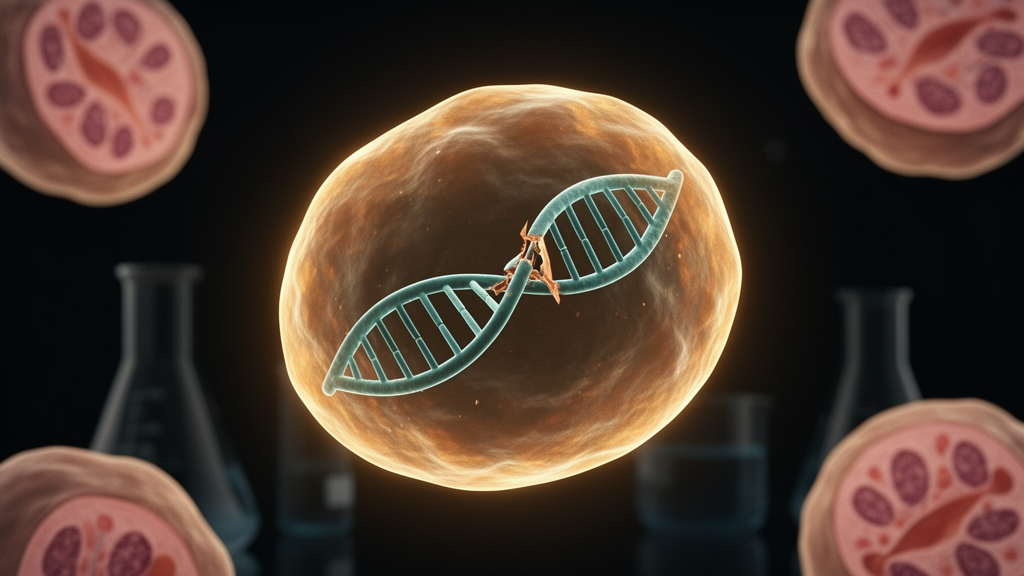
Inherited changes in the architecture of the human genome, far larger than the single-letter mutations that have dominated cancer genetics for decades, appear to leave fingerprints on the tumors that patients develop. A new study published in Genome Biology by researchers at Baylor College of Medicine reports that germline structural variants—deletions, duplications, and other rearrangements involving large segments of DNA present from birth—are far more consequential in breast and gynecologic cancers than previously appreciated. Analyzing more than 2,000 tumors, the team found that these inherited rearrangements not only silence or dysregulate individual cancer genes but also shape the overall mutational landscape of the tumor itself, suggesting that a patient’s genetic background helps determine how heavily mutated their cancer will become.
The study, led by Fengju Chen, Yiqun Zhang, Luis F. Paulin, Fritz J. Sedlazeck, and Chad J. Creighton, drew on whole-genome sequencing data from The Cancer Genome Atlas, focusing on a pan-gynecologic cohort of 2,006 patients whose blood-normal genomes and tumor multi-omics profiles were both available. The tumors spanned five cancer types: breast carcinoma, cervical cancer, ovarian cancer, uterine endometrial carcinoma, and uterine carcinosarcoma. By combining germline structural variant calls from normal blood DNA with tumor gene expression, DNA methylation, and somatic mutation data, the researchers could ask how variants present in every cell of the body influence the molecular character of the cancer that eventually arises.
Structural variants have long been the neglected middle child of cancer genomics. While single nucleotide variants and small insertions and deletions can be called with high confidence from short-read sequencing, larger rearrangements—deletions spanning thousands of bases, duplications, inversions, and complex rearrangements—are harder to detect and annotate. Their effects also depend heavily on tissue context: a structural variant that disrupts gene regulation in breast tissue may have no consequence in the ovary. This tissue dependence is precisely why the Baylor team chose to study each cancer type individually rather than pooling all tumors together, using linear models that corrected for patient ancestry and cancer type.
One of the starkest findings concerns rare structural variants predicted to disable genes outright. The researchers identified rare germline SV events with breakpoints falling within cancer-relevant genes, predicted by the SVAnnotate tool to cause loss of function, and cumulatively these events affected approximately 29 percent of patients in the cohort. In other words, nearly three in ten patients carried at least one rare inherited rearrangement predicted to disrupt a gene with known relevance to cancer. When the team cross-referenced these predicted gene-disrupting variants with tumor RNA sequencing data, they found that genes carrying such variants tended to show reduced expression in the corresponding tumors—evidence that the germline event had a measurable downstream effect on the tumor transcriptome.
Beyond rare events, the study uncovered thousands of genes with statistically significant associations between nearby germline SV breakpoints and altered tumor gene expression or DNA methylation. These associations took two forms: some were specific to a single tumor type, consistent with the tissue-specific nature of gene regulation, while others were shared across multiple cancer types, pointing to more universal regulatory mechanisms. The genes involved were not random—they were enriched for cancer-relevant genes, including established cancer susceptibility genes previously found to harbor pathogenic or likely pathogenic germline variants in exome-based pan-cancer analyses. The researchers also performed a variant-centric analysis, examining SV-gene pairings found in at least ten patients, to confirm that the signal was not an artifact of the gene-centric approach.
The epigenetic dimension of the work adds an important layer. DNA methylation at CpG islands—the chemical tags that silence promoters and shape chromatin state—showed widespread associations with nearby germline SV breakpoints. Because methylation changes can persistently alter gene expression without changing the DNA sequence itself, these findings suggest that inherited structural variation may program tumor epigenetic states long before malignant transformation begins. The probe-level analysis of CpG island methylation, conducted across the full cohort and within individual cancer types, revealed that the regulatory consequences of a germline SV can be written into the tumor’s epigenome as well as its transcriptome.
Perhaps the most provocative result is the link between germline SV patterns and tumor mutational load—the total burden of somatic mutations, copy number alterations, and somatic structural variation acquired by the tumor during its evolution. The team found widespread associations between the density of germline SV breakpoints in specific genomic regions and the degree of somatic copy number alteration and somatic structural variation in the corresponding tumors. Crucially, similar patterns appeared in additional cancer cohorts beyond the gynecologic and breast cancers, including the Pan-cancer Analysis of Whole Genomes (PCAWG) cohort and the Children’s Brain Tumor Network (CBTN) cohort, indicating that the relationship between inherited genome architecture and tumor evolution is not confined to one tissue type.
From these region-level correlations, the researchers constructed a polygenic signature—a score summarizing a patient’s germline SV breakpoint pattern across many genomic regions—that correlated with global somatic copy number alteration index in the pan-Gyn cohort. When applied to the PCAWG and CBTN cohorts, the same germline-based polygenic signature scores showed consistent behavior, supporting the idea that the total germline SV landscape, rather than any single variant, encodes information about how heavily a tumor will mutate. This polygenic framing echoes concepts from common-disease genetics, where many variants of small effect combine to shape risk, but here the combined signal predicts a property of the tumor rather than the probability of developing cancer.
A single concrete example anchors the statistical findings. The team identified a germline deletion structural variant spanning the UGT2B17 gene, carried by 36 percent of patients, that was associated with reduced UGT2B17 expression in tumors and, notably, with lower tumor mutational load. UGT2B17 encodes a UDP-glucuronosyltransferase enzyme involved in the metabolism of steroid hormones and xenobiotics, and the common deletion is one of the most frequent copy number polymorphisms in human populations. The observation that carriers of this deletion show both reduced gene expression and a distinct somatic mutation profile provides a mechanistic template for how a common inherited rearrangement can influence the evolutionary trajectory of a tumor—potentially through altered metabolism of endogenous or environmental compounds that generate DNA-damaging intermediates.
The implications stretch across cancer genetics, risk prediction, and tumor classification. By demonstrating that germline SV-associated dysregulation extends the spectrum of patients with evidence of a germline contribution to cancer development or progression, the study considerably widens the population in whom inherited factors may be relevant—well beyond the small fraction identified by current clinical testing for point mutations in known susceptibility genes. The finding that a patient’s genetic background may influence tumor characteristics, including somatic mutational load, also suggests that germline structural variation could one day inform how tumors are stratified for therapy, since mutational load shapes immunogenicity, genomic instability, and treatment response. As long-read sequencing technologies mature and structural variant calling becomes routine in clinical genomes, the hidden architecture of the inherited genome may prove to be a missing dimension in understanding why two patients with the same cancer can carry tumors with such different molecular personalities.
Subject of Research: Cancer Genetics and Genomics
Article Title: Germline structural variation involving gynecologic and breast cancers reveals polygenic signatures of tumor mutational load
Article References: Germline structural variation involving gynecologic and breast cancers reveals polygenic signatures of tumor mutational load. (n.d.). https://doi.org/10.1186/s13059-026-04297-3
Image Credits: AI Generated
DOI: 10.1186/s13059-026-04297-3
Keywords: germline structural variation, breast cancer, gynecologic cancer, tumor mutational load, TCGA, gene expression, DNA methylation, copy number alteration, UGT2B17, polygenic signature, cancer susceptibility genes, whole-genome sequencing
News Source: Juliet Wilcox. (October 15, 2026). Inherited genome rearrangements shape tumor mutation burden in breast and gynecologic cancers. Scienmag.