Liver cancer has long been understood as a disease of damaged DNA, viral infection, and cirrhosis. But as obesity and metabolic syndrome sweep across the globe, a quieter and more insidious route to hepatocellular carcinoma has taken center stage: the fatty liver pathway. A new review published in the Journal of Translational Medicine argues that the field has been making a fundamental conceptual error by treating fat-driven liver cancer as a single, uniform disease process. Instead, researchers led by Yi Deng and Wen Meng of Central South University in Changsha, China, propose that lipid metabolism plays entirely different roles at different phases of disease, and that failing to respect this stage dependency may explain why so many promising therapies have stumbled in translation.
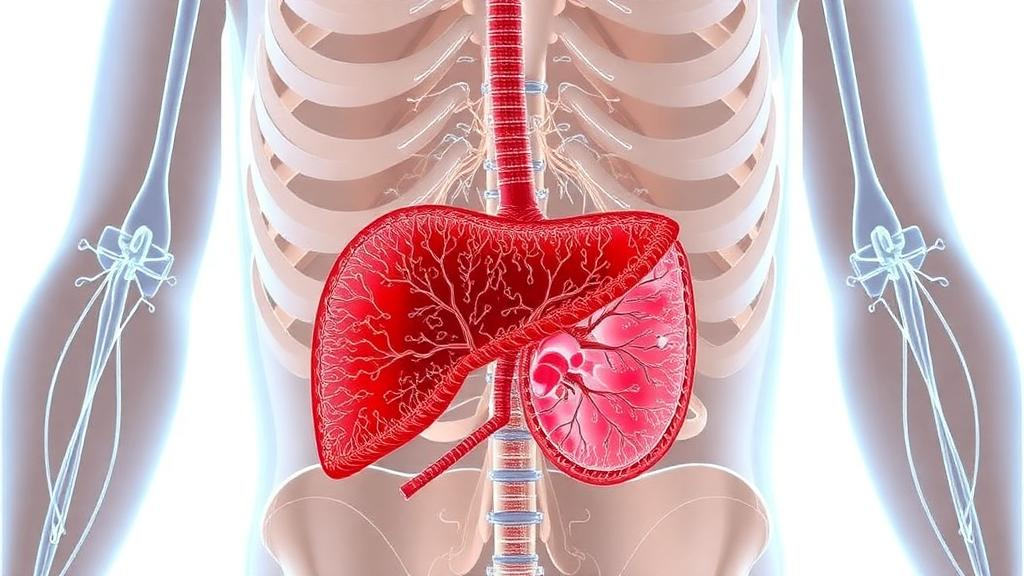
The condition at the heart of the analysis is metabolic dysfunction-associated steatotic liver disease, or MASLD, which affects roughly a third of adults in many industrialized countries. In a subset of patients, simple fat accumulation progresses to metabolic dysfunction-associated steatohepatitis, or MASH, an inflammatory state marked by hepatocyte injury, fibrosis, and regenerative nodules. MASH is now one of the fastest-growing substrates for hepatocellular carcinoma worldwide, and alarmingly, it can give rise to liver cancer even in the absence of full-blown cirrhosis. Yet as the review emphasizes, the cancer biology of this pathway cannot be reduced to fat simply piling up inside liver cells.
The authors organize their argument around a phase-resolved framework that divides the MASLD-to-cancer continuum into three biologically distinct stages. In the earliest phase, the problem is one of lipid-buffering failure. The liver receives an oversupply of fatty substrates from the diet and from adipose tissue while simultaneously ramping up de novo lipogenesis, the internal synthesis of new fat from excess carbohydrates. Transcription factors such as sterol regulatory element-binding protein 1c and carbohydrate response element-binding protein drive this synthesis, while enzymes including ATP citrate lyase, acetyl-CoA carboxylase, and fatty acid synthase execute it. When fatty acid oxidation cannot keep pace and very-low-density lipoprotein export falters, triglycerides accumulate, organelles become stressed, and the gut-liver axis delivers inflammatory microbial products that amplify the damage.
What makes this framework provocative is its insistence that the same lipid pathway can be protective in one phase and oncogenic in another. Lipid droplets, for instance, are often dismissed as mere storage depots, but they can act as safety buffers that sequester toxic lipids away from sensitive membranes. Perilipin proteins that coat these droplets help determine whether stored fat remains inert or becomes dangerous. During the transformation phase, however, repeated cycles of lipotoxic injury convert metabolic stress into genomic damage. Reactive oxygen species generated by overloaded mitochondria and stressed endoplasmic reticulum attack DNA directly, while the review highlights how senescence escape, epigenetic reprogramming, and RNA-level stress memory consolidate the malignant potential of injured hepatocytes.
The molecular cast of characters in this transformation is extensive. The review catalogs alterations in DNA damage checkpoint mediators, chromatin remodelers such as Brahma-related gene 1, and RNA modification machinery including the methyltransferase METTL14, which deposits N6-methyladenosine marks on messenger RNA. Fibrotic remodeling driven by hepatic stellate cells creates a permissive microenvironment, while immune dysfunction, including impaired antitumor T cell surveillance and altered mucosal-associated invariant T cell function, removes another layer of defense. The gut microbiome contributes its own amplification loop, with microbial metabolites such as trimethylamine N-oxide and deoxycholic acid species feeding back into hepatic inflammation and proliferation signals.
Once hepatocellular carcinoma is established, the metabolic logic shifts again. Malignant cells become connoisseurs of fat, exploiting a suite of lipid programs to fuel growth and resist therapy. They upregulate de novo lipogenesis to build membranes for dividing cells, deploy selective fatty acid oxidation as an efficient energy source, and reroute carnitine shuttling through transporters such as organic cation and carnitine transporter 2 and carnitine palmitoyltransferase 1A to keep mitochondria supplied. Fatty acid uptake via the scavenger receptor CD36 and lipid droplet buffering through hypoxia-inducible lipid droplet-associated protein allow tumors to thrive under hypoxic conditions where normal cells would falter.
Perhaps the most clinically consequential theme in the review is ferroptosis resistance. Ferroptosis is an iron-dependent form of cell death driven by the peroxidation of membrane lipids, and it has emerged as a promising vulnerability in cancer therapy. Lipid-rich liver tumors, however, appear to have evolved multiple countermeasures. The review describes how enzymes such as acyl-CoA synthetase family members and phospholipase A2 group VI, along with antioxidant regulators like glutathione peroxidase 4 and the cystine transporter SLC7A11, help malignant hepatocytes neutralize lipid peroxides before they become lethal. Understanding these defenses, the authors argue, is essential for designing therapies that can flip the switch back toward ferroptotic death.
This phase dependency also exposes a subtle trap that the authors call phase mismatch. Interventions that successfully improve steatohepatitis do not necessarily prevent hepatocellular carcinoma, because the lipid programs driving inflammation in early disease are not the same ones driving malignancy later. Conversely, a tumor vulnerability identified in established cancer may be irrelevant, or even harmful to target, during the precancerous phase. The same pathway can be protective, neutral, or oncogenic depending on when in the continuum it is engaged and in which cell compartment, whether hepatocyte, stellate cell, or immune cell, it is being modulated.
The translational implications are significant but tempered by caution. The review frames future lipid-directed therapy around phase-specific endpoints and biomarker enrichment, meaning trials should stratify patients by disease stage and by molecular markers such as genetic variants in patatin-like phospholipase domain-containing protein 3, transmembrane 6 superfamily member 2, or membrane-bound O-acyltransferase domain containing 7, all of which modulate lipid handling and cancer risk. Approved anti-MASH therapies and standard hepatocellular carcinoma treatments, including immune checkpoint inhibitors and tyrosine kinase inhibitors, remain the only validated options, while most lipid-targeted interventions, from acetyl-CoA carboxylase inhibitors to ferroptosis inducers, are still investigational. The authors also flag environmental contributors such as per- and polyfluoroalkyl substances as emerging risk factors deserving attention.
What the framework ultimately offers is a map. By resolving the MASLD-to-cancer continuum into discrete phases with distinct lipid biology, it gives researchers a way to ask sharper questions: which biomarkers identify patients at each transition point, which interventions should be deployed before transformation rather than after, and how to match a therapy to the specific metabolic dependencies of a given tumor. As fatty liver disease continues its relentless global expansion, this phase-resolved view may prove to be the conceptual tool that finally turns metabolic insight into intercepted cancers.
Subject of Research: Phase-dependent lipid metabolic reprogramming during progression from MASLD/MASH to hepatocellular carcinoma
Article Title: Phase-resolved lipid reprogramming in MASLD/MASH-associated hepatocellular carcinoma: pathogenesis, risk interception, and biomarker-matched therapeutic strategies
Article References: Deng, Y., Chen, T., Hairulajiang, A., Yan, L., Liu, J., & Meng, W. (2026). Phase-resolved lipid reprogramming in MASLD/MASH-associated hepatocellular carcinoma: pathogenesis, risk interception, and biomarker-matched therapeutic strategies. Journal of Translational Medicine. https://doi.org/10.1186/s12967-026-09051-8
Image Credits: AI Generated
DOI: 10.1186/s12967-026-09051-8
Keywords: MASLD, MASH, hepatocellular carcinoma, lipid metabolism, de novo lipogenesis, fatty acid oxidation, ferroptosis, biomarkers, liver fibrosis, gut-liver axis, lipotoxicity, translational medicine
News Source: Nathaniel Bowman. (October 13, 2026). Fat Rewrites the Rules of Liver Cancer Across Every Disease Stage. Scienmag.