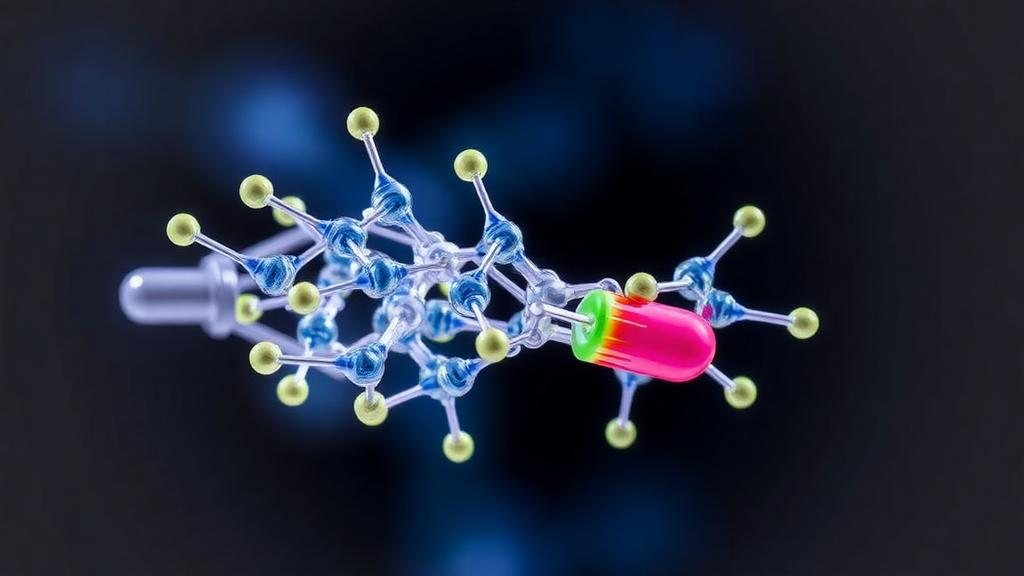
Natural drug molecules have long tantalized medicine with their extraordinary structural diversity and multitarget therapeutic effects, yet most have remained trapped in the laboratory by stubborn physicochemical flaws. Compounds such as curcumin and berberine dissolve so poorly in water that the gut barely absorbs them, while potent agents like triptolide carry toxicity that limits clinical use. A comprehensive review published in the Journal of Advanced Research by Yuan Zhang, Tian Li, Yao Chen, and Jun Ge now maps out how advanced nanocarrier technologies are dismantling these barriers, offering the most systematic account to date of how hydrogels, lipid particles, polymers, polysaccharides, inorganic frameworks, and biomimetic systems are being engineered to carry nature’s pharmacy into patients.
The commercial stakes are enormous. The global nanomedicine market was valued at 263.68 billion US dollars in 2025 and is projected to reach 759.09 billion dollars by 2034, growing at a compound annual rate of 12.83 percent, with North America holding a 46.12 percent share. Natural product-derived drugs continue to account for a significant proportion of newly approved small-molecule therapeutics, making the marriage between nanotechnology and natural chemistry one of the most consequential trends in modern drug development. By precisely tuning particle size, surface charge, and microenvironmental responsiveness, nanocarriers can cross biological barriers, boost the solubility of poorly soluble drugs, prolong retention at lesion sites, and enhance bioavailability while reducing toxicity.
Hydrogel nanocarriers represent one of the most versatile platforms described in the review. These three-dimensional crosslinked networks, held together by hydrogen bonding, pi-pi stacking, and hydrophobic effects, can transform hydrophobic herbal molecules into injectable depots. In pancreatic cancer models, a carrier-free hydrogel co-assembled from puerarin and deacetylasperulosidic acid reduced tumor cell viability to 21.39 percent, while an adenosine-gentisic acid hydrogel that targets mitochondria pushed the apoptosis rate of SW1990 cells to 33.5 percent. Smart hydrogels are also being designed to dismantle multidrug resistance by softening stiff tumor matrix, relieving hypoxia, and reactivating antitumor immunity, potentially converting drug-resistant cold tumors into therapy-sensitive hot ones.
Clinical translation of hydrogels, however, has proven difficult. OncoGel, a thermosensitive PLGA-PEG-PLGA hydrogel encapsulating paclitaxel, was tested in a phase IIb trial of 154 patients with advanced esophageal cancer. Interim safety analysis showed the intratumoral injection was well tolerated, with mostly mild local adverse reactions and no increase in systemic toxicity, yet no efficacy endpoints were ever disclosed and the product never advanced to phase III. The case illustrates a sobering gap between the safety advantages of hydrogel carriers and the demonstration of definitive benefit, compounded by low drug loading, weak intrinsic targeting, protein corona formation after systemic administration, and severe batch-to-batch variability from natural sources.
Lipid-based nanocarriers, by contrast, are the most clinically mature platform. Liposomes, solid lipid nanoparticles, and nanostructured lipid carriers exploit biomembrane-mimetic bilayers to encapsulate both hydrophilic and hydrophobic natural drugs. Preclinical successes are striking: pH-sensitive liposomes coloaded with dihydroartemisinin and tetrandrine reversed doxorubicin resistance in breast cancer by up to 46.70 percent while reducing cardiotoxicity, aptamer-modified liposomes carrying norcantharidin and paeonol achieved a 77.67 percent hepatic tumor inhibition rate, and ApoE-functionalized liposomes delivered artesunate derivatives deep into drug-resistant glioblastoma. Approved products validate the pathway: Marqibo for relapsed acute lymphoblastic leukemia, Onivyde for metastatic pancreatic cancer based on the NAPOLI-1 trial showing median overall survival of 6.1 versus 4.2 months, and the Chinese paclitaxel liposome Lipusu, which in real-world studies of advanced lung cancer combined with immunotherapy produced a median overall survival of 30.5 months.
Even liposomal curcumin has reached patients. In a phase I dose-escalation study of 32 patients with advanced solid tumors, Lipocurc established safety and tolerability, with curcumin plasma concentrations reaching 1,428 to 1,641 nanograms per milliliter at the 300 milligrams per square meter dose. Although no objective tumor responses were observed, one prostate cancer patient’s PSA fell from 649 to 355 nanograms per milliliter and a colon cancer patient’s CEA dropped from 18,542 to 6,441 micrograms per liter, providing rare clinical evidence that nanodelivery can overcome the notoriously low bioavailability of plant polyphenols. Challenges remain, including the accelerated blood clearance phenomenon after repeated PEGylated injections and limited loading capacity for poorly water-soluble drugs.
Polymeric nanocarriers form the second pillar of translation. Genexol-PM, a Cremophor-free micellar paclitaxel formulation approved in Korea, achieved a 58.5 percent overall response rate in metastatic breast cancer without routine premedication, while the micelle NK105 met safety goals in a phase III trial of 436 patients, cutting severe peripheral neuropathy from 7.5 percent to 1.4 percent compared with conventional paclitaxel, though it narrowly missed its noninferiority endpoint for progression-free survival. The camptothecin nanoparticle CRLX101 provided direct proof of tumor localization in a biopsy study, with fluorescence detectable in all post-treatment tumor samples and none in adjacent healthy tissue. Biomimetic systems add another layer of sophistication: Abraxane, the albumin-bound paclitaxel approved for breast, lung, and pancreatic cancer, exploits the endogenous gp60-SPARC transport pathway and demonstrated a 33 percent versus 19 percent response rate advantage over solvent-based paclitaxel in its pivotal trial, with far less severe neutropenia.
The review also catalogs emerging platforms with high potential but low maturity. Natural polysaccharide-derived carriers built from Astragalus, Dendrobium, and Ganoderma polysaccharides combine drug delivery with intrinsic immunomodulation, yet raw material heterogeneity makes GMP standards nearly impossible to establish. Mesoporous silica and metal-organic frameworks offer enormous surface area and drug-loading capacity, with curcumin-loaded IRMOF-16 and oridonin-loaded MOF-5 showing potent antitumor activity, but framework hydrolysis, burst release, and poorly characterized long-term toxicity keep them preclinical. Biomimetic carriers using erythrocyte membranes, exosomes, yeast cell walls, transferrin, and ferritin achieve immune evasion and homotypic targeting, but scale-up of ultrasonication and extrusion processes remains a fundamental bottleneck.
The authors argue the field is undergoing a paradigm shift from one-size-fits-all nanocarriers toward precision nanomedicines. Future priorities include multi-stimuli-responsive carriers that release payloads sequentially in response to pH, reactive oxygen species, enzymes, and temperature; integration with immunotherapy such as checkpoint blockade and CAR-T cells; genetically engineered protein cages; and artificial intelligence-driven prediction of carrier-drug interactions to screen optimal materials and process parameters. They also highlight an underappreciated frontier: nanocarriers that counteract therapy-induced toxicity, such as systems designed to neutralize the Thbs1-enriched extracellular vesicles that irradiated tumors release to damage the heart.
For now, the hierarchy of translational readiness is clear: lipid carriers lead, followed by polymeric systems and albumin technology, while hydrogels, inorganic frameworks, and polysaccharide carriers remain largely preclinical. Yet the trajectory is unmistakable. As interdisciplinary integration of materials science, biochemistry, and computational design accelerates, the therapeutic potential locked inside curcumin, berberine, paclitaxel, artemisinin, and hundreds of other natural molecules is finally being unlocked, one nanoscale vehicle at a time, promising a future where nature’s most powerful chemistry can reach the right target at the right dose with minimal harm.
Subject of Research: Nanocarrier-based delivery systems for natural drug molecules and their clinical translation
Article Title: Advanced nanocarrier delivery and therapeutic systems for natural drug molecules: mechanisms, applications, and future perspectives
Article References: Zhang, Y., Li, T., Chen, Y., & Ge, J. (2026). Advanced nanocarrier delivery and therapeutic systems for natural drug molecules: mechanisms, applications, and future perspectives. Journal of Advanced Research. https://doi.org/10.1016/j.jare.2026.10.024
Image Credits: AI Generated
DOI: 10.1016/j.jare.2026.10.024
Keywords: nanocarriers, natural products, drug delivery, liposomes, hydrogels, polymeric nanoparticles, biomimetic nanocarriers, paclitaxel, curcumin, nanomedicine, clinical translation, targeted therapy
News Source: Ophelia Keating. (October 12, 2026). Nanocarriers Unlock the Hidden Power of Natural Drug Molecules. Scienmag.