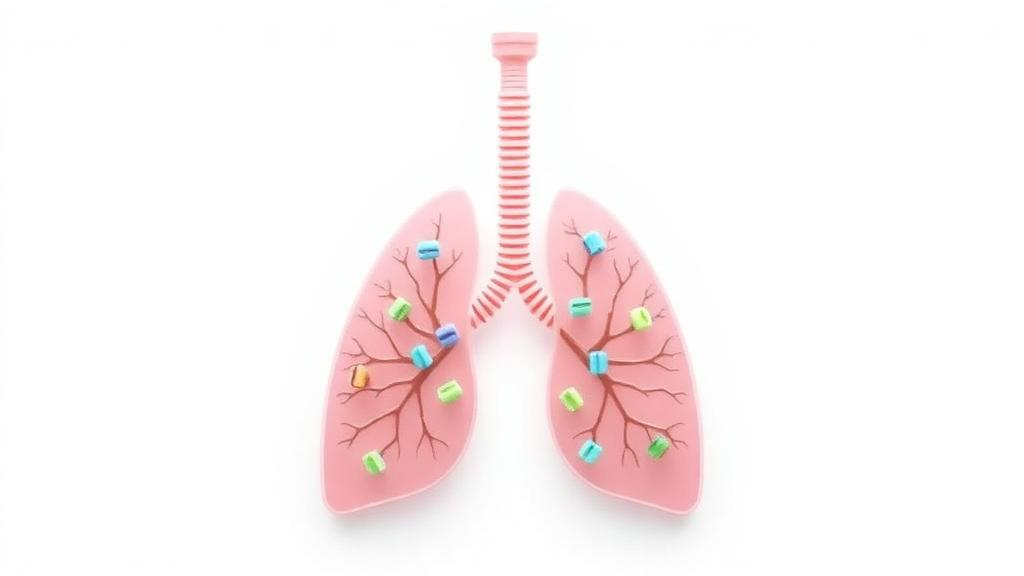
Deep inside aging lungs, a microscopic courier service may be quietly spreading the damage that makes chronic respiratory diseases so stubborn and so hard to reverse. Extracellular vesicles, or EVs, are nanometer-scale particles released by virtually every cell in the body, and for years they were dismissed as little more than cellular debris. Scientists now understand them as sophisticated messengers, ferrying microRNAs, proteins, and lipids between cells and rewiring the behavior of the recipients. A comprehensive new review, led by Professor Wang Ruiying of Shanxi Bethune Hospital together with Professor Chen Yahong of Peking University Third Hospital, Professor Liu Xiansheng of Tongji Hospital, and Professor Peter J. Barnes of Imperial College London, published in the Chinese Medical Journal on July 13, 2026, assembles the evidence that these vesicles are central shared players in senescence-associated chronic lung diseases, from chronic obstructive pulmonary disease to idiopathic pulmonary fibrosis, asthma, bronchiectasis, obstructive sleep apnea, and lung cancer.
The biological concept at the heart of the review is cellular senescence, a state in which cells stop dividing but refuse to die, instead secreting a cocktail of inflammatory molecules known as the senescence-associated secretory phenotype, or SASP. Senescence is not inherently harmful; it contributes to wound healing and tumor suppression in the short term. But when senescent cells accumulate with age, their secretions chronically inflame surrounding tissue, degrade its structure, and push neighboring cells toward senescence themselves. The review argues that EVs act as essential shuttles in this process, propagating senescence signals between cells and creating what the authors describe as a vicious cycle of senescence, inflammation, and dysfunction. In the words of first author Professor Wang, cellular senescence is a major driver of many chronic pulmonary conditions, and EVs are the vehicles that carry those instructions from cell to cell.
Crucially, the cargo of an extracellular vesicle depends on the state of the cell that released it. Under healthy conditions, EVs help maintain tissue homeostasis, supporting immune regulation, cell proliferation, and repair. In disease states, however, senescent cells package a distinctly pro-senescent payload. When neighboring healthy cells take up these vesicles, they can be driven into secondary senescence, amplifying inflammation, tissue damage, and fibrosis across the lung. This mechanism helps explain why chronic lung diseases track so closely with aging, and why damage, once established, tends to spread and self-perpetuate even after the original insult, such as cigarette smoke or environmental pollutants, has been removed.
The review details several mechanistic pathways through which EVs accelerate disease. They facilitate aberrant intercellular communication, deliver pathogenic microRNAs and proteins, promote chronic inflammation, modulate immune cell function, amplify oxidative stress, and actively contribute to remodeling of the extracellular matrix, the scaffolding that gives lung tissue its elastic architecture. Among all cargo types, microRNAs have attracted the most attention because a single vesicle can deliver molecules that silence multiple target genes at once. Several miRNAs in particular, including miR-34a, miR-21, miR-125a-5p, miR-146a-5p, and miR-570-3p, have been shown to target key anti-aging molecules such as the sirtuins, a family of enzymes that protect cells against stress and maintain genomic stability, thereby accelerating senescence in epithelial cells and fibroblasts.
Disease-specific examples illustrate how finely tuned, and how varied, these mechanisms are. In COPD, small EVs released by airway epithelial cells transfer miR-34a to recipient cells, where it suppresses SIRT1, raising levels of the cell-cycle inhibitor p21 and other senescence markers. In idiopathic pulmonary fibrosis, a relentlessly scarring disease of the lung interstitium, fibroblast-derived EVs deliver miR-23b-3p and miR-494-3p, which downregulate SIRT3 and trigger mitochondrial dysfunction, reinforcing the pro-fibrotic, pro-senescent microenvironment that characterizes the disease. In asthma, EV-mediated alterations in miR-34a may simultaneously influence immune polarization and cellular aging pathways in the airway, linking two processes usually studied in isolation.
The review extends this framework to conditions that receive less attention in senescence research. In bronchiectasis, sputum-derived miR-92b-5p and miR-223-3p may directly connect colonization by the bacterium Pseudomonas aeruginosa to airway aging, mediating local inflammation through the cytokines IL-1β and IL-8 while regulating longevity-related pathways. In obstructive sleep apnea, EVs have been implicated in the cardiovascular and neurocognitive complications that accompany repeated nighttime oxygen deprivation. In lung cancer, EVs remodel the tumor microenvironment and mediate resistance to therapy, adding a senescence dimension to oncology’s long-standing interest in vesicle biology. The authors argue that this functional diversity across diseases underscores the pivotal position EVs occupy in the regulatory network of pulmonary medicine.
What elevates the review beyond mechanism is its treatment of EVs as therapeutic agents in their own right. Because they are naturally derived, inherently biocompatible, and capable of targeted delivery, EVs have emerged as promising drug carriers. Mesenchymal stem cell-derived EVs have shown the potential to alleviate inflammation, downregulate senescence markers, and repair lung tissue in experimental models of COPD and IPF. Neutrophil-derived EVs offer unique advantages as delivery vehicles, and aerosol administration allows vesicles to be delivered efficiently and noninvasively directly to lung tissue, a route particularly suited to respiratory disease. In early clinical translation, research in COPD has focused on plasma exosomal miRNA biomarkers, while lung cancer studies apply EV-based liquid biopsy to guide therapeutic decisions. Although these studies were not designed specifically to target senescence, the authors note that they provide indirect evidence for the mechanisms underlying EV-mediated pulmonary aging.
Professor Wang notes that EVs hold promise as tools for senotherapy, the emerging class of interventions aimed at removing or reprogramming senescent cells, and that developing optimal EVs for such therapies is becoming an important research focus. Current optimization strategies include loading vesicles with therapeutic drugs, modifying their surfaces with targeting ligands so they home to specific cell types, and refining aerosol delivery for the respiratory tract. Yet significant obstacles stand between laboratory promise and bedside impact. Isolation and characterization methods remain inconsistent across laboratories, making results difficult to compare and reproduce. Large-scale clinical validation is still lacking, and the basic biology of EVs in the aging context, including how vesicle cargo changes with age and disease severity, is only beginning to be mapped.
The significance of the review lies in its unifying framing. Chronic lung diseases have traditionally been studied and treated as separate entities, each with its own specialist clinic, biomarker panel, and drug pipeline. By identifying EV-mediated senescence signaling as a shared pathway running through COPD, IPF, asthma, bronchiectasis, OSA, and lung cancer, the authors provide a conceptual bridge that could allow insights and therapies developed for one condition to inform others. A vesicle-targeting strategy that interrupts the transfer of miR-34a in COPD airways, for example, might be adapted to interrupt pro-fibrotic vesicle signaling in IPF. Conversely, biomarkers measured in circulating vesicles could one day track senescence burden across multiple diseases with a single blood test.
The work also arrives at a moment when the biology of aging is moving from the fringes of medicine toward its center. With global populations aging rapidly, the burden of chronic respiratory disease is projected to rise steeply, and current treatments largely manage symptoms rather than halt the underlying degenerative process. If EVs truly are the shuttles that spread senescence through lung tissue, then intercepting them, disarming their cargo, or replacing them with engineered vesicles carrying restorative payloads represents a fundamentally new therapeutic paradigm. The review’s authors are careful to emphasize the challenges that remain, but their synthesis offers researchers a clear framework for future investigation and, they hope, a path toward anti-senescence therapy for chronic respiratory diseases that changes the trajectory of these conditions rather than merely slowing their symptoms.
Subject of Research: The role of extracellular vesicles in cellular senescence and chronic lung diseases
Article Title: Insights into extracellular vesicles in senescence-associated chronic lung diseases
Article References: Insights into extracellular vesicles in senescence-associated chronic lung diseases. (n.d.). Original publication
Image Credits: AI Generated
DOI: Not provided
Keywords: extracellular vesicles, cellular senescence, COPD, idiopathic pulmonary fibrosis, microRNAs, SASP, sirtuins, senotherapy, asthma, lung cancer, bronchiectasis, obstructive sleep apnea
News Source: Beatrice Stafford. (October 11, 2026). Tiny Cellular Shuttles Drive Aging in Chronic Lung Disease, Review Finds. Scienmag.