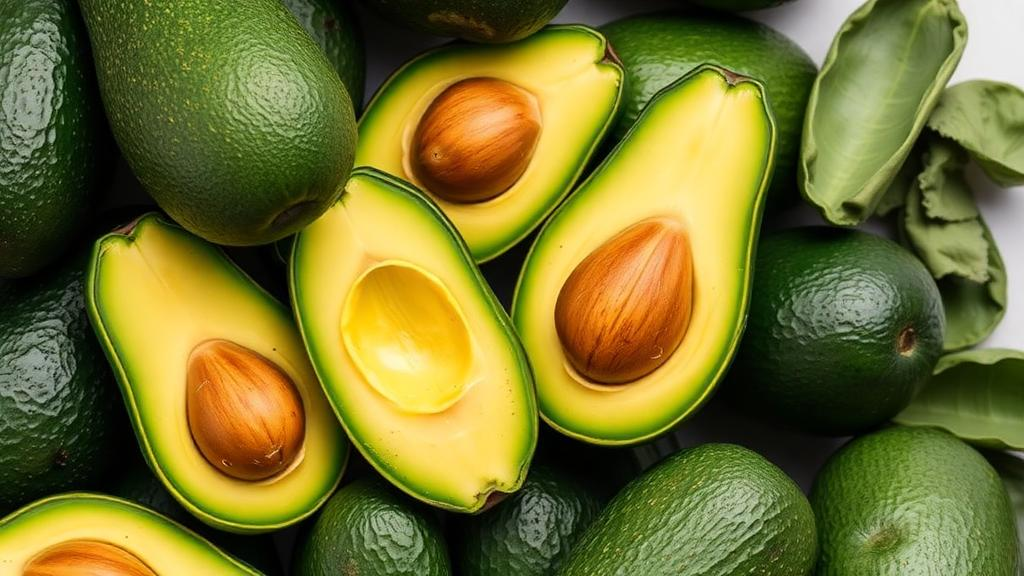
Every year, the booming avocado oil industry leaves behind mountains of defatted pulp, seeds, and peels—roughly thirty percent of the fruit’s total weight—most of which is discarded or fed to animals despite being loaded with protein, polyphenols, and dietary fiber. Now, a team of researchers in Thailand and the United Kingdom has demonstrated a fully green, three-stage process that transforms this overlooked waste stream into a remarkably high-performing protein ingredient. By combining supercritical carbon dioxide defatting, a food-grade deep eutectic solvent, and microwave heating, they recovered avocado proteins with dramatically better purity, solubility, nutrition, and antioxidant power than those obtained through the industry’s standard alkaline method. The work, published in the Journal of Agriculture and Food Research, offers a template for how food by-products could be upgraded into premium ingredients rather than thrown away.
The conventional way of isolating plant proteins—soaking the raw material in strong sodium hydroxide and then dropping the pH to precipitate the protein at its isoelectric point—is cheap and familiar, but it comes with serious drawbacks. The process demands large volumes of corrosive chemicals, long extraction times, and considerable energy, and the harsh alkaline conditions can denature proteins and strip away essential amino acids. Worse, the strong base dissolves not just protein but also carbohydrates, pectin, and fiber, inflating the apparent yield while diluting the actual protein content. In the new study, conventionally extracted avocado protein reached only about 18 to 20 percent protein content, meaning four-fifths of the recovered powder was essentially impurity.
The researchers’ alternative begins with supercritical fluid CO2 extraction, which strips residual oil from the defatted avocado cake at a gentle 35 degrees Celsius and high pressure using ethanol as a co-solvent. This defatting step matters for more than cleanliness: removing lipids prevents the formation of lipid-protein complexes during extraction, which are a common source of off-flavors, and previous work has shown that supercritical pretreatment preserves the structural and functional integrity of proteins better than organic solvents like hexane. The resulting SFE-pretreated cake became the starting material for all the greener extraction routes the team tested.
The heart of the innovation lies in the solvent. Deep eutectic solvents are mixtures of a hydrogen bond acceptor—in this case food-grade choline chloride—and a hydrogen bond donor, here glycerol, blended with a small amount of water. The resulting liquid is biodegradable, inexpensive, low in toxicity, and easy to prepare. The team chose a 2:1 choline chloride to glycerol ratio with water added to reach a 2:1:1 molar composition, tuning the viscosity and polarity so the solvent could penetrate the plant matrix without disrupting protein integrity. Glycerol was preferred over acidic donors because its polyhydroxy structure maintains a near-neutral medium, avoiding the low pH and high viscosity that would compromise both mass transfer and protein quality.
On its own, however, the deep eutectic solvent has a stubborn limitation: high viscosity slows the movement of molecules between solvent and solid material. That is where the microwave comes in. Microwave-induced dipole rotation generates rapid, volumetrically uniform heating that slashes both the surface tension and viscosity of the solvent, allowing it to flood into the cellular structure of the avocado cake in minutes rather than hours. The researchers first optimized the microwave temperature, testing 60 to 120 degrees Celsius, and found that although yield stayed statistically similar across the range, protein purity fell sharply at higher temperatures as heat triggered denaturation, Maillard reactions with residual sugars, and the co-extraction of phenolics and polysaccharides. Sixty degrees Celsius proved optimal, delivering the cleanest protein at 37 percent content in a microwave-only run.
When all three technologies were combined—supercritical defatting, deep eutectic solvent, and microwave assistance—the results were striking. The integrated SFE-DES-MW process achieved the highest protein content of any method, 47.78 percent, along with a protein recovery rate of 26.40 percent, while cutting extraction time from two hours to thirty minutes. The team is candid that recovery remains modest: a substantial fraction of nitrogenous material stays locked in the spent cake, particularly alkali-soluble glutelins anchored to polysaccharides through ester cross-links that only strong base can cleave. They propose a sequential two-step biorefinery in which the DES-MW extraction delivers a high-purity isolate first, and alkaline extraction of the residue captures the remainder for non-food industrial uses—a cascade configuration they argue is essential for economic viability.
The structural evidence reveals why the new protein performs so well. Sodium dodecyl sulfate gel electrophoresis showed that conventional extraction retains large native aggregates of 110 to 120 kilodaltons, whereas the DES-MW treatment dissociates these complexes into sharp, well-resolved subunits at roughly 75, 65, 45, and 35 kilodaltons—dissociation of non-covalent aggregates, not peptide-chain degradation, since no smearing appeared on the gels. Infrared spectroscopy quantified the conformational shift: conventional protein was dominated by rigid beta-sheet structures at 89.25 percent with almost no alpha-helix, while the SFE-DES-MW protein flipped to 48.36 percent alpha-helix and only 38.11 percent beta-sheet. This unfolding exposes hydrophilic residues that were previously buried, and X-ray diffraction confirmed the protein remained in a salt-free, amorphous state—free of the potassium chloride crystalline impurities that contaminate conventionally extracted samples when hydrochloric acid reacts with the fruit’s abundant natural potassium.
Those molecular changes translate directly into functional performance. Water solubility jumped nearly fourfold, from about 20 percent for conventional protein to 74 percent for the SFE-DES-MW isolate, driven by the exposed hydrophilic groups and a highly negative zeta potential of minus 45.63 millivolts that generates strong electrostatic repulsion between particles. Foaming capacity reached 107.90 percent and foam stability 85.75 percent, both far exceeding the conventional extract, while water-holding capacity was uniformly excellent across all samples at 8.5 to 8.9 grams of water per gram of protein—higher than previously reported for avocado or soy protein—thanks to the porous, sponge-like microstructure revealed by scanning electron microscopy. Oil-holding capacity was also slightly but significantly improved in the DES-treated groups.
Nutritionally, the green process more than doubled total amino acid recovery, from 41.5 to 98.6 milligrams per gram of protein, and raised the essential amino acid share from 37.35 to 41.58 percent. Leucine, the dominant branched-chain amino acid, nearly tripled to 9.3 milligrams per gram, with parallel gains in lysine, valine, threonine, and the antioxidant-active aromatic residues tyrosine, phenylalanine, and histidine. Those exposed aromatic amino acids, working in tandem with co-extracted phenolic compounds, pushed DPPH radical scavenging activity to four times the conventional level. The authors argue that the combination of safe solvents, minimized processing time, lower energy demand, and biodegradable chemistry gives the integrated process a highly competitive environmental profile. If the two-step biorefinery concept matures, the humble leftover of the world’s avocado toast habit could become a premium, functional protein ingredient for the food industry.
Subject of Research: Green extraction of functional protein from defatted avocado cake using supercritical fluid, deep eutectic solvent, and microwave-assisted processing
Article Title: A holistic supercritical fluid-deep eutectic solvent-microwave-assisted process for the recovery of protein from defatted avocado cake
Article References: A holistic supercritical fluid-deep eutectic solvent-microwave-assisted process for the recovery of protein from defatted avocado cake. (n.d.). Original publication
Image Credits: AI Generated
DOI: Not provided
Keywords: avocado, protein extraction, deep eutectic solvents, supercritical fluid extraction, microwave-assisted extraction, food waste valorization, green chemistry, plant protein, antioxidant activity, amino acids, biorefinery, functional properties
News Source: Alan Morgan. (October 11, 2026). Green Triple-Technology Process Turns Avocado Waste Into High-Performance Protein. Scienmag.