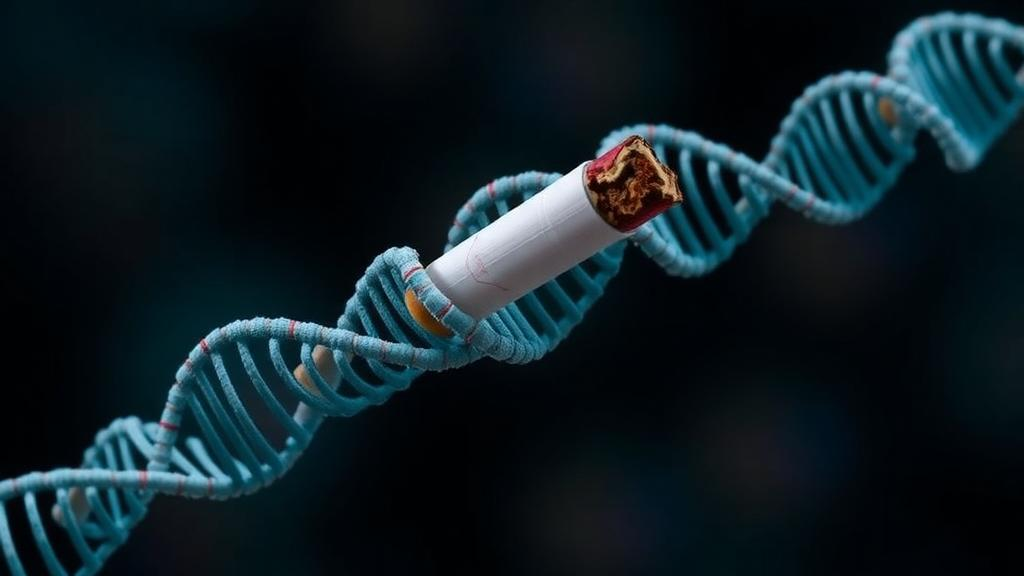
Oral cancer remains one of the most devastating malignancies of the head and neck, and a new critical review published in Medical Oncology argues that the key to understanding who falls ill may lie not only in what people are exposed to, but in how their bodies chemically process those exposures. Cancers of the lip and oral cavity account for nearly 400,000 new cases and more than 180,000 deaths worldwide each year, with the heaviest burden concentrated in low- and middle-income countries. South and Southeast Asia show some of the highest incidence rates on the planet, a pattern that closely mirrors regional prevalence of tobacco use, alcohol consumption, and the chewing of betel quid or areca nut. Yet only a fraction of exposed individuals ever develop oral squamous cell carcinoma, the predominant histological subtype, or progress through oral potentially malignant disorders such as leukoplakia and oral submucous fibrosis. That gap between exposure and disease has long pointed to hidden host factors, and the new synthesis by researchers at the Federal University of São Paulo and the University of São Paulo places genetic variation in xenobiotic-metabolizing enzymes at the center of the story.
The review, led by Gabriel Carvalhal de Aguiar and senior author Daniel Araki Ribeiro, systematically searched PubMed, Scopus, and Web of Science up to April 2026 for observational studies and meta-analyses evaluating seven candidate genes: CYP1A1, CYP1B1, and CYP2E1 from the cytochrome P450 family, and GSTM1, GSTT1, GSTP1, and GSTM3 from the glutathione S-transferase family. Twenty-one studies met the inclusion criteria, spanning research published between 1997 and 2024. The geographic distribution is striking: India alone contributed twelve studies, followed by significant cohorts from China, Japan, and Taiwan, with Western populations represented only through smaller cohorts from Germany and Canada. Eighteen of the included studies were case-control designs, alongside one case-series and two meta-analyses, and sample sizes ranged from as few as 28 cases to pooled analyses encompassing thousands of participants. The authors deliberately separated the two meta-analyses from the primary case-control cohorts in their narrative synthesis to avoid double-counting underlying patient populations.
The biological logic of the review rests on a two-phase metabolic system. Phase I enzymes, chiefly the cytochrome P450 proteins CYP1A1, CYP1B1, and CYP2E1, catalyze oxidative biotransformation reactions that can convert relatively inert pro-carcinogens into highly reactive electrophilic intermediates. These intermediates are capable of forming bulky DNA adducts and inducing strand breaks in the epithelial cells lining the mouth. Phase II enzymes, the glutathione S-transferases, perform the opposite function: they conjugate those reactive intermediates with glutathione, increasing their water solubility and ushering them out of the body. Functional polymorphisms in these genes can tip the biochemical balance in either direction. Null deletions of GSTM1 and GSTT1 eliminate functional enzyme activity entirely, while variants such as GSTP1 Ile105Val, GSTM3 A/B, and high-activity alleles of CYP1A1 and CYP2E1 modulate the efficiency of activation or clearance. The net result determines whether DNA-reactive species accumulate in chronically exposed oral tissues or are swept away before they can do damage.
The strongest and most consistent signal in the review concerns the GSTM1 and GSTT1 null genotypes. Multiple studies found that people carrying these inherited gene deletions face elevated susceptibility to oral cancer, particularly in Asian cohorts with heavy tobacco or betel quid exposure. Katiyar and colleagues reported an odds ratio of 1.87 for the GSTM1 null genotype, while Buch and colleagues reported an odds ratio of 3.2 in an Indian population. Case-control studies from India, Japan, Taiwan, and China have repeatedly linked the null genotypes to increased risks of oral leukoplakia, oral squamous cell carcinoma, and broader head and neck squamous cell carcinoma, often reporting odds ratios above two-fold under conditions of intense smoking or betel quid chewing. A meta-analysis by Li and colleagues in the Chinese population reached similar conclusions, and a systematic evaluation by Lou and colleagues associated the null genotypes with oral potentially malignant disorders, particularly leukoplakia and oral submucous fibrosis.
The Phase I picture is messier. CYP1A1 and CYP2E1 variants produced heterogeneous results across the literature, but several studies indicated elevated risk among smokers, drinkers, and betel quid users. Maurya and colleagues found a significant association between the CYP1A1*2A variant and oral cancer risk, with an odds ratio of 1.77, and a meta-analysis by Zhuo and colleagues, pooling 1,515 cases and 2,233 controls, demonstrated that the CYP1A1 Ile462Val polymorphism significantly increases oral carcinoma risk in Asian populations. Bartake and colleagues reported a significant risk increase for the CYP1B1 L432V variant in oral squamous cell carcinoma. Mechanistically, these variants may alter the metabolic activation of tobacco-derived polycyclic aromatic hydrocarbons, while CYP2E1 variants may influence ethanol metabolism and the bioactivation of nitrosamines derived from both tobacco and betel quid. Chronic ethanol consumption can itself induce CYP2E1 expression, potentially increasing the formation of acetaldehyde, a recognized mutagenic metabolite capable of generating DNA adducts and cross-links.
Perhaps the most important theme of the review is that genes rarely act alone. The strongest effects consistently appeared in gene-environment interaction models rather than in analyses of isolated polymorphisms. Hung and colleagues highlighted an increased risk for CYP2E1 variants specifically in the subgroup of non-betel chewers, while Komiya and colleagues demonstrated a significant risk increase for GSTA1 variants exclusively among male smokers. The exposure data underlying these interactions are dramatic. Hung’s study reported tobacco use in 90.2 percent of cases, and Singh and colleagues reported it in 85.2 percent. Rajesh and colleagues found that 100 percent of their cases used chewable tobacco or betel quid, and Hung’s team documented betel quid exposure in 73.2 percent of cases compared with only 12.2 percent of controls. Meta-analyses cited in the review indicate that habitual betel quid chewers experience a relative risk of oral cancer five to eight times higher than non-users, a risk that climbs further when tobacco and alcohol are also consumed. Betel quid and areca nut are classified by the International Agency for Research on Cancer as Group 1 carcinogens.
The review does not shy away from the contradictions that have long plagued this field. Some investigations failed to confirm associations between GSTM1 or GSTT1 null genotypes and oral cancer, and others reported null or even protective effects for specific CYP variants in certain ethnic groups or exposure strata. ThekkePurakkal and colleagues, studying Canadian Caucasians, reported a protective association for GSTP1 105Val carriers, with an odds ratio of 0.71 and a 95 percent confidence interval of 0.53 to 0.95. Balaji and colleagues found no significant association between CYP2E1 polymorphisms and oral cancer susceptibility in South Indians. The authors attribute much of this inconsistency to genuine biological complexity, but also to methodological fragility. Population stratification remains a particular concern in genetic association studies, because differences in ancestry between cases and controls can generate spurious associations. Deviations from Hardy-Weinberg equilibrium among control groups may signal genotyping errors or hidden population structure, and the contribution of human papillomavirus infection to oral carcinogenesis remains insufficiently addressed in several studies, representing an additional source of heterogeneity and confounding.
Methodologically, the included studies relied overwhelmingly on polymerase chain reaction-based genotyping, most commonly PCR-restriction fragment length polymorphism and multiplex PCR, with peripheral blood serving as the dominant source of genomic DNA, though some studies used non-invasive oral exfoliated cells or brush biopsies. The review also gestures beyond the classical CYP-GST axis. Tobacco smoke contains aromatic amines and heterocyclic amines, including o-toluidine, 2-naphthylamine, and 4-aminobiphenyl, which are metabolized by human arylamine N-acetyltransferases, particularly NAT1 and NAT2. Functional polymorphisms in these genes produce different acetylator phenotypes and may shift the balance between activation and detoxification of aromatic amine carcinogens. Evidence linking metabolic polymorphisms to alterations in the p53 tumor suppressor pathway, reported by Singh and colleagues, and mitochondrial instability associated with the mtDNA A12308G locus, described by Datta and colleagues, suggests that oral cancer may involve a broader, systemic impairment of genomic and cellular protection mechanisms, including compromised DNA repair and apoptotic responses.
The clinical upshot is a model of oral carcinogenesis as a cumulative interaction between carcinogen exposure, Phase I metabolic activation, Phase II detoxification capacity, oxidative stress, and individual genetic background. A single susceptibility polymorphism, the authors stress, should never be interpreted as sufficient to determine cancer development; risk emerges from the interplay of multiple genetic and environmental determinants. Still, the identification of specific polymorphic profiles represents a promising avenue for predictive biomarkers. If validated in well-designed prospective studies across diverse populations, such biomarkers could enable individualized risk stratification and support targeted screening and prevention strategies, particularly for people with sustained exposure to established oral carcinogens. The authors call for adequately powered, multicenter prospective studies incorporating standardized exposure assessment, genetic ancestry, and HPV status. Until then, the message for the hundreds of millions of smokers, drinkers, and betel quid chewers worldwide is sobering but clear: the same carcinogen does not hit every mouth equally, and the enzymes written into our DNA may decide who pays the price.
Subject of Research: Genetic polymorphisms in xenobiotic-metabolizing enzymes and susceptibility to oral squamous cell carcinoma
Article Title: The impact of genetic polymorphisms in xenobiotic-metabolizing enzymes and the risk of oral cancer: a critical review
Article References: de Aguiar, G. C., de Souza, D. V., dos Anjos Rosário, B., da Silva Avanci, L., Silva, A., Dedivitis, R. A., & Ribeiro, D. A. (2026). The impact of genetic polymorphisms in xenobiotic-metabolizing enzymes and the risk of oral cancer: a critical review. Medical Oncology, 43(11), Article 312. https://doi.org/10.1007/s12032-026-03428-x
Image Credits: AI Generated
DOI: 10.1007/s12032-026-03428-x
Keywords: oral cancer, oral squamous cell carcinoma, CYP1A1, CYP2E1, GSTM1, GSTT1, glutathione S-transferase, gene-environment interaction, tobacco, betel quid, genetic polymorphisms, carcinogen metabolism
News Source: Nathaniel Bowman. (October 10, 2026). Gene Variants That Detoxify Tobacco Carcinogens Reshape Oral Cancer Risk. Scienmag.