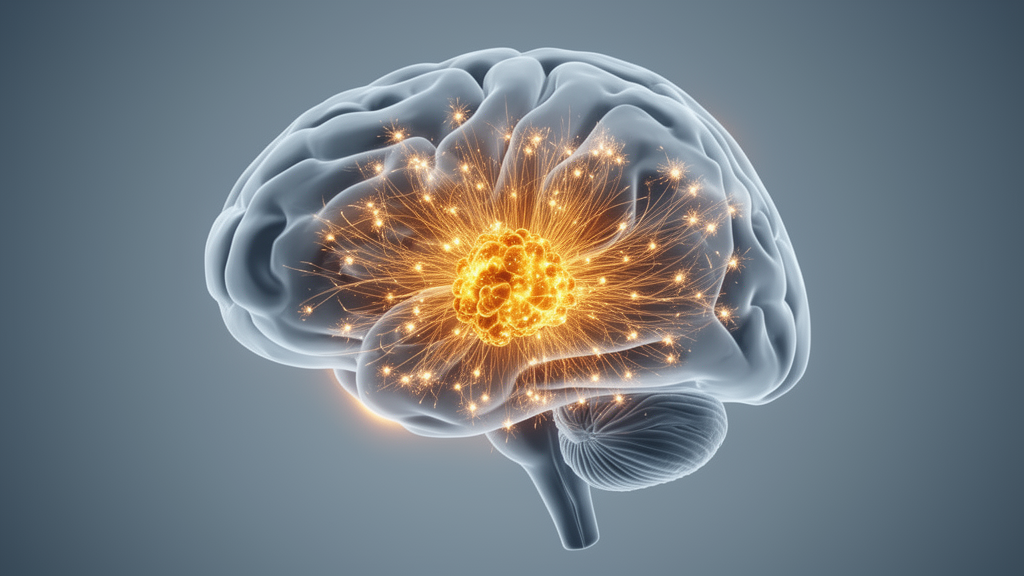
Deep in the human brain, sandwiched between the deep gray matter and the outer cortical ribbon, lies a wafer-thin sheet of neurons that has puzzled scientists for more than a century. The claustrum is connected to nearly every corner of the neocortex, yet its function has remained so opaque that some researchers once speculated it might be central to consciousness, while others dismissed it as little more than an evolutionary leftover. A new study, published in Nature Neuroscience, now provides the most direct evidence to date that this enigmatic structure does something far more sophisticated than relaying sensory traffic: its neurons appear to encode abstract, hidden quantities of the mind itself, including how uncertain we are and how badly our predictions have just failed.
The research team, led by neurosurgeon and neuroscientist Eyiyemisi Damisah of Yale University, took advantage of a rare clinical opportunity. Seven patients with medication-refractory epilepsy were undergoing robotic implantation of depth electrodes to localize the origins of their seizures. Each of these hybrid electrodes carried bundles of eight microwires, each just 40 micrometers across, protruding four millimeters from the electrode tip. Because the electrodes were placed according to clinical need, some of them happened to pass through the claustrum, the dorsal anterior cingulate cortex, and the basolateral amygdala, giving the researchers an extraordinary window into three brain regions at the resolution of individual neurons in awake, behaving humans.
While the electrodes recorded the firing of single neurons at 30,000 samples per second, the patients played a deceptively simple computer game. They steered a spaceship along a vertical axis, trying to slip through a safety hole in an approaching belt of asteroids. Two zones, one above and one below, each carried a probability of containing a safe passage that shifted unpredictably between blocks of trials, sometimes offering a 90 percent chance of safety and sometimes only 10 percent. Because the asteroids approached too quickly for reactive dodging, participants had to anticipate where the hole would appear based on what they had learned, positioning their ship in advance according to their internal beliefs about the hidden probabilities.
This task design was the key to the study’s ambition. The researchers fitted each participant’s behavior with an approximate Bayesian model, a mathematical framework in which beliefs about the safety of each zone are represented as probability distributions that are updated trial by trial. From this model, the team could extract two so-called latent variables, quantities that exist in the mind but are never directly observable: subjective uncertainty, derived from the variance of the belief distribution, and prediction error, the mismatch between what the participant expected and what actually happened. The model outperformed standard reinforcement-learning alternatives, and crucially, the uncertainty estimates had a visible behavioral signature. On trials when the model inferred high uncertainty, participants moved their spaceship more and with greater variability, as though exploring between the two potential safety zones.
When the researchers examined the neural recordings, the claustrum proved to be intensely engaged. Of the 110 single neurons recorded there, 78, or 71 percent, showed significant task-related firing changes, a proportion matched almost exactly by the anterior cingulate cortex, where 56 of 80 units were task-responsive. The amygdala, by contrast, was far less involved, with only about 30 percent of its neurons modulated by the task. Within the claustrum, distinct subpopulations emerged. Some neurons fired sharply and transiently at the moment the asteroids appeared, splitting into cells that burst into activity and cells that briefly paused. Others responded only to the outcome of each trial, and strikingly, these outcome neurons showed a strong bias toward crashes: they fired far more vigorously when the ship was destroyed than when it successfully avoided the asteroids.
That crash bias set the claustrum apart from its cortical partner. In the anterior cingulate cortex, outcome-responsive neurons were almost evenly split between those preferring crashes and those preferring successful avoidance, producing no consistent directional preference across the population. A linear mixed-effects model confirmed a statistically robust interaction between brain region and outcome type, and the effect survived leave-one-subject-out refits and log transformation of the firing rates. In other words, the two regions, though similarly engaged, appeared to be doing meaningfully different things with the same stream of task events.
The most striking findings emerged when the researchers linked neural activity to the model-derived latent variables. Roughly 28 percent of claustral neurons were modulated by uncertainty, firing more strongly on high-uncertainty trials during the active avoidance period, and about 23 percent responded to high prediction errors, with the two populations overlapping substantially. Because uncertainty and prediction error naturally covary, errors tend to be larger when beliefs are imprecise, the authors are careful to note that the analyses cannot fully separate the two signals at the single-neuron level. But the pattern is coherent: claustral neurons preferentially ramp up their activity when the brain’s internal model is least confident and when outcomes violate expectations most sharply.
To rule out the possibility that these signals were merely echoes of visible task events, the team applied a conditional mutual information analysis, a technique from information theory that measures how much a neuron’s firing depends on a latent variable after statistically controlling for confounds such as the ship’s position, the safety zone, and the outcome. During the active avoidance period, a significant fraction of claustral neurons retained information about uncertainty even after these controls, something that could not be explained by the external stimuli alone. The anterior cingulate cortex showed a complementary temporal profile: its uncertainty-related signals were most prominent during the intertrial interval, before the asteroids appeared, consistent with a role in maintaining and monitoring the reliability of internal beliefs between episodes of action.
The authors propose an elegant synthesis within the framework of predictive processing, the influential theory that the brain constantly generates predictions about the world and updates them based on errors. In this account, the anterior cingulate cortex may carry precision signals, estimates of how much the brain should trust its current beliefs, that tonically suppress claustral output during stable periods. When uncertainty rises, that suppression weakens, releasing bottom-up error signals from the claustrum to propagate through its vast cortical network and drive rapid updating. This would explain why claustral crash responses were strongest precisely under high uncertainty, and it fits with rodent work showing that the claustrum decides whether prediction-input mismatches are dismissed as noise or broadcast as meaningful news.
The implications reach well beyond basic neuroscience. Structural and functional abnormalities of the claustrum have been reported in conditions marked by disturbed perception and inference, including autism, schizophrenia, and psychedelic states, and the new findings suggest a concrete computational role that such abnormalities could disrupt. The study has limitations the authors acknowledge candidly: the cohort was small, the participants had epilepsy, and the number of neurons, particularly in the amygdala, was limited. Still, the demonstration that human claustral neurons track hidden cognitive variables, quantities no sensory input could directly convey, transforms this long-mysterious structure from a speculative curiosity into a serious candidate for a key node in the brain’s inferential machinery. Future experiments, including targeted microstimulation of claustral populations, may soon reveal whether this thin sheet of neurons truly acts as the conductor the theory predicts.
Subject of Research: Single-neuron encoding of uncertainty and prediction error in the human claustrum during aversive learning
Article Title: Human claustrum neurons encode uncertainty and prediction errors during aversive learning
Article References: Hu, M., Dalvit, R., Medina-Pizarro, M., Dougherty, M., Zhou, Y., Barreto-Nieves, J., Obaid, S., Afrasiyabi, A., Krishnaswamy, S., Kaye, A. P., Günel, M., Krystal, J. H., Sheth, K. N., Gu, X., Pittenger, C. P., Wise, T., & Damisah, E. C. (2026). Human claustrum neurons encode uncertainty and prediction errors during aversive learning. Nature Neuroscience. https://doi.org/10.1038/s41593-026-02475-x
Image Credits: AI Generated
DOI: 10.1038/s41593-026-02475-x
Keywords: claustrum, uncertainty, prediction error, aversive learning, anterior cingulate cortex, amygdala, Bayesian modeling, single-unit recordings, predictive processing, epilepsy patients, neuroscience, cognitive control
News Source: Cassandra Pierce. (October 9, 2026). Mysterious Brain Structure Revealed as a Hub for Tracking Uncertainty and Surprise. Scienmag.