Urinary incontinence is one of the most common yet least discussed health conditions affecting women worldwide. Characterized by the involuntary loss of urine, this pelvic floor disorder touches the lives of an estimated 20 to 50 percent of women globally, and in Sub-Saharan Africa, prevalence figures hover around 21 percent. Despite how widespread the condition is, a new qualitative study conducted in Kigali, Rwanda, reveals a striking paradox: women are increasingly connected to the digital world, yet they remain largely in the dark about a condition that shapes their daily routines, relationships, and sense of self. The research, published in PLOS Global Public Health, offers a detailed portrait of the knowledge gaps, misconceptions, and digital barriers that stand between affected women and the care they need.
The study, led by Alexandre Dukundane and colleagues, took a phenomenological qualitative approach, a method designed to capture lived experience in depth rather than simply measure prevalence. Researchers worked across four hospitals in Kigali: Masaka, Rwanda Military, Kibagabaga, and King Faisal. Using purposive sampling, they recruited 20 women between the ages of 20 and 70, all living with urinary incontinence. Through interviews and thematic analysis, applying both deductive and inductive coding, the team distilled the women’s experiences into four key themes: significant knowledge gaps about the condition, regular use of digital devices and the internet, specific barriers to trusting and affording digital health information, and a strong appetite for multimodal digital education platforms.
The first theme is perhaps the most sobering. Many participants misunderstood urinary incontinence at a fundamental level, often confusing it with a normal feature of aging or attributing their symptoms to unrelated conditions. This confusion had cascading consequences. Women delayed seeking diagnosis, endured emotional distress, withdrew from social life, and in some cases suffered financial strain as they cycled through ineffective coping strategies. Contributing factors for the condition include genetics, childbirth injury, and chronic disease, and effective treatments exist, ranging from medication and surgery to pelvic floor muscle training, a structured exercise approach that strengthens the muscles supporting the bladder. Yet without accurate baseline knowledge, women had no way to connect their symptoms to these options.
The emotional and social toll described in the study extends far beyond the physical inconvenience of leakage. Participants reported fear of public accidents, isolation, and a reduced overall quality of life. In many communities, the stigma surrounding incontinence keeps women silent, and that silence feeds the misconception cycle. When a woman believes her symptoms are simply an inevitable part of growing older or a private shame not worth mentioning to a clinician, she may spend years, even decades, without a proper assessment. The researchers argue that this is precisely where education, delivered in accessible and destigmatizing formats, could intervene earlier and change trajectories.
What makes the Kigali findings particularly compelling is the second theme: the women in the study were not digitally excluded in the way conventional assumptions might suggest. Participants regularly used digital devices and the internet, recognized their benefits, and considered them affordable for accessing health information. This is a crucial insight for public health planners. The infrastructure for digital health education already reaches into the daily lives of many women in urban Rwanda, and the study notes that healthcare systems across Africa are increasingly adopting digital technologies, including WhatsApp and social media platforms, to support patient education and professional collaboration among clinicians.
Previous research has shown that digital platforms can genuinely help women manage urinary incontinence, particularly through guided pelvic floor muscle training delivered via mobile applications and messaging services. Structured exercise programs, when properly taught and sustained, are a first-line treatment for many types of incontinence, and digital delivery can lower the threshold for adherence by providing reminders, demonstrations, and privacy. The Kigali study suggests that the raw ingredients for such interventions, namely device ownership, internet familiarity, and motivation, are present among the very population that stands to benefit.
Yet the third theme tempers this optimism with hard realities. Participants described distrust in the accuracy of online health information, a skepticism that is not irrational in an environment where misinformation circulates freely and where the provenance of a health claim is often impossible to verify. They also cited financial constraints in maintaining digital devices and paying for internet services, barriers that can turn a nominally connected life into an intermittent one. A woman may own a smartphone but ration her data, or share a device with family members, limiting the privacy needed to explore sensitive health topics. Any digital education strategy, the authors imply, must confront both the trust deficit and the cost barrier head-on.
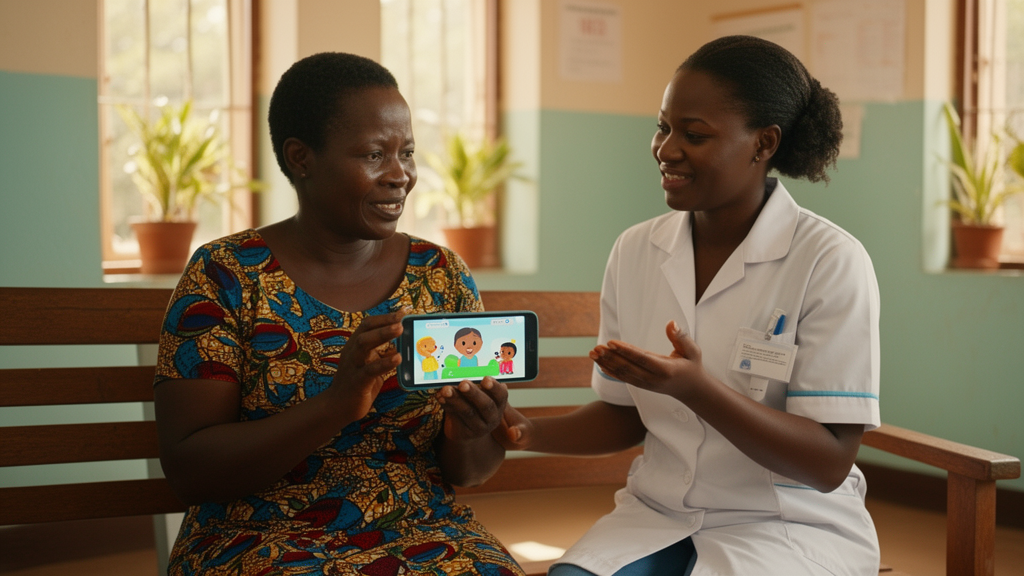
The fourth theme ties the findings together: participants expressed a strong interest in multimodal digital health education platforms to receive information about urinary incontinence. Multimodal, in this context, means combining formats such as text, audio, video, and interactive messaging so that content reaches women with different literacy levels, device capabilities, and learning preferences. The researchers conclude that there is an urgent need for accessible and trustworthy digital health education to bridge knowledge gaps, provide support, and enhance the management of urinary incontinence among affected women. Trust, they suggest, is best earned through content developed with clinical credibility and cultural sensitivity, potentially delivered through channels women already use and already associate with their care providers.
The implications reach well beyond Rwanda’s capital. Urinary incontinence affects hundreds of millions of women, and the gap between prevalence and treatment access is widest in low- and middle-income settings where specialist pelvic health services are scarce. Digital education cannot replace surgical or pharmacological care, but it can perform a triage function that is arguably just as important: informing women that their symptoms have a name, that the condition is not an inevitable consequence of childbirth or age, and that effective, often conservative treatments exist. Early education could shift women from silent endurance toward timely diagnosis, reducing the emotional distress and social withdrawal documented in the study.
For the 20 women of Kigali who shared their experiences, the study’s message is one of cautious hope. They described a condition that has shaped their lives in silence, but they also described a readiness, an explicit request, for knowledge delivered through the phones and platforms that already sit in their pockets. The challenge now falls to health system designers, app developers, and clinicians: to build digital health education that is accurate, affordable, and trusted. If they succeed, one of the most common and most hidden disorders in women’s health may finally begin to lose its stigma, one message at a time.
Subject of Research: Digital health education needs among women with urinary incontinence in Kigali, Rwanda
Article Title: Digital health education needs for women with urinary incontinence in Kigali Rwanda, a phenomenological qualitative study
Article References: Dukundane, A., Murekatete, R., Opiyo, J., Keyser, L., McKinney, J., Nambaziira, R., & Ojiambo, R. (2026). Digital health education needs for women with urinary incontinence in Kigali Rwanda, a phenomenological qualitative study. PLOS Global Public Health, 6(10), e0006703. https://doi.org/10.1371/journal.pgph.0006703
Image Credits: AI Generated
DOI: 10.1371/journal.pgph.0006703
Keywords: urinary incontinence, digital health, women's health, Rwanda, Kigali, pelvic floor muscle training, qualitative research, health education, mHealth, PLOS Global Public Health, health misinformation, Sub-Saharan Africa
News Source: Courtney Benton. (October 9, 2026). In Kigali, Women With Urinary Incontinence Say Digital Health Education Could Change Their Lives. Scienmag.