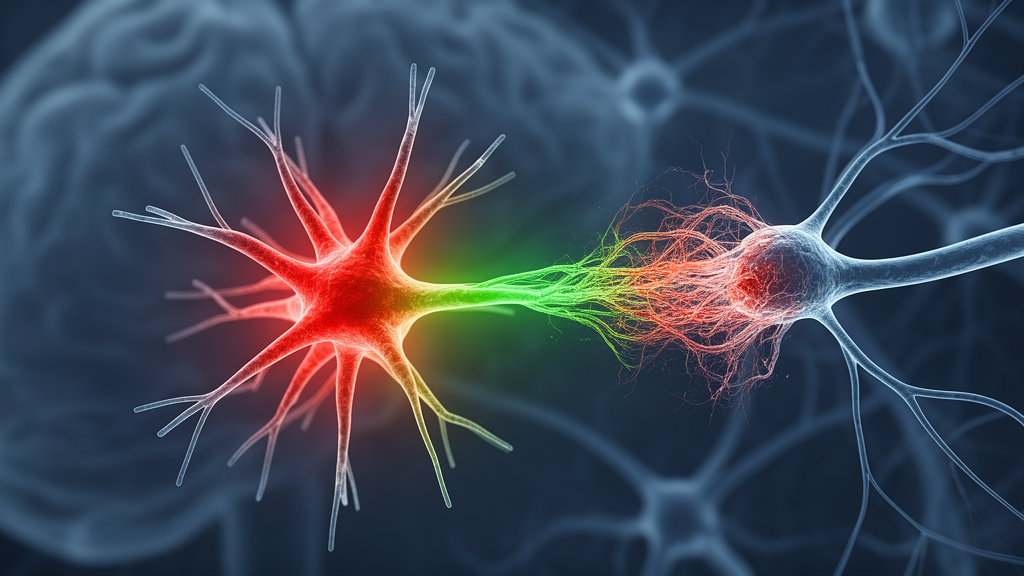
Multiple sclerosis has long been framed as a disease of myelin, the fatty insulation that immune cells strip away from nerve fibers. But a growing body of evidence points to another, quieter casualty: the synapse, the microscopic junction where neurons talk to one another. A new study published in the Journal of Translational Medicine adds a striking piece to that picture, identifying a specific astrocyte state, defined by high expression of the gene SLC7A11, that appears to tie oxidative stress directly to the remodeling and dysfunction of synaptic circuitry in the central nervous system.
The research team, led by Jian Liu and colleagues at institutions including Shanxi University of Chinese Medicine and Caidian District People’s Hospital in China, combined single-nucleus RNA sequencing of human brain tissue with a mouse model of demyelination. Their starting point was a publicly available human dataset, GSE279180, containing nuclei from both healthy controls and people with multiple sclerosis. Rather than treating astrocytes as a single cell type, the researchers reclustered the data to tease apart subpopulations, then traced how those populations changed along a computational trajectory known as pseudotime, which orders cells as if they were moving through a biological process.
What emerged was a broad landscape of cellular remodeling in multiple sclerosis lesions. Pathways governing neuroactive ligand-receptor interactions, calcium signaling, the glutamatergic synapse, and the synaptic vesicle cycle were all altered relative to healthy tissue. These are not obscure molecular details; calcium signaling and glutamate handling sit at the heart of how neurons transmit signals, and the synaptic vesicle cycle is the machinery that packages and releases neurotransmitters. Disruption in these systems helps explain why people with multiple sclerosis can experience cognitive decline and other neurological deficits even when inflammatory activity appears controlled.
At the center of the study is SLC7A11, a gene that encodes the light chain of the cystine/glutamate antiporter, better known in the literature as xCT. This transporter imports cystine into cells, a critical step because cystine is the raw material for glutathione, the cell’s master antioxidant. SLC7A11 is also famous for its role in ferroptosis, an iron-dependent form of cell death driven by lipid peroxidation, where the SLC7A11-glutathione-glutathione peroxidase 4 (GPX4) axis acts as the main line of defense. In the astrocytes of multiple sclerosis tissue, SLC7A11 was enriched and its expression increased along later pseudotime stages, suggesting that astrocytes ramp up this transporter as the disease state progresses.
But higher SLC7A11 did not signal a protective response. When the researchers stratified astrocytes into SLC7A11-high and SLC7A11-low groups, the high-expression cells were linked to impaired antioxidant defense, specifically a compromised glutathione-GPX4 system, and to remodeling of synaptic vesicle-related pathways. In other words, astrocytes that had turned up their cystine importer were simultaneously showing signs that their antioxidant machinery was failing and that the synaptic microenvironment around them was being restructured. Using high-dimensional weighted gene co-expression network analysis, the team identified hub modules connecting these processes, and gene set enrichment analysis confirmed the involvement of inflammatory and redox pathways, including signals tied to tumor necrosis factor-alpha, interleukin-1 beta, and interleukin-6.
To probe causality computationally, the researchers applied single-cell tenifold knockout, a virtual knockout method that predicts the downstream consequences of removing a gene from a gene regulatory network. This in silico perturbation supported the idea that SLC7A11 sits within a network whose disruption propagates to synaptic and redox-related genes. Such predictions cannot substitute for experiments, but they sharpened the hypotheses that the team then carried into the laboratory.
The animal work used cuprizone, a copper chelator that, when fed to mice, destroys oligodendrocytes and strips myelin from brain regions such as the corpus callosum, producing a demyelination model widely used to study multiple sclerosis-like pathology without the full autoimmune attack seen in other models. The cuprizone-treated mice showed behavioral deficits in open field and elevated plus maze tests, alongside measurable demyelination on Luxol Fast Blue staining and loss of myelin basic protein. Critically, the molecular findings from the human data were echoed in the mice: the colocalization of SLC7A11 with GPX4 decreased, indicating a weakening of the antioxidant partnership, while colocalization of synaptophysin, a presynaptic vesicle protein, with GFAP, the classic astrocyte marker, increased, a pattern consistent with synaptic vesicle-related remodeling occurring in close proximity to reactive astrocytes.
The authors interpret these converging lines of evidence as support for a glial-state framework in which SLC7A11-associated astrocytes link neuroinflammation, oxidative stress, and synaptic dysfunction. The idea is compelling because it reframes astrocytes not as passive bystanders in multiple sclerosis but as active participants whose metabolic state shapes the health of the synapses they envelop. Astrocytes normally buffer glutamate, supply metabolic support to neurons, and help regulate blood flow and immune signaling. When their redox balance collapses, those housekeeping functions may degrade, leaving synapses exposed to oxidative damage and maladaptive remodeling.
The translational implications are twofold. First, SLC7A11-high astrocyte states could serve as a basis for biomarker development, offering a way to track the redox and synaptic dimension of the disease that current disease-modifying therapies do not directly address. The study’s authors note that chronic active lesions and ongoing neurodegeneration remain largely untreated despite existing drugs, which mostly target the immune attack on myelin. Second, the SLC7A11-GPX4 axis is already a target of intense pharmaceutical interest because of its role in ferroptosis, meaning that tools to modulate it, from system xc- inhibitors to GPX4-directed strategies, are under active development in other fields and could eventually be repurposed for neuroinflammatory disease.
Important caveats remain. The human findings derive from a single sequencing dataset, and the mouse model, while informative about demyelination, does not capture every aspect of the human disease. The colocalization changes observed by microscopy are correlational, and the virtual knockout predictions are computational. Still, the convergence of human single-cell data, network analysis, and animal validation gives the study unusual breadth for a translational paper. If subsequent work confirms that pushing astrocytes away from the SLC7A11-high state restores antioxidant capacity and protects synapses, it could open a genuinely new therapeutic front in multiple sclerosis, one aimed not at calming the immune system but at shoring up the metabolic defenses of the glial cells that neurons depend on. The study, published open access on 30 August 2026, was supported by the National Youth Science Foundation and provincial research programs in Shanxi, China.
Subject of Research: SLC7A11-associated astrocyte states, redox imbalance, and synaptic microenvironment remodeling in multiple sclerosis
Article Title: SLC7A11-associated astrocyte states are linked to redox imbalance and synaptic microenvironment remodeling in multiple sclerosis: translational implications
Article References: Liu, J., Yin, J.-J., Pu, M., Guo, D., Mao, Z., Guo, Y., Xiao, Y., & Wang, Q. (2026). SLC7A11-associated astrocyte states are linked to redox imbalance and synaptic microenvironment remodeling in multiple sclerosis: translational implications. Journal of Translational Medicine. https://doi.org/10.1186/s12967-026-08902-8
Image Credits: AI Generated
DOI: 10.1186/s12967-026-08902-8
Keywords: multiple sclerosis, astrocytes, SLC7A11, GPX4, oxidative stress, synaptic vesicle cycle, neuroinflammation, single-nucleus RNA sequencing, cuprizone model, ferroptosis, glutathione, translational medicine
News Source: Cassandra Pierce. (October 9, 2026). Astrocyte Redox Switch Linked to Synapse Damage in Multiple Sclerosis. Scienmag.