One of the most stubborn problems in modern medicine is not killing bacteria but finding them. Physicians routinely face patients with fever, pain and elevated inflammatory markers, yet cannot say with confidence whether the culprit is a bacterial infection, a viral illness or a sterile inflammatory condition such as rheumatoid arthritis. The consequences of that uncertainty are profound: antibiotics given unnecessarily fuel antimicrobial resistance and disrupt the microbiome, while antibiotics withheld from genuinely infected patients can cost lives. A team of researchers at the University of California, San Francisco, working with collaborators at the University of Pennsylvania, now reports a positron emission tomography (PET) tracer that promises to change this calculus by imaging the bacteria themselves rather than the inflammation they provoke.
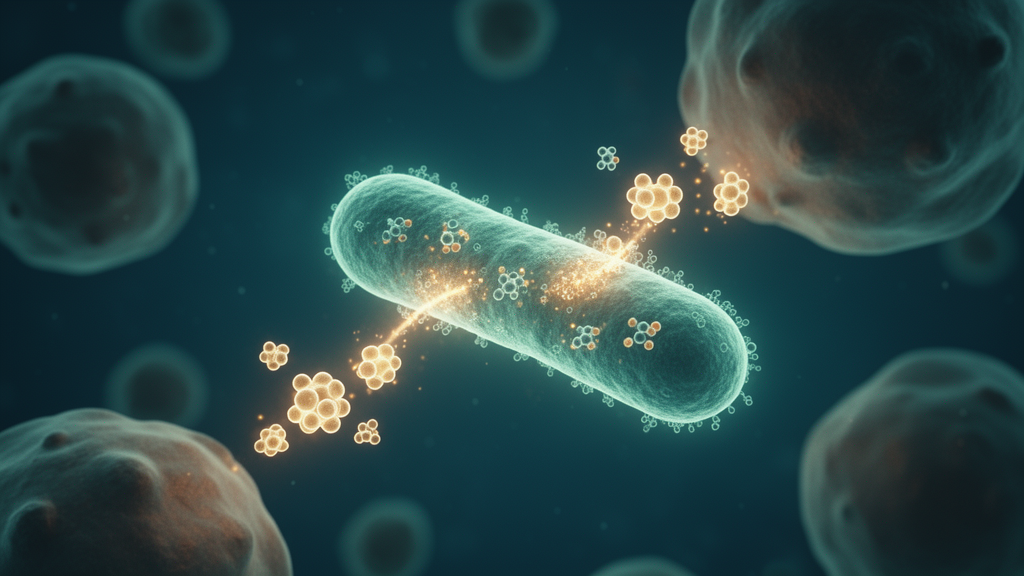
The tracer, named β-Me-2-[18F]FDG, is described in a study published in Nature Biomedical Engineering. It is derived from [18F]FDG, the glucose analogue that has anchored clinical PET for decades, but with a crucial chemical modification: a methyl group attached at the anomeric C-1 position through a β-glycosidic linkage. That small structural change transforms the molecule from a probe of host metabolism into a probe of bacterial metabolism. Human cells import glucose through GLUT and SGLT transporters, which depend on hydroxyl groups at the C-1 and C-2 positions of the sugar. By replacing the C-1 hydroxyl with a methyl group and lacking the C-2 hydroxyl entirely, β-Me-2-[18F]FDG is no longer recognized by mammalian transporters. Bacteria, however, possess an entirely different carbohydrate import machinery, the phosphoenolpyruvate-dependent phosphotransferase system, or PTS, which simultaneously transports and phosphorylates sugars using phosphoenolpyruvate as the phosphoryl donor. Because this system exists only in prokaryotes, it offers a metabolic doorway that is invisible to human tissue.
The discovery began with a remarkably simple synthetic strategy. Rather than building each candidate tracer from scratch, the researchers took clinical-grade [18F]FDG, dried it by azeotropic distillation, and subjected it to Fischer glycosidation with a series of alcohols under acidic conditions. In a single step, and with isolated radiochemical yields ranging from roughly 33 to 92 percent, they generated a library of nine 18F-labelled alkyl glucosides. Screening these compounds against Staphylococcus aureus in vitro revealed that the methyl glucoside, an anomeric mixture of α and β forms, accumulated in the bacteria far more readily than any of its longer-chain counterparts. Because glucosides do not undergo mutarotation under physiological conditions, the team could separate the two anomers by high-performance liquid chromatography and test them independently. The result was unambiguous: the β-anomer drove essentially all of the bacterial uptake, while the α-anomer was nearly inert.
Crucially, the active β-anomer can be manufactured without any new equipment. The researchers synthesized a β-methyl mannose triflate precursor and showed that it could be radiofluorinated and hydrolyzed using the same workflow, and even the same commercially available cassettes, used for routine [18F]FDG production. Manual synthesis delivered the tracer in 74.6 percent radiochemical yield with purity above 99 percent within 40 minutes, and an automated run on a GE FASTlab module produced it in 31.3 percent yield starting from 37 GBq of fluoride in about 34 minutes. In an era when most experimental PET tracers require bespoke radiochemistry, a compound that can be swapped into existing FDG infrastructure is a significant translational advantage. The team also demonstrated that direct glycosidation of clinical [18F]FDG could serve as an alternative route for imaging centers that receive FDG from commercial vendors but lack their own cyclotrons.
In laboratory assays, β-Me-2-[18F]FDG was taken up robustly and consistently by every clinical isolate of methicillin-resistant and methicillin-susceptible S. aureus tested, spanning the USA100 through USA800 pulsed-field types, as well as by methicillin-susceptible and vancomycin-intermediate Staphylococcus epidermidis. Streptococcus agalactiae and Streptococcus pyogenes also accumulated the tracer, though with somewhat more variability. By contrast, uptake in Escherichia coli, Mycobacterium smegmatis and mammalian cell lines was negligible. Heat-killed bacteria did not take up the compound, and uptake was blocked by excess non-radioactive competitor, confirming that accumulation requires live, metabolically active organisms. The tracer was also stable in both mouse and human serum for at least four hours at 37 degrees Celsius, a prerequisite for clinical use.
Genetic experiments pinpointed the transporter responsible. S. aureus encodes four glucose uptake systems: the PTS components GlcA, GlcB and GlcC, and a non-PTS transporter called GlcU. Using a panel of transposon mutants, the researchers showed that deletion of glcA, which encodes the glucose-specific PTS component EIICBAGlc1, dramatically reduced tracer uptake, whereas deletion of glcB, glcC, glcU or manA had no effect. HPLC analysis of bacterial lysates revealed that most intracellular radioactivity corresponded to a phosphorylated metabolite, consistent with the PTS mechanism of import-coupled phosphorylation, which traps the sugar inside the cell and prevents efflux. Notably, β-Me-2-[18F]FDG was not phosphorylated by mammalian hexokinase, reinforcing its selectivity for bacterial biochemistry. Protein sequence analysis showed that EIICBAGlc1 is highly conserved across Staphylococcus species, explaining why the tracer performed well against multiple staphylococcal pathogens.
In healthy mice, the tracer behaved exactly as a bacteria-specific agent should. Dynamic PET/CT imaging showed rapid distribution to lung, liver and kidneys followed by predominantly renal excretion into the bladder, with low retention in brain, heart and other background tissues. Pharmacokinetic modeling yielded a distribution half-life of 0.48 minutes and an elimination half-life of 44.34 minutes, and extrapolated human dosimetry estimated effective doses of 0.020 to 0.041 mSv/MBq depending on sex and the ICRP model applied, with the urinary bladder receiving the highest absorbed dose. Urine analysis confirmed high in vivo metabolic stability, with no detectable degradation to [18F]FDG, an advantage attributed to the stability of β-glycosidic linkages over their α counterparts.
The imaging performance in disease models was striking. In a murine myositis model, sites inoculated with live S. aureus showed a target-to-non-target ratio of 6.1, rising to 14.6 when imaging was delayed to four hours after injection, while sites inoculated with heat-killed bacteria and tissues of mice with lipopolysaccharide-induced sterile inflammation showed no significant uptake. Conventional [18F]FDG, by comparison, lit up brain, spinal cord and brown adipose tissue in inflamed animals, illustrating precisely the background problem the new tracer is designed to solve. In a wound infection model, signal at infected tissue was nearly seventeenfold higher than in uninfected tissue, and in a pulmonary model, infected lungs accumulated 11.3 percent of the injected dose per cubic centimeter versus 0.6 in uninfected lungs. In a rat model of vertebral discitis-osteomyelitis, tracer signal at the inoculated spinal level rose progressively over six days, reaching sixteenfold above baseline, and expanded to adjacent vertebrae in a pattern that mirrors multifocal spondylodiscitis in patients.
Perhaps the most clinically consequential experiments involved treatment monitoring and disseminated infection. In mice dually infected with oxacillin-susceptible and oxacillin-resistant S. aureus, serial PET scans before and after a three-day course of oxacillin showed a significant drop in signal at the susceptible site, from 5.1 to 2.9 percent injected dose per cubic centimeter, while the resistant site showed persistent uptake and visible spread of infection. Ex vivo bacterial counts correlated with the imaging findings. In a bacteremia model, the tracer revealed secondary foci of infection in the brain, heart, liver, shoulder joint and ilium by day three, sites that the gram-negative-targeting comparator tracer [18F]FDS failed to highlight. The researchers note that interpreting PET signals during bloodstream infection requires caution, since circulating bacteria and sepsis-altered tracer kinetics can confound quantification, but the pattern of focal uptake still mapped plausibly onto hematogenous dissemination.
The team, led by David M. Wilson and Sang Hee Lee at UCSF, is now preparing an investigational new drug application, including toxicity testing of the non-radioactive 19F standard, to support first-in-human studies. Because β-Me-2-[18F]FDG targets gram-positive organisms, it is envisioned as a clinical complement to [18F]FDS, which images gram-negative bacteria, allowing tracer selection based on the likely pathogen. If human trials confirm the preclinical profile, the tracer could enable physicians to distinguish infection from sterile inflammation, localize disseminated disease, and judge antibiotic success within days rather than weeks, potentially shortening therapy, sparing patients unnecessary drugs, and offering a new tool in the fight against resistant pathogens such as MRSA.
Subject of Research: Development of a bacteria-specific PET radiotracer targeting the glucose phosphotransferase system for imaging gram-positive infections
Article Title: Selective PET imaging of bacterial infection using a glycosylated 18F-fluorodeoxyglucose-derived tracer
Article References: Lee, S. H., Kim, J. M., López-Álvarez, M., Wadhwa, A., Bidkar, A. P., Ur Rahim, J., Blecha, J., Flavell, R. R., Ordonez, A. A., Seo, Y., Engel, J., Ohliger, M. A., & Wilson, D. M. (2026). Selective PET imaging of bacterial infection using a glycosylated 18F-fluorodeoxyglucose-derived tracer. Nature Biomedical Engineering. https://doi.org/10.1038/s41551-026-01798-1
Image Credits: AI Generated
DOI: 10.1038/s41551-026-01798-1
Keywords: PET imaging, bacterial infection, Staphylococcus aureus, radiotracer, phosphotransferase system, 18F-FDG, MRSA, antimicrobial resistance, molecular imaging, gram-positive bacteria, antibiotic response monitoring, infection diagnostics
News Source: Kristina Jarvis. (October 8, 2026). New PET tracer homes in on bacterial infections by hijacking a sugar transport system unique to microbes. Scienmag.