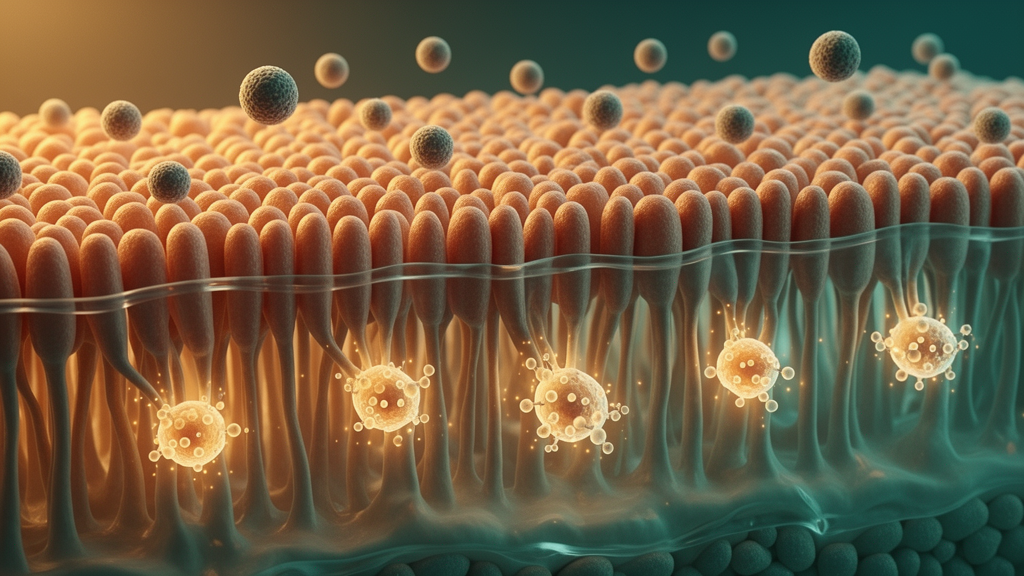
The intestinal epithelium is far more than a passive physical barrier against the microbial world. A new study published in Nature Immunology reveals that the cells lining the colon act as decisive architects of long-lived immune memory, determining not only how strongly the immune system responds to a bacterial invader but also where the resulting memory cells take up residence. The research, led by C. Garrett Wilson, M. Pragun Acharya, Carlene L. Zindl and Casey T. Weaver at the University of Alabama at Birmingham, demonstrates that the subcellular destination of bacterial antigens inside host cells fundamentally shapes the fate of CD4 T cells, with profound implications for mucosal vaccine design.
The team used Citrobacter rodentium, a mouse pathogen closely related to the human diarrheal bacteria enteropathogenic and enterohemorrhagic Escherichia coli. These attaching and effacing pathogens colonize the apical surface of intestinal epithelial cells and deploy a type III secretion system, a molecular syringe that injects bacterial effector proteins directly into the host cell cytosol. Crucially, the bacteria never enter the cell as intact organisms; only the injected proteins breach the epithelial barrier. The researchers asked whether this distinction matters immunologically, and the answer proved to be dramatic.
To track a defined immune response, the investigators engineered isogenic C. rodentium strains carrying the same model CD4 T cell epitope, the lymphocytic choriomeningitis virus gp66-80 peptide recognized by SMARTA T cells, fused to different bacterial carrier proteins. Intimin, an outer membrane adhesin, kept the epitope on the bacterial surface. Tir, a translocated receptor, placed it in the epithelial apical membrane. NleA distributed it diffusely through the host cytosol, and EspZ concentrated it in cytosolic clusters beneath attached bacteria. All strains retained wild-type virulence, ensuring that epitope insertion did not compromise bacterial fitness.
When naive SMARTA T cells were transferred into infected mice, the results were striking. Antigens confined to the bacterial surface or the epithelial membrane failed to drive responses beyond background levels, whereas cytosolically delivered antigens triggered robust clonal expansion. NleA-gp66 and EspZ-gp66 induced 28-fold and 47-fold greater accumulation of antigen-specific T cells in the colon, respectively, compared with intimin-gp66. Antigen abundance could not explain the disparity: Tir was the most abundantly secreted protein yet elicited a minimal response, while the poorly expressed EspZ drove the strongest reaction. Compartmentalization, not dose, emerged as the critical determinant of immunogenicity.
The investigators then isolated translocation as the sole variable by comparing full-length EspZ with a truncated variant lacking its type III secretion signal, so that the identical protein and epitope differed only in access to the host cytosol. The bifurcation was even more pronounced: full-length EspZ generated more than a 100-fold increase in mucosal antigen-specific T cells at the peak of the response. This difference held across all infected tissues and time points, establishing that cytosolic delivery alone accounts for the greatest divergence in the clonal CD4 T cell response to bacterial antigen.
Mapping the geography of the response revealed that immunity to C. rodentium is initiated in the cecum, where the bacterium first colonizes a highly focal region near the cecal patch, a gut-associated lymphoid structure. Fluorescence in situ hybridization showed bacteria clustered at the cecal apex, and T cell priming occurred predominantly in the cecum-draining distal mesenteric lymph node before effector cells spread to the distal colon. The weak response to bacterially associated antigen was evident at every site, ruling out differences in priming location as an explanation for the muted reaction to noncytosolic antigens.
The most consequential finding concerned memory. Weeks after bacterial clearance, cytosolic antigens had driven the majority of antigen-specific CD4 T cells into a tissue-resident memory phenotype, marked by CD69 and CD103 expression, whereas noncytosolic antigens left memory cells largely confined to gut-associated lymphoid tissue. Light-sheet fluorescence microscopy of intact, optically cleared colons showed that nearly 69 percent of memory T cells responding to injected antigen occupied the epithelial compartment, a density roughly threefold higher than in lymphoid structures and ninefold higher than the lamina propria. In mice lacking epithelial MHC class II, mucosal memory cells were reduced more than 20-fold, and intraepithelial residency was virtually abolished.
Single-cell RNA sequencing of more than half a million cells exposed the bidirectional dialogue underlying this programming. Epithelial MHC class II expression peaked during infection and persisted long after pathogen clearance, sustaining MHC-class-II-dependent contacts with resident memory T cells, a finding confirmed by LIPSTIC intercellular labeling, which marked about 79 percent of intraepithelial CD4 memory cells as actively engaged with epithelial cells. Interferon-gamma signaling dominated the transcriptional response of epithelial cells receiving T cell help, while ligand-receptor analysis identified MHC class II-CD4 interactions as the dominant epithelial-T cell axis, supplemented by CXCL16-CXCR6 and IL-7 and IL-15 pathways that support tissue residency and survival. Without epithelial antigen presentation, memory differentiation defaulted toward a central memory-like transcriptional program, with reduced expression of residency and effector genes such as Itgae, Ifng and Gzma and increased activity of plasticity-associated factors including Tcf7 and Bach2.
The functional payoff was demonstrated in a heterologous rechallenge experiment. Mice primed with cytosolic antigen-expressing C. rodentium were later challenged with Salmonella Typhimurium engineered to inject the same epitope into epithelial cells via its own secretion system. Primed mice showed significantly lower cecal bacterial burdens, complete survival through the observation window compared with 50 percent mortality in controls, and more than tenfold greater recovery of interferon-gamma-producing memory T cells. The authors conclude that nonprofessional antigen-presenting epithelial cells are central regulators of CD4 T cell memory fate, deploying protective residents precisely where reinfection will be encountered. The findings suggest that vaccines targeting antigens to the cytosol of intestinal epithelial cells could markedly enhance barrier-protective mucosal immunity, while offering new angles for modulating pathological memory in chronic inflammatory disease.
Subject of Research: How intestinal epithelial cell presentation of cytosol-delivered bacterial antigens programs mucosal CD4 tissue-resident memory T cell formation
Article Title: Barrier immune memory is programmed by intestinal epithelial cell presentation of cytosol-delivered bacterial antigens
Article References: Wilson, C. G., Acharya, M. P., Karsch, L., Duck, L. W., Twumasi-Ankrah, N., Wang, Y., Shen, H., Frey, B. F., McKee, A. R., Oza, V. H., Harbour, S. N., Nagaoka-Kamata, Y., Singer, J. R., Hatton, R. D., Moffitt, J., Gunzer, M., Zindl, C. L., & Weaver, C. T. (2026). Barrier immune memory is programmed by intestinal epithelial cell presentation of cytosol-delivered bacterial antigens. Nature Immunology, 27(10), 2117-2133. https://doi.org/10.1038/s41590-026-02656-7
Image Credits: AI Generated
DOI: 10.1038/s41590-026-02656-7
Keywords: intestinal epithelial cells, antigen presentation, CD4 T cells, tissue-resident memory, Citrobacter rodentium, type III secretion system, MHC class II, mucosal immunology, immune memory, barrier immunity, vaccine design, single-cell RNA sequencing
News Source: Kristina Jarvis. (October 8, 2026). Injected Bacterial Antigens Program Gut Immune Memory Through Epithelial Cell Presentation. Scienmag.