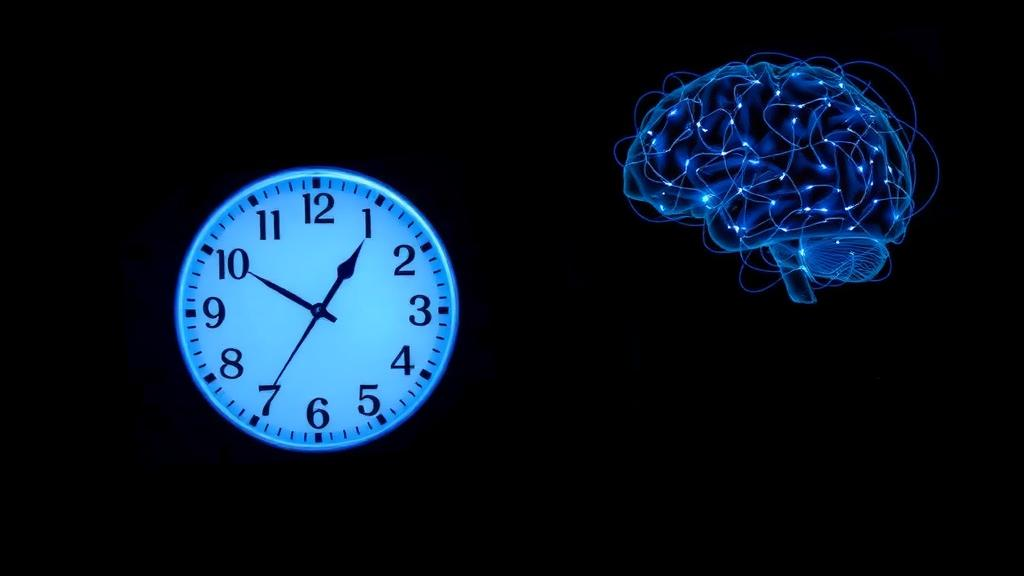
For decades, the brain’s master clock—the suprachiasmatic nucleus, or SCN—has been cast as the sole gatekeeper through which light exerts its grip on mammalian physiology. Nestled in the hypothalamus just above the optic chiasm, this tiny cluster of roughly 20,000 neurons receives a direct cable from the retina, the retinohypothalamic tract, and is widely assumed to funnel all light-derived information onward to the rest of the hypothalamus, suppressing the activity of downstream effector nuclei during the day. A new study from the University of Manchester, published in BMC Biology, upends that tidy hierarchy. Brinda Gurung, Court Harding, Josh W. Mouland, David Bechtold, Timothy Brown and colleagues demonstrate that light reaches deep into the anterior midline hypothalamus through parallel signalling channels—one routed via the SCN, the other acting far more directly—and that these channels sculpt hypothalamic activity in ways the canonical model never anticipated.
The team deployed an unusually broad technical arsenal to interrogate the question. They combined electrical stimulation of the SCN region in brain slices with visual stimulation of light-exposed animals, perforated multielectrode array recordings that capture the firing of many neurons simultaneously over hours, c-Fos mapping to visualise which cells were activated in the living brain, and detailed neuroanatomical tracing of retinal projections. This multi-pronged strategy matters because no single method could disentangle the two influences at play: the time-of-day signal emanating from the SCN and the moment-to-moment photic signal arriving from the eye.
The first surprise was the sheer diversity of responses. Across the midline hypothalamus—encompassing regions such as the paraventricular nucleus, the dorsomedial and anterior dorsomedial hypothalamus, the anterior hypothalamic area, the anterior ventromedial hypothalamus, the arcuate nucleus, the medial preoptic area, the lateral hypothalamic area and the retrochiasmatic area—the researchers found distinct cell populations that fell into different functional classes. Some received inhibitory input of SCN origin, some excitatory input, and some both. When the SCN region was stimulated electrically in slices, hypothalamic neurons responded with a mixture of fast excitatory postsynaptic currents and inhibitory currents, revealing that the master clock does not simply broadcast a uniform suppressive message to its hypothalamic targets.
Crucially, the responses were not confined to SCN-derived signals. The recordings revealed excitatory and inhibitory responses of retinal origin in hypothalamic cells, indicating that photic information arrives through routes that bypass, or at least run in parallel to, the classical SCN relay. The pharmacology supported this: blocking ionotropic glutamate receptors abolished the fast excitatory components, while the GABA receptor antagonist bicuculline unmasked inhibitory drive, consistent with glutamate and GABA acting as the principal transmitters carrying both circadian and retinal messages into these downstream nuclei.
Ex vivo recordings of hypothalamic slices maintained in artificial cerebrospinal fluid added a temporal dimension. Even when isolated from the body, different hypothalamic cell populations displayed divergent circadian activity patterns—some firing vigorously at what would be daytime in the donor animal, others peaking at night, and others showing phase relationships that shifted depending on where in the hypothalamus the cells resided. This differential phase resetting means the hypothalamus is not a passive uniform follower of the SCN clock; it hosts multiple local oscillators with distinct timing signatures, each potentially tuned to different physiological outputs such as hormone secretion, thermoregulation, feeding or sleep-wake control.
Back in the living animal, the picture sharpened further. Light-evoked activity in the hypothalamus in vivo was dominated by melanopsin—the photopigment found in intrinsically photosensitive retinal ganglion cells, the specialised neurons that also drive circadian photoentrainment and the pupil reflex. The melanopsin-dominated character of the hypothalamic visual responses aligned neatly with the distribution of direct retinal projections traced by the anatomical experiments: the regions that received the densest retinal innervation were the ones showing the strongest light-driven activation. Neutral density filters that attenuated light intensity, and comparisons across Zeitgeber times, allowed the team to separate the photic component from the circadian component of hypothalamic firing.
The c-Fos mapping experiments then delivered the study’s most visually compelling result. When the researchers quantified c-Fos expression—the classic molecular fingerprint of recent neuronal activation—across hypothalamic subregions, they found a striking mosaic. Some discrete subregions were dominated by circadian signals, lighting up according to time of day regardless of illumination. Others were dominated by light, responding to illumination irrespective of clock phase. And a third set responded to both, integrating the internal clock with the external light environment. This anatomical segregation of circadian, photic and combined influences means the hypothalamus is organised into parallel channels rather than a single SCN-gated pipeline.
The implications ripple outward well beyond rodent neuroanatomy. The hypothalamic nuclei implicated in this study are major effector sites for physiology: the paraventricular nucleus orchestrates the hormonal stress axis and autonomic output, the dorsomedial hypothalamus helps coordinate sleep-wake and feeding rhythms, the arcuate nucleus governs appetite and energy balance, and the ventromedial hypothalamus is central to defensive behaviour and metabolic regulation. If light can modulate these circuits directly, through melanopsin-driven retinal input, then environmental illumination has a far more immediate and granular influence on physiology than the SCN-suppression model allowed. It also offers new substrates for understanding how light can be adaptive—sharpening daily rhythms—and how it can be disruptive, as in the metabolic and mood disturbances associated with irregular light exposure, shift work and excessive evening screen use.
The study also reframes how we think about the SCN itself. Rather than a despotic conductor whose output wholly determines hypothalamic state, the master clock emerges as one player in a distributed network, contributing inhibitory and excitatory signals that interact with independent retinal channels. The finding that SCN-derived responses include both inhibitory and excitatory components challenges the textbook framing of daytime SCN output as uniformly suppressive on downstream hypothalamic effectors. Instead, the SCN appears to shape hypothalamic activity with the same kind of push-pull synaptic logic found elsewhere in the brain, while the retina delivers a second, parallel stream of information that can act on the same nuclei on its own timescale.
Methodologically, the work sets a benchmark for how to disentangle circadian and photic influences on neural activity. By pairing long-duration ex vivo multielectrode recordings—capable of tracking slice activity across the circadian cycle—with in vivo visual stimulation, pharmacological dissection of glutamatergic and GABAergic transmission, and quantitative c-Fos mapping validated against anatomical templates, the Manchester team built a converging chain of evidence in which each line of attack compensates for the limitations of the others. The result is a coherent map of where, when and how light and time-of-day signals converge in the hypothalamus. What remains to be explored is how these parallel channels influence specific physiological outputs—whether direct retinal drive to the paraventricular nucleus, for instance, acutely modulates stress hormones, or whether melanopsin input to feeding circuits contributes to the appetite-suppressing effects of bright light. The authors’ data establish that light-dependent activity across the anterior midline hypothalamus is surprisingly extensive, and in doing so they open a rich new seam for research into how the light environment shapes, and sometimes scrambles, the daily biology of mammals—including, very likely, ourselves.
Subject of Research: Parallel retinal and circadian signalling pathways regulating light-dependent activity in the mouse hypothalamus
Article Title: Parallel retinal and circadian signalling channels organise mouse hypothalamic activity
Article References: Gurung, B., Harding, C., Mouland, J. W., Sahid, N., Ray, H., Bechtold, D. A., & Brown, T. M. (2026). Parallel retinal and circadian signalling channels organise mouse hypothalamic activity. BMC Biology. https://doi.org/10.1186/s12915-026-02746-w
Image Credits: AI Generated
DOI: 10.1186/s12915-026-02746-w
Keywords: suprachiasmatic nucleus, hypothalamus, circadian rhythms, melanopsin, intrinsically photosensitive retinal ganglion cells, retinohypothalamic tract, c-Fos mapping, multielectrode recordings, paraventricular nucleus, dorsomedial hypothalamus, light exposure, electrophysiology
News Source: Cassandra Pierce. (October 6, 2026). Light Talks Directly to the Hypothalamus, Rewriting the Rules of the Body Clock. Scienmag.