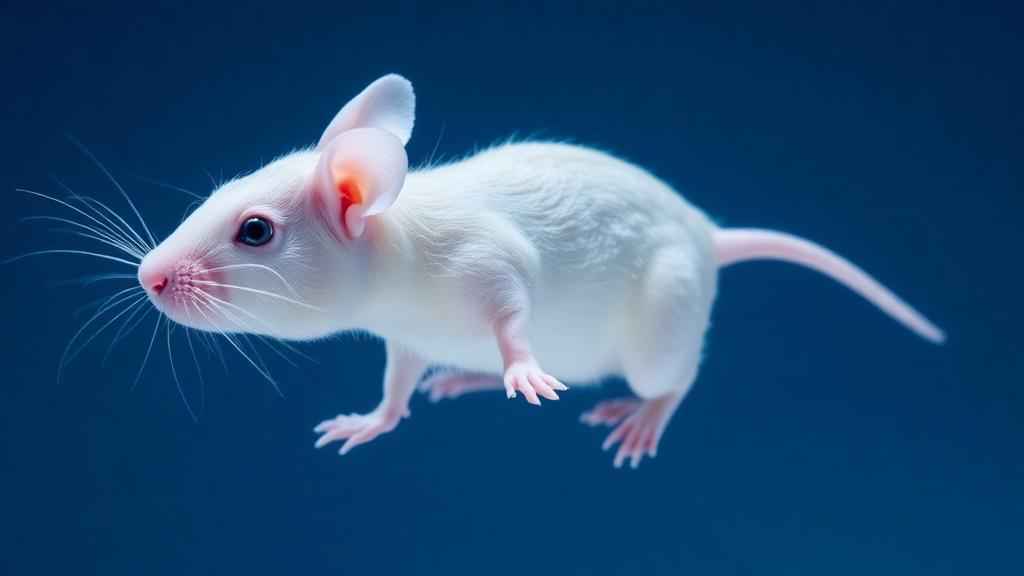
Cryopreservation has become one of the quiet workhorses of modern reproductive science, allowing researchers and clinicians to suspend eggs, embryos, and sperm in a state of suspended animation until they are needed. In livestock breeding, laboratory animal colonies, and human fertility clinics alike, the ability to freeze gametes reliably underpins everything from genetic conservation programs to assisted reproduction. Yet for all its importance, the solutions used to freeze animal sperm have long relied on ingredients that scientists would rather avoid. A research team at Kyoto University and RIKEN in Japan has now taken a significant step toward cleaner, more predictable sperm freezing, reporting a chemically defined cryopreservation solution for rat sperm that eliminates both chicken egg yolk and a problematic detergent, while still producing healthy offspring through in vitro fertilization.
The conventional approach to freezing animal sperm, including rat sperm, typically involves a lactose-based solution supplemented with chicken egg yolk. Egg yolk earned its place in cryopreservation media decades ago because its lipoproteins help shield sperm membranes from the stresses of freezing and thawing. But it comes with baggage. As a biological product of variable composition, egg yolk introduces batch-to-batch inconsistency that makes it difficult to standardize freezing protocols between laboratories. More concerning is the risk of microbial contamination, since egg products can harbor bacteria and viruses that threaten both the samples being preserved and the animals that may eventually be produced from them. For colonies of laboratory rats maintained under strict pathogen-free conditions, that risk is far from trivial.
The second problematic ingredient is OEP, a detergent containing sodium lauryl sulfate that is commonly added to sperm freezing solutions to improve their performance. While OEP helps during the freezing process, it has a darker side when the thawed sperm are used for in vitro fertilization: the detergent has the potential to damage oocytes, the egg cells that sperm must fertilize. In an IVF setting, where the goal is to produce viable embryos from carefully collected eggs, introducing a substance that can harm those very eggs is an unwelcome compromise. These twin problems, microbial risk from egg yolk and oocyte toxicity from OEP, motivated the Kyoto University and RIKEN team to ask a fundamental question: could rat sperm be frozen effectively using only chemically defined components whose identity, purity, and concentration are fully known?
“We were particularly interested in whether rat sperm could be cryopreserved without egg yolk, which has been used for many years in conventional sperm preservation solutions,” says first author Kohtaro Morita of Kyoto University. The question matters because rats occupy a special place in biomedical research, serving as models for physiology, pharmacology, toxicology, and human disease. Yet the reproductive engineering technologies that have transformed mouse genetics, allowing researchers to archive and ship mouse strains as frozen sperm, have lagged behind for rats. A reliable, defined freezing solution would be a practical tool for maintaining rat colonies, exchanging genetic lines between institutions, and safeguarding valuable strains against accidental loss.
The team’s strategy was systematic and iterative. They began by freezing rat sperm in a simple lactose solution, stripped of both egg yolk and OEP, and then measured sperm motility after thawing. Motility, the ability of sperm to swim actively, serves as a key indicator of post-thaw viability and fertilizing potential. By varying the concentration of lactose across trials, the researchers identified the optimal level for supporting sperm survival through the freeze-thaw cycle. With that baseline established, they turned to additives, testing each candidate’s contribution to membrane protection and motility recovery.
The first meaningful improvement came from OptiPrep, a commercially available iodixanol-based density gradient medium that has previously shown effectiveness in protecting sperm during cryopreservation. When added to the lactose solution, OptiPrep improved sperm motility after thawing, suggesting it helps buffer the cells against the physical and osmotic stresses of ice formation. The researchers then layered on additional cryoprotectants in various combinations and concentrations, systematically searching for the formulation that yielded the highest motility in thawed rat sperm. This combinatorial screening approach allowed them to identify synergies between protective agents rather than relying on any single ingredient.
Two components emerged as particularly important. The combination of ethylene glycol, a small penetrating cryoprotectant widely used in embryo freezing, and sericin, a silk-derived protein with documented cell-protective properties, reduced damage to both the plasma membrane and the acrosomal membrane of the sperm. The acrosome is the enzyme-filled cap that sperm use to penetrate an egg during fertilization, so preserving its integrity is essential for maintaining fertilizing capacity. In addition, the researchers found that two nucleotides, ATP and dbcAMP, improved sperm motility after thawing, presumably by supporting the energy metabolism and signaling pathways that drive sperm movement. The final optimized solution thus consisted of OptiPrep, ethylene glycol, sericin, ATP, and dbcAMP in a lactose base, every component chemically defined and free of animal-derived biological material.
With the formulation in hand, the team put it to the ultimate test: could sperm frozen in this solution actually produce live animals? They cryopreserved rat sperm, thawed it, and used it for in vitro fertilization with fresh oocytes collected from female rats. The resulting two-cell embryos were then transferred into the oviducts of pseudopregnant female rats, where they could develop to term. To benchmark performance, the researchers ran the same IVF and embryo transfer procedure in parallel using freshly prepared, never-frozen sperm, allowing a direct comparison of fertilization efficiency and birth rates between the two groups.
The results were encouraging, if not perfect. Sperm cryopreserved in the new solution achieved a fertilization rate of approximately 70 percent, lower than the roughly 90 percent achieved with fresh sperm, but high enough to efficiently generate fertilized oocytes for embryo production. More striking was the outcome at the other end of the developmental pipeline: approximately 36 percent of the embryos fertilized with cryopreserved sperm resulted in live rat pup births, a figure that showed no significant difference compared with the fresh sperm group. In other words, once an embryo was successfully produced from the frozen-thawed sperm, its ability to develop into a healthy pup was essentially equivalent to that of an embryo derived from fresh sperm. The freezing process, in the new defined solution, did not appear to compromise developmental potential.
“Although reproductive engineering technology for rats has lagged behind that for mice, we expect that this new cryopreservation solution will facilitate the international transport of rat sperm and reduce the risk of microbial contamination when producing offspring,” says Morita. The implications extend across the laboratory animal science community. Shipping frozen sperm rather than live animals is cheaper, safer, and more humane, and it allows institutions to reconstitute strains locally from a small vial rather than transporting breeding pairs across borders. A defined, yolk-free medium also removes a persistent source of variability that has complicated comparisons between laboratories, since each batch of egg yolk carries its own biological idiosyncrasies.
The authors are candid that further improvements are still necessary. The fertilization rate achieved with the new solution, at around 70 percent, remains below the 80 to 95 percent range reported for fresh sperm or for conventional cryopreservation methods that include egg yolk. Closing that gap will likely require refining the formulation further, perhaps by tuning cryoprotectant concentrations or identifying additional membrane-stabilizing agents. Even so, the study, published on 16 September 2026 in Biology of Reproduction under the title “Development of a chemically defined cryopreservation solution for rat sperm and production of offspring by in vitro fertilization,” demonstrates that the long-standing compromises of conventional sperm freezing media can be overcome. By showing that rat sperm can be frozen without egg yolk or detergent, thawed, and used to generate healthy offspring through IVF, the Kyoto University and RIKEN team has opened a path toward cleaner, more standardized gamete banking, not only for rats but potentially for other species where the same old recipe has persisted for decades.
Subject of Research: Development of a chemically defined cryopreservation solution for rat sperm enabling in vitro fertilization and offspring production without egg yolk or detergent
Article Title: Rat sperm freezing without the egg yolk
Article References: Rat sperm freezing without the egg yolk. (n.d.). Original publication
Image Credits: AI Generated
DOI: Not provided
Keywords: cryopreservation, rat sperm, in vitro fertilization, egg yolk-free, sperm motility, ethylene glycol, sericin, OptiPrep, Kyoto University, RIKEN, reproductive technology, laboratory animals
News Source: Drew Townsend. (October 6, 2026). Egg Yolk-Free Freezing Solution Preserves Rat Sperm for Successful IVF. Scienmag.