Milk seems like the simplest product on the shelf, yet a new study from South Korea reveals that the battle between domestic and imported milk is fought molecule by molecule. Researchers at the Korea Food Research Institute set out to answer a deceptively ordinary question: when Korean consumers sip milk from Germany, Poland, or Australia, do they actually taste something different, and does that difference shape what they buy? The answer, published in Food Science of Animal Resources, is a resounding yes, and it hinges on a family of volatile aroma compounds that most shoppers have never heard of but every one of them can smell.
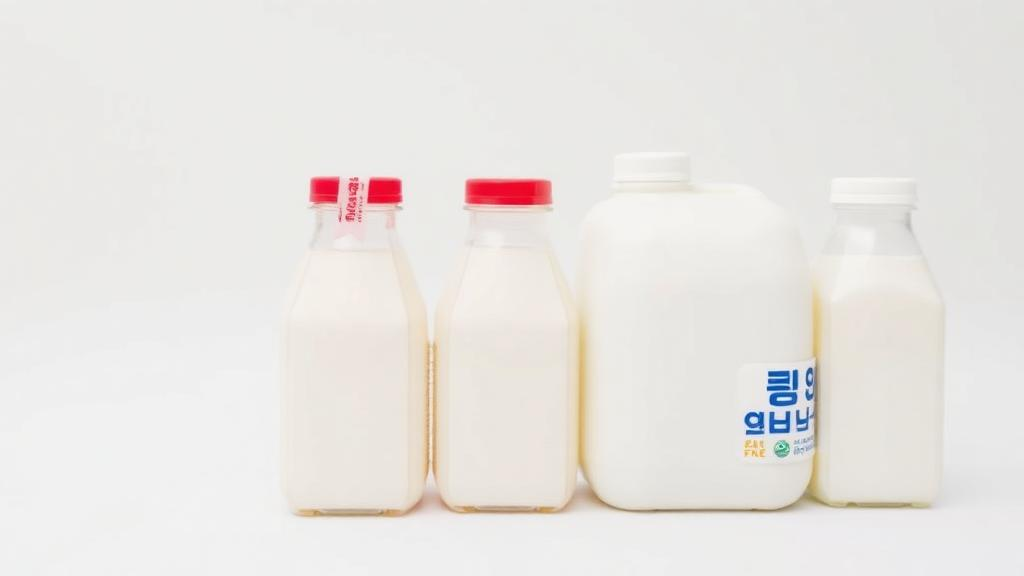
The research team, led by Min Kyung Park and Han Sub Kwak, assembled seven commercial milk samples: four produced in Korea and three imported sterilized milks from Germany, Poland, and Australia. The domestic samples included two refrigerated ultra-high-temperature pasteurized milks with a government-regulated fourteen-day shelf life and two room-temperature sterilized milks with a six-week shelf life. The imported products, all UHT-treated with one-year shelf lives, were purchased through online marketplaces, reflecting how most Korean consumers now encounter them. Every sample was stored at four degrees Celsius and served within its expiration date, ensuring that the comparison captured genuine product differences rather than handling artifacts.
To dissect the chemistry, the team turned to headspace solid-phase microextraction coupled with gas chromatography and mass spectrometry, a technique that essentially sniffs milk at the molecular level. Three milliliters of each sample were sealed in amber vials with an internal standard, incubated at forty degrees Celsius, and probed with a divinylbenzene/carboxen/polydimethylsiloxane fiber that absorbs volatile compounds from the headspace. Separation occurred on a DB-WAXUI capillary column with helium as the carrier gas, and compounds were identified by matching retention times and mass spectra against authentic standards and the Wiley library. In total, forty-two volatile aroma compounds were quantified across the seven milks, providing a chemical fingerprint for each product.
The chemical results were striking. Imported milk contained significantly higher total levels of volatile aroma compounds than domestic milk, with the Australian and Polish samples standing out in particular. Ketones and benzene derivatives dominated the profiles, and acetone alone accounted for roughly half to seventy percent of the total volatiles, a dominance consistent with earlier international studies. In the imported milks, fatty acid-derived methyl ketones such as propan-2-one, butan-2-one, pentan-2-one, heptan-2-one, and nonan-2-one were predominant; these compounds, formed through lipid oxidation, are known key contributors to cheese and butter notes. Domestic milks, by contrast, leaned more heavily on benzene derivatives and carried a generally quieter aromatic profile.
Multivariate statistics sharpened the picture. Principal component analysis explained sixty percent of the total variance and cleanly separated domestic from imported samples along the first component, while partial least squares discriminant analysis identified nine volatile compounds as the molecular signatures driving the divide. Among them was methylsulfonylmethane, a sulfur-containing compound with a vegetable-like odor. Sulfur volatiles matter enormously in flavor science because their sensory thresholds are extremely low, meaning even trace amounts register strongly in the nose. The imported group was thus characterized by distinctive, pungent notes of cheese, fruit, and sulfur, while the domestic group showed a milder profile associated with sweet and aromatic compounds such as 1,2-xylene and phenylmethanol.
Why would milk from different countries smell so different? The researchers point to the entire chain from pasture to processing. Cows grazing on fresh grass produce milk richer in terpenes and carotenoids, lending grassy and creamy notes, whereas animals fed grain or total mixed rations yield milk with different fatty acid patterns and less distinct aromas. Pasture biodiversity, feed quality, and rearing climate all leave chemical traces in the glass. Processing adds another layer: intense UHT heating can generate caramel-like or cooked flavors through Maillard reactions. Korea’s limited land area and high population density mean dairy cows are typically raised in barns on formulated fodder, producing milk with a deliberately mild, less complex aroma, while pasture-based systems common in exporting countries produce richer, more intense flavor profiles.
Chemistry alone, however, cannot predict what people will like, so the team recruited 120 consumers from Jeonju-si and Wanju-gun under an approved institutional review board protocol, with 114 completing both sessions. On day one, participants tasted all seven milks blind, coded with random three-digit numbers and served slightly chilled at eight degrees, rating overall liking plus color, flavor, aroma, and mouthfeel on nine-point scales. They also profiled each sample using the rate-all-that-apply method across twenty-four attributes and recorded emotional responses with the EsSense25 questionnaire. On day two, the identical procedure was repeated, except this time the actual one-liter packages and prices were displayed, allowing the researchers to measure exactly how brand, country of origin, and cost information reshape perception.
The consumer results told a clear story. In the blind test, domestic refrigerated milks earned the highest liking scores, followed by domestic sterilized milks, with all three imported samples rated significantly lower. When packages were revealed, liking for domestic milk generally rose, and one familiar brand showed a statistically significant jump from 6.87 to 7.25, while ratings for imported milk slipped further. Familiarity followed the same pattern, increasing significantly for domestic products and dropping for imports once their origin was visible. Sensory profiling confirmed that blind tasters already described imported milk as yellowish, cheesy, buttery, fermented, and gamey, and these impressions intensified when shoppers knew what they were drinking. Partial least squares regression tied the negative attributes directly to the methyl ketones and sulfur compounds identified chemically, showing that the same molecules driving the imported aroma profile were dragging down overall liking.
Perhaps the most surprising finding concerned price. Polish milk in the study was nearly forty-six percent cheaper than its Korean counterpart, and imported products averaged roughly twenty-one percent lower prices overall, yet this economic advantage barely moved the needle. Only a handful of participants mentioned cost in open-ended feedback, and acceptance ratings for imports barely changed between blind and informed conditions. The researchers conclude that intrinsic factors, flavor and aroma above all, dominate milk choice, likely because milk remains a small, frequent purchase rather than a major household expense. For Korean consumers, decades of exposure have cultivated a taste for mild domestic milk, and the unfamiliar intensity of imported dairy aromas, sometimes described locally as a gamey off-note, outweighs any discount. As imported sterilized milk continues to gain shelf space in an increasingly expensive domestic market, the study suggests that winning over Korean palates will require more than competitive pricing; it may require either reformulating expectations or meeting consumers in flavored matrices, such as lattes, where those bold dairy notes can hide.
Subject of Research: Volatile aroma compound profiles and consumer perception of domestic versus imported milk in Korea
Article Title: Comparison of volatile aroma compounds and consumer perception between domestic and imported milk in Korea
Article References: Park, M. K., Park, S., Yoon, G., Lee, C.-L., & Kwak, H. S. (2026). Comparison of volatile aroma compounds and consumer perception between domestic and imported milk in Korea. Food Science of Animal Resources, 46(1), Article 52. https://doi.org/10.1007/s44463-025-00018-9
Image Credits: AI Generated
DOI: 10.1007/s44463-025-00018-9
Keywords: milk, volatile aroma compounds, GC-MS, consumer perception, country of origin, UHT milk, sensory evaluation, South Korea, food science, flavor chemistry, consumer ethnocentrism, dairy
News Source: Alan Morgan. (October 4, 2026). Why Korean Shoppers Turn Up Their Noses at Cheaper Imported Milk. Scienmag.