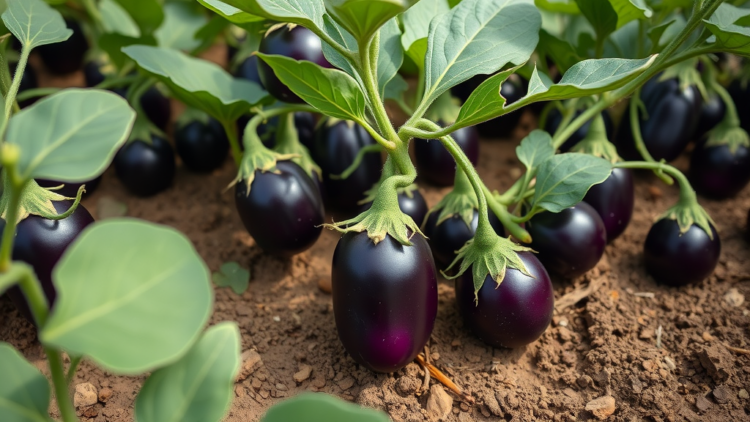
A team of Bangladeshi agricultural researchers has shown that an Internet of Things (IoT) enabled, sensor-driven drip irrigation system can grow eggplants with dramatically less water, fertilizer, and labor than conventional farming, while matching or slightly exceeding the yields that traditional practices deliver. The field trial, conducted at the Bangladesh Agricultural Research Institute (BARI) in Gazipur during the dry Rabi season of 2023 to 2024, is one of the first rigorous real-world evaluations of precision agriculture technology in Bangladesh, a country where irrigation is expensive, diesel pumps dominate, and excessive or unbalanced input use has long undermined both farm profitability and environmental sustainability. The results, published in the open-access journal BMC Agriculture, suggest that smart irrigation could become a practical tool for smallholder and commercial growers across South Asia.
The study’s central challenge was to determine whether automated, data-driven scheduling of irrigation and fertigation could actually perform under genuine field conditions, not just in laboratory prototypes. Farmers in Bangladesh typically apply fertilizers and pesticides without knowing whether they are necessary, and more than 80 percent of the country’s irrigation pumps run on costly diesel. Eggplant, a year-round crop grown on roughly 51,165 hectares and a key income source for rural households, suffers an estimated 30 percent yield loss each year to pests and diseases, making it an ideal test case for a system that promises to deliver precisely measured inputs at precisely the right moments.
The system the researchers built combined a sensor node, fitted with soil and meteorological instruments, with an automation node that controlled drip irrigation lines and fertigation pumps. Soil moisture probes, electrical conductivity sensors, and weather stations streamed data wirelessly to the cloud, where a decision-making algorithm determined when to irrigate and when to inject nutrients. A mobile application gave operators remote access to real-time field information, allowing the entire crop to be monitored and controlled from anywhere. The logic was straightforward but finely tuned: irrigation began when soil moisture fell to 13.3 percent, corresponding to the management allowable depletion level, and stopped once moisture reached 26.6 percent, the soil’s field capacity.
Fertigation followed an equally disciplined schedule. On predetermined days after planting, specifically days 20, 40, 60, and 80, the system checked the soil’s electrical conductivity before acting. If conductivity exceeded 0.5 decisiemens per meter, considered unfavorable for plant growth in non-saline soils, fertigation was skipped entirely. Otherwise, separate pumps drew urea and potash solutions into a mixing tank, each motor calibrated to a flow rate of 16.6 milliliters per second so that exactly 20 liters of solution reached the field per event. These doses corresponded to 60 percent of the recommended nitrogen and 70 percent of the recommended potassium, a deliberate reduction designed to test whether precision placement could compensate for smaller quantities.
To evaluate the technology, the team laid out a randomized complete block design with four treatments, each replicated twice. The IoT-based system was compared against BARI-recommended eggplant production practices, a drip fertigation system using pan evaporation-based scheduling, and traditional farmer practices that had been documented through focus group discussions and interviews in the Narshingdi, Jamalpur, and Tangail districts. Traditional plots received surface flooding irrigation at 15 to 20 day intervals, full or excessive fertilizer doses, and frequent pesticide applications. Soil water content was tracked gravimetrically throughout the season at depths from 0 to 30 centimeters, and seasonal actual water use was calculated from irrigation, effective rainfall, and changes in stored soil water.
The yield results were striking in their evenness. The IoT-managed plots produced 30.99 tonnes of marketable fruit per hectare, statistically similar to the 31.73 tonnes achieved by drip fertigation and marginally above the 30.08 tonnes from traditional practice, a gain of roughly 3 percent. The advantage came through better fruit length, diameter, and unit weight, driven by the steady, adequate water supply that sensor-driven scheduling maintained. Traditional plots, by contrast, suffered from inadequate and poorly timed irrigation. The finding aligns with earlier studies showing that smart drip irrigation boosted banana yields by 15 percent and sweet corn yields by 12.8 percent, and with a Chinese meta-analysis finding that drip fertigation raised crop yields by 6 to 40 percent compared with flood irrigation and broadcast fertilization.
Water savings were the headline figure. The IoT system used 63 percent less irrigation water than traditional practices while improving water use efficiency by 172.7 percent, and irrigation water use efficiency rose in proportion. Total seasonal water use in the IoT and drip fertigation plots was nearly identical, and both were far below the furrow-irrigated BARI plots and the flood-irrigated traditional plots. The pattern echoes results from other crops: IoT-based drip systems cut water use by 65 percent in sweet potato, 50 percent in a pear orchard, and 30 percent in field tomatoes. Soil moisture data also revealed that the sensor-managed plots held less water than traditional ones, yet crops thrived, indicating that eggplants, which are moderately deep-rooted, could extract moisture from the 10 to 30 centimeter layer while the system avoided the waste of overwatering.
Nutrient efficiency improved just as dramatically. By delivering urea and potash directly to the root zone in water-soluble form, the IoT system saved 50 percent of urea and 53 percent of potassium relative to traditional practice, while nitrogen use efficiency rose 106.9 percent and potassium use efficiency rose 118 percent. The gain comes from basic physics and plant physiology: conventional flood irrigation washes nitrogen and potassium away in surface runoff, whereas drip fertigation places the right nutrient at the right place at the right time, maximizing uptake and minimizing loss. Pesticide costs also fell by 53 percent, and labor demand dropped by 33 percent, since irrigation and fertigation ran automatically without field visits.
Economics told a more nuanced story. When all gross costs were counted, including the substantial initial investment in sensors, automation hardware, software, and drip accessories, the IoT system’s benefit-cost ratio was initially lower than traditional farming during the first crop cycle. But measured against variable costs alone, the IoT system was clearly superior, with total variable costs about 18 percent lower than conventional production thanks to savings on labor, irrigation, fertilizer, and pesticides. At an 8.5 percent discount rate, the system’s benefit-cost ratio was 1.17, its internal rate of return exceeded the discount rate, and the researchers project that the initial investment would be recovered after roughly five crop cycles, assuming two cycles per year. A sensitivity analysis confirmed that the system remains profitable even when costs rise or returns fall.
The authors are candid about the obstacles to scaling. IoT sensors are scarce in the local market, import tariffs inflate prices, and repeated sensor calibration adds expense and complexity. For smallholder farmers facing high upfront costs, adoption will be difficult without policy support, and the researchers recommend removing taxes on IoT devices, offering incentives, and conducting public field demonstrations across different locations. They also suggest that Long Range Wide Area Network technology, which transmits over long distances with low power, could overcome connectivity gaps in remote areas lacking Wi-Fi or 4G coverage. The study covered a single season at a single site, so the team recommends multi-season, multi-location trials to confirm scalability. Still, the demonstration stands: a sensor-driven irrigation network, working unattended under South Asian field conditions, delivered eggplant yields on par with intensive conventional practice while saving nearly two-thirds of the water and half the fertilizer, a combination that could reshape how resource-constrained farming systems feed a growing population.
Subject of Research: IoT-enabled sensor-based automated drip irrigation and fertigation for water- and nutrient-efficient eggplant production in Bangladesh
Article Title: Field evaluation of sensor-driven drip irrigation systems for eggplant production
Article References: Sarker, K. K., Karim, N. N., Islam, A. T., Ahmed, I., Uddin, M. N., Hasan, S., Hoque, M. R., Ali, M. T., Kabir, M. S., Biswas, S. K., Hossain, M. A., & Mahboob, M. G. (2026). Field evaluation of sensor-driven drip irrigation systems for eggplant production. BMC Agriculture, 2(1), Article 7. https://doi.org/10.1186/s44399-026-00031-3
Image Credits: AI Generated
DOI: 10.1186/s44399-026-00031-3
Keywords: IoT, precision agriculture, drip irrigation, fertigation, eggplant, water use efficiency, nutrient use efficiency, smart farming, Bangladesh, soil moisture sensors, benefit-cost ratio, sustainable agriculture
Cite Scienmag News
APA MLA Chicago
Alan Morgan. (September 25, 2026). Smart Sensors Slash Water and Fertilizer Use in Eggplant Fields Without Yield Loss. Scienmag. https://scienmag.com/smart-sensors-slash-water-and-fertilizer-use-in-eggplant-fields-without-yield-loss/
Alan Morgan. “Smart Sensors Slash Water and Fertilizer Use in Eggplant Fields Without Yield Loss.” Scienmag, 25 September 2026, https://scienmag.com/smart-sensors-slash-water-and-fertilizer-use-in-eggplant-fields-without-yield-loss/. Accessed 25 September 2026.
Alan Morgan. “Smart Sensors Slash Water and Fertilizer Use in Eggplant Fields Without Yield Loss.” Scienmag. September 25, 2026. https://scienmag.com/smart-sensors-slash-water-and-fertilizer-use-in-eggplant-fields-without-yield-loss/
Copy citation Download RIS
Tags: Bangladeshbenefit-cost ratiocost-effective drip irrigation systemsdigital agriculture in South Asiadrip irrigationdrone and sensor-based crop managementeggplantenvironmentally friendly agriculture innovationsfertigationfield trial evaluation of IoT farming toolsimpact of smart sensors on crop yieldIoTIoT-enabled precision agriculturenutrient use efficiencyprecision agriculturereducing reliance on diesel pumps in farmingsmallholder farmer irrigation solutionsSmart farmingsmart irrigation technologysoil moisture sensorssustainable agriculturesustainable farming practices in Bangladeshwater and fertilizer savings in eggplant cultivationwater-use efficiency