Metastatic colorectal cancer remains one of the most stubborn frontiers in modern oncology, and a new review published in Medical Oncology argues that the missing weapon may come from an unexpected source: Traditional Chinese Medicine. The work, led by Yu Sun and colleagues at the Affiliated Hospital of Beihua University in Jilin, China, lays out a mechanistic blueprint for how standardized herbal formulas could be combined with immune checkpoint inhibitors to transform colorectal tumors that currently shrug off immunotherapy into tumors the immune system can attack. The central idea is deceptively simple but scientifically ambitious: rather than treating herbal medicine as a vague immune booster, the authors propose that multi-component formulas act as ecological engineers of the tumor microenvironment, reshaping the soil in which cancer grows so that immunotherapy can finally take root.
The clinical problem the review addresses is stark. Immune checkpoint inhibitors, the drugs that have revolutionized treatment of many advanced cancers, work spectacularly well in only a small subset of colorectal cancer patients. Tumors classified as microsatellite instability-high, which carry abundant mutations and are therefore highly visible to the immune system, respond robustly to pembrolizumab and similar agents, with five-year follow-up from the randomized phase III KEYNOTE-177 study confirming durable benefit over chemotherapy. But the vast majority of metastatic colorectal cancers are microsatellite-stable, meaning their mutation burden is low and their immune landscape is cold: few T cells infiltrate the tumor, and suppressive cells and signaling molecules actively keep the immune system at bay. For these patients, checkpoint blockade alone offers little, and the search for ways to convert cold tumors into hot ones has become one of the field’s most urgent priorities.
The authors frame their solution around what they call the tumor-immune-soil nexus, a conceptual model in which the tumor, the immune system, and the surrounding microenvironment form an interdependent ecosystem. Within this framework, Traditional Chinese Medicine formulas are proposed to function as formula-defined ecological conditioners, multi-target systems that simultaneously adjust several parameters of the ecosystem rather than hitting a single molecular switch. The blueprint rests on three actionable pillars: remodeling the gut microbiome to restore immune-supportive bacterial communities and metabolic flux, reprogramming the myeloid compartment away from immunosuppressive states, and inducing immunogenic cell death in tumor cells to generate the danger signals needed to ignite an immune response. Each pillar is grounded in a growing body of preclinical and early clinical evidence.
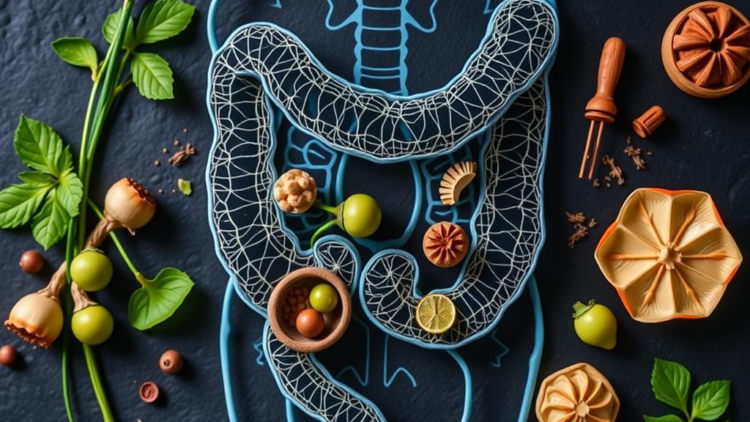
The first pillar, microbiome remodeling, is perhaps the most provocative. The gut harbors trillions of bacteria that shape systemic immunity, and disruption of this community has been linked to colorectal cancer development and to poor responses to immunotherapy. Several classical herbal formulas have now been shown in experimental systems to reshape gut microbial composition. Gegen Qinlian decoction, for example, was reported to enhance the effect of PD-1 blockade in microsatellite-stable colorectal cancer models by remodeling both the gut microbiota and the tumor microenvironment. Huang-Lian-Jie-Du decoction enhanced the efficacy of capecitabine and oxaliplatin through the bacterium Akkermansia muciniphila and CD8-positive T cells, while Shenling Baizhu powder has been implicated in potentiating immunotherapy response through gut microbial remodeling and fatty acid metabolism modulation. Herbal compounds can also repair the intestinal barrier, whose breakdown allows bacterial products and even live bacteria to disseminate and promote metastasis, particularly to the liver.
Metabolism provides the mechanistic bridge between microbes and immune cells. Bacterial metabolites such as short-chain fatty acids and bile acids profoundly influence T cell differentiation, including the balance between inflammatory Th17 cells and suppressive regulatory T cells. Secondary bile acids produced by gut bacteria have been linked to Western diet-associated colorectal cancer and to liver metastasis through altered neutrophil recruitment. The review argues that by steering microbial metabolism, herbal formulas could shift these metabolite pools toward configurations that favor anti-tumor immunity. The authors also invoke the classical concept of the Gan Pi axis, a traditional framework linking liver and spleen physiology, and propose translating it into modern immunometabolism, suggesting that ancient syndrome categories may map onto measurable metabolic and immune states that can be targeted and monitored.
The second pillar targets the myeloid compartment, the army of innate immune cells that in colorectal cancer too often works for the tumor rather than against it. Tumor-associated macrophages polarized toward the M2 phenotype and myeloid-derived suppressor cells both suppress cytotoxic T cells and correlate with poor outcomes. TGF-beta signaling builds what researchers have described as a dual immune barrier by impairing T cell recruitment and instructing immunosuppressive macrophages, while molecules such as MNDA promote immunosuppression by facilitating infiltration of polymorphonuclear myeloid-derived suppressor cells. Here again, herbal pharmacology offers candidate tools: Astragalus polysaccharide has been shown to induce macrophage polarization toward the pro-inflammatory M1 state via Notch signaling, curcumin has been reported to inhibit and redifferentiate myeloid-derived suppressor cells, and artesunate modulates macrophage inflammatory signaling through the TLR4 pathway. Senescent fibroblasts, which drive T cell dysfunction through CD36-mediated lipid transfer, represent another stromal target within this pillar.
The third pillar addresses the fundamental requirement that the immune system must first perceive cancer as a threat. Immunogenic cell death is a specialized form of tumor cell demise that exposes calreticulin on the cell surface and releases danger signals, allowing dendritic cells to capture tumor antigens and prime T cell responses. Several compounds derived from Chinese herbs have been shown to induce this process: cantharidin-loaded nanomedicines triggered immunogenic cell death to enhance PD-1 blockade in preclinical models, and triptolide induced immunogenic cell death through endoplasmic reticulum stress and redox modulation. The review also highlights the STING pathway, a DNA-sensing circuit that is frequently epigenetically silenced in colorectal carcinoma, constraining DNA damage responses and enabling immune escape. Reactivating such danger-sensing machinery, the authors argue, is a prerequisite for converting the immune desert of microsatellite-stable tumors into productive anti-tumor immunity.
The authors are notably candid about the weaknesses of the existing evidence base, and this honesty distinguishes the review from more promotional treatments of the topic. A significant portion of the human data on Traditional Chinese Medicine in colorectal cancer remains observational, cross-sectional, or case-control in design, which limits causal inference and makes it impossible to reconstruct the long-term temporal sequence linking immune and microbiome dynamics to cancer progression or treatment response. Herb-drug interactions add a further layer of complexity: compounds such as baicalein and baicalin can alter the activity of drug-metabolizing enzymes like CYP3A4 and the transporter p-glycoprotein, changing the pharmacokinetics of co-administered drugs, a lesson underscored by the classic demonstration that St. John’s wort accelerates irinotecan metabolism. Without chemical standardization of formulas and careful pharmacokinetic monitoring, combination strategies risk being confounded or even dangerous.
To move the field forward, the review proposes a concrete methodological agenda. Future trials should evaluate standardized, chemically characterized formulas within adaptive platform designs that incorporate biomarker-driven endpoints, an approach aligned with the FDA’s botanical drug development guidance and with the emerging infrastructure of precision oncology trials. Validation tools should include spatial transcriptomics to map whether candidate formulas genuinely convert cold tumor regions into immune-inflamed ones, and microbiome-humanized mouse models that allow patient-derived microbial communities to be tested in controlled experiments. Network pharmacology, artificial intelligence-driven synergy prediction, and multi-omics integration are proposed as engines for identifying which combinations of herbal constituents produce the desired ecological shifts, while organoid platforms derived from patients could screen for resistance mechanisms before trials begin.
If the blueprint succeeds, the implications would extend well beyond colorectal cancer, offering a template for rationally integrating multi-component natural products with immunotherapy across tumor types. The vision is not herbal medicine as an alternative to mainstream oncology but as a priming agent, one that conditions the tumor ecosystem so that checkpoint inhibitors can work in the patients who currently derive no benefit from them. Whether classical formulas can survive the rigor of standardized chemistry, adaptive trials, and mechanistic validation remains an open question, but the review makes a compelling case that the answer is worth pursuing with the full arsenal of modern cancer science.
Subject of Research: Integrating Traditional Chinese Medicine with immune checkpoint inhibitors to convert immunotherapy-resistant microsatellite-stable metastatic colorectal cancer into an immune-responsive state
Article Title: Beyond the barrier: Engineering the tumor-immune-soil nexus–a mechanistic blueprint for integrating Traditional Chinese Medicine with immunotherapy in metastatic colorectal cancer
Article References: Beyond the barrier: Engineering the tumor-immune-soil nexus–a mechanistic blueprint for integrating Traditional Chinese Medicine with immunotherapy in metastatic colorectal cancer. (n.d.). https://doi.org/10.1007/s12032-026-03397-1
Image Credits: AI Generated
DOI: 10.1007/s12032-026-03397-1
Keywords: metastatic colorectal cancer, Traditional Chinese Medicine, immune checkpoint inhibitors, gut microbiome, tumor microenvironment, immunotherapy resistance, microsatellite stability, immunogenic cell death, myeloid-derived suppressor cells, macrophage polarization, gut barrier, spatial transcriptomics
Cite Scienmag News
APA MLA Chicago
Nathaniel Bowman. (September 25, 2026). Ancient Herbal Formulas May Hold the Key to Unlocking Immunotherapy for Hard-to-Treat Colorectal Cancer. Scienmag. https://scienmag.com/ancient-herbal-formulas-may-hold-the-key-to-unlocking-immunotherapy-for-hard-to-treat-colorectal-cancer/
Nathaniel Bowman. “Ancient Herbal Formulas May Hold the Key to Unlocking Immunotherapy for Hard-to-Treat Colorectal Cancer.” Scienmag, 25 September 2026, https://scienmag.com/ancient-herbal-formulas-may-hold-the-key-to-unlocking-immunotherapy-for-hard-to-treat-colorectal-cancer/. Accessed 25 September 2026.
Nathaniel Bowman. “Ancient Herbal Formulas May Hold the Key to Unlocking Immunotherapy for Hard-to-Treat Colorectal Cancer.” Scienmag. September 25, 2026. https://scienmag.com/ancient-herbal-formulas-may-hold-the-key-to-unlocking-immunotherapy-for-hard-to-treat-colorectal-cancer/
Copy citation Download RIS
Tags: combining herbal medicine with immune checkpoint inhibitorsecological engineering of tumor microenvironmentgut barrierGut microbiomeherbal formulas as tumor microenvironment modulatorsherbal formulas for colorectal cancerherbal formulas targeting microsatellite instability-high tumorsherbal-based adjunct therapies for metastatic colorectal cancerimmune checkpoint inhibitorsimmunogenic cell deathImmunotherapy Resistanceimmunotherapy resistance in colorectal cancerinnovative approaches to hard-to-treat colorectal cancermacrophage polarizationmetastatic colorectal cancermicrosatellite stabilitymyeloid-derived suppressor cellsovercoming immunotherapy resistance with herbal formulasrole of herbal medicine in tumor immune responseSpatial transcriptomicstraditional Chinese medicinetraditional herbal medicine in modern oncologytumor microenvironment