Crystalline materials with permanent porosity have reshaped modern chemistry, offering designers a way to build sponges at the molecular scale for capturing carbon dioxide, separating industrial gases, storing energy, and delivering drugs. For decades, the most successful strategies for constructing these frameworks have relied on strong covalent bonds or metal–ligand coordination, producing famous material families such as metal–organic frameworks and covalent organic frameworks. A study published in Nature Chemistry now argues that a third route, built on ionic interactions, deserves a central place in that design toolkit. The work demonstrates that charged molecular clusters can serve as high-connectivity secondary building units, the robust nodes from which extended crystalline networks are assembled, opening a path to a class of materials known as crystalline porous organic salts.
The concept of a secondary building unit is familiar to anyone who has followed the evolution of framework chemistry. In metal–organic frameworks, clusters of metal ions bridged by organic linkers act as rigid, geometrically predictable joints. Because each node presents a fixed number of connection points arranged in a defined geometry, chemists can link them with linear or angular ligands and predict the topology of the resulting network. Connectivity, in this sense, is the key design variable: the more connection points a node offers, the more complex and topologically rich the network it can support. Achieving high connectivity with purely organic, non-metal nodes has long been difficult, because molecular clusters held together only by weak interactions tend to fall apart or rearrange during crystallization.
The new study tackles that challenge by turning to ionic clusters. These are aggregates in which charged organic building blocks associate through strong electrostatic attractions, often reinforced by networks of hydrogen bonds, to form discrete, well-defined assemblies that behave like single structural units. Rather than relying on a metal center to fix the geometry, the cluster’s charge distribution and directional ionic pairing lock its shape. When such a cluster carries a high number of available charged sites around its perimeter, it can bind many counter-charged organic partners simultaneously, functioning exactly like the multi-connected nodes of traditional framework chemistry while remaining entirely metal-free.
What emerges from this strategy is a crystalline porous organic salt: a material in which positively and negatively charged organic components assemble into an ordered lattice whose architecture is governed by electrostatic complementarity. The authors show that using ionic clusters as high-connectivity nodes produces frameworks with far greater structural complexity than could be achieved from simple ion pairs. The high connectivity translates directly into richer topologies and, crucially, into structures whose pores survive the removal of guest molecules from the crystal. That permanence is the defining requirement for useful porous materials, since a framework that collapses when emptied cannot capture, separate, or store anything.
The physics behind the stability is worth unpacking. In ordinary organic salts, each ion typically partners with just one or a few counterions, and the resulting crystals can be fragile, prone to phase transitions, and sensitive to humidity or solvent exchange. In an ionic cluster built from multiple charged units, the electrostatic charges are effectively distributed and multiply bridged. Each ionic contact reinforces the others, and the cluster presents a cohesive, internally satisfied structure to the outside world. At the same time, the outward-facing charged groups remain available for assembly. The result is a node that is simultaneously stable on the inside and reactive on the outside, precisely the combination needed for reliable crystallization into open frameworks.
Porous organic salts as a class carry distinct advantages over their covalent and coordination-based cousins. Their synthesis is often a matter of simple mixing in solution, with no need for solvothermal conditions, metal precursors, or elaborate catalysts. The components are frequently derived from abundant, inexpensive organic acids and bases. Because no metal is involved, the materials avoid issues of metal cost, toxicity, and scarcity that can complicate applications in water treatment or biomedicine. And because ionic frameworks are inherently charged, they offer strong, tunable electrostatic fields inside their pores, an attribute of particular interest for capturing carbon dioxide, whose quadrupolar charge distribution responds strongly to polar pore environments, and for separating similarly sized molecules that differ in polarity.
The introduction of high-connectivity ionic clusters addresses what has arguably been the field’s most serious limitation: topological simplicity. When the building blocks of an organic salt connect at only two or three points, the achievable network types are limited, and the resulting pores tend to be small, one-dimensional, or easily blocked by interpenetration. High-connectivity nodes change the calculus dramatically. With four, six, or more bonding directions available from a single node, designers can target three-dimensional pore networks with large cavities, intersecting channels, and controlled pore apertures. The study’s demonstration that such connectivity can be achieved through purely ionic assembly suggests that the design principles matured for metal–organic frameworks can now be ported into the metal-free world.
The implications extend across several application domains. In carbon capture, charged pore surfaces can be tuned to bind carbon dioxide preferentially over nitrogen, and a crystalline salt whose pore chemistry is dictated by interchangeable counterions offers a natural knob for optimization. In gas separation, the combination of size-selective apertures and strong electrostatic fields could discriminate between molecules that conventional adsorbents struggle to distinguish. In proton conduction, hydrated ionic frameworks are natural candidates for electrolyte membranes in fuel cells, since the same ionic pathways that define the structure can also transport charge. And in sensing and drug delivery, the ability to exchange guests within a stable, water-tolerant crystalline host makes these salts attractive platforms for uptake and release studies.
There are also fundamental scientific payoffs. Framework chemistry has long been organized around a handful of canonical secondary building units whose geometries dictate network topology. Adding ionic clusters to that catalog expands the mathematical space of achievable structures and raises new questions about how charge delocalization, hydrogen bonding, and counterion identity shape crystallization outcomes. The work also highlights a conceptual bridge between solution-phase supramolecular chemistry and solid-state materials design: the same electrostatic forces that assemble ions into discrete clusters in solution can be harnessed, under the right conditions, to assemble those clusters into extended, permanently porous crystals. Understanding and controlling that hierarchy, from ion to cluster to framework, is a central theme of modern supramolecular materials science.
Challenges remain before such materials reach practical deployment. Water sensitivity, long a weakness of ionic solids, must be quantified and, where necessary, engineered away through hydrophobic pore linings or reinforced ionic networks. Scalability of synthesis, reproducibility of crystal quality, and long-term stability under cycling conditions all require systematic study. Yet the demonstration that ionic clusters can serve as reliable high-connectivity secondary building units represents a genuine conceptual advance, giving chemists a metal-free, solution-processable route to complex porous architectures. As the toolkit of ionic nodes grows, crystalline porous organic salts may move from a laboratory curiosity to a serious competitor in the crowded field of functional porous materials, proving that the humble electrostatic bond, when organized with sufficient geometric ambition, can build structures as sophisticated as any forged from metal or covalent links.
Subject of Research: Use of ionic clusters as high-connectivity secondary building units for constructing crystalline porous organic salts.
Article Title: Ionic clusters as high-connectivity secondary building units for crystalline porous organic salts
Article References: Lu, Y.-L., Chen, Y., Qu, H., Zhang, L., O’Shaughnessy, M., Fellowes, T., & Cooper, A. I. (2026). Ionic clusters as high-connectivity secondary building units for crystalline porous organic salts. Nature Chemistry. https://doi.org/10.1038/s41557-026-02248-w
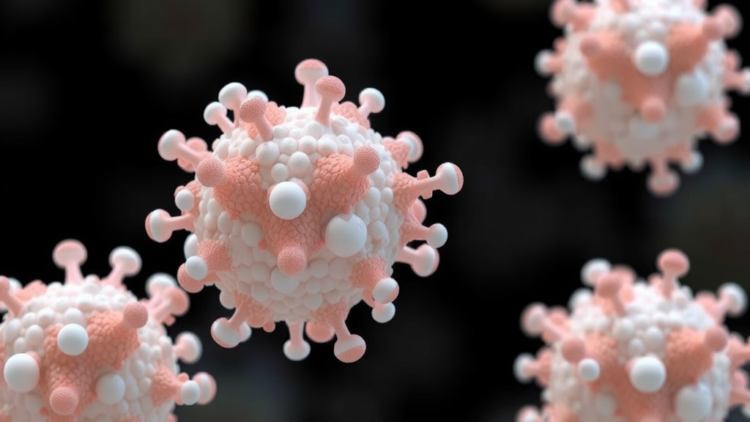
Image Credits: AI Generated
DOI: 10.1038/s41557-026-02248-w
Keywords: ionic clusters, porous organic salts, secondary building units, crystalline frameworks, metal-free materials, supramolecular chemistry, porosity, carbon capture, gas separation, framework chemistry, electrostatic assembly, hydrogen bonding
Cite Scienmag News
APA
MLA
Chicago
Bethany Barker. (September 12, 2026). Ionic Clusters Take Center Stage as Building Blocks for Porous Organic Salts. Scienmag. https://scienmag.com/ionic-clusters-take-center-stage-as-building-blocks-for-porous-organic-salts/
Bethany Barker. “Ionic Clusters Take Center Stage as Building Blocks for Porous Organic Salts.” Scienmag, 12 September 2026, https://scienmag.com/ionic-clusters-take-center-stage-as-building-blocks-for-porous-organic-salts/. Accessed 12 September 2026.
Bethany Barker. “Ionic Clusters Take Center Stage as Building Blocks for Porous Organic Salts.” Scienmag. September 12, 2026. https://scienmag.com/ionic-clusters-take-center-stage-as-building-blocks-for-porous-organic-salts/
Copy citation
Download RIS
Tags: advances in framework chemistry and material synthesisand ionic frameworksapplications in carbon dioxide capture and industrial gas separationcarbon capturecomparison of covalentcrystalline frameworkscrystalline materials for gas capturedevelopment of porous organic frameworkselectrostatic assemblyenergy storage and drug delivery using porous materialsframework chemistrygas separationhigh-connectivity crystalline networkshydrogen bondingionic clustersIonic clusters in porous organic saltsionic interactions in material constructionmetal-free materialsmetal–ligandmolecular-scale sponge designporosityporous organic saltsrole of secondary building units in framework chemistrysecondary building unitssignificance of ionic bonds in crystalline porous structure formationsupramolecular chemistry