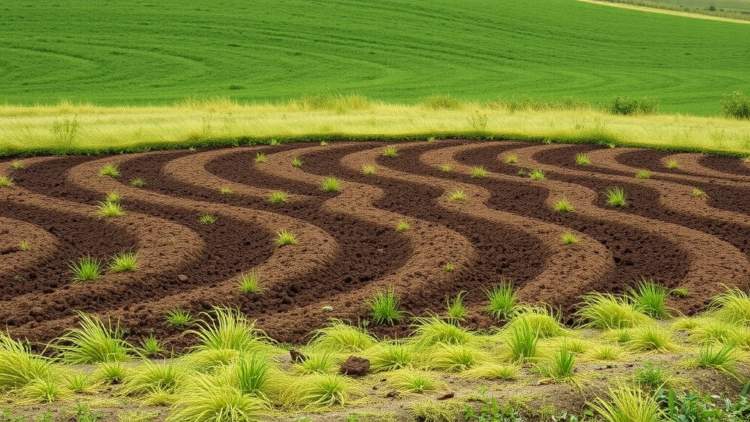
Deep in the foothills of the Western Carpathians in southern Poland, a quiet agricultural landscape is rewriting what scientists know about biodiversity hotspots in Europe’s vanishing semi-natural meadows. A new study conducted in the Wielopolka catchment, a 484-square-kilometer river basin in the Strzyżów Foothills, has revealed that the extraordinary plant diversity of these submontane valleys hinges on a precise interplay between soil moisture, landscape topography, and the persistence of old-fashioned farming practices. The research, published in the journal Plant and Soil, offers both a scientific roadmap for conservation and a stark warning: without renewed support for traditional management, some of the region’s richest grasslands could disappear within a generation.
Semi-natural grasslands are among the most endangered ecosystems on the continent. Unlike natural grasslands, they exist only because humans have mowed, grazed, and managed them for centuries, preventing forest from reclaiming the land. Across temperate Europe, these meadows shelter rare and endangered plant and animal species, which is why many have been placed under legal protection and long-term monitoring. Yet as intensive agriculture expands and traditional farming becomes economically unviable, these communities are vanishing at an alarming rate, making it urgent to understand exactly which factors sustain their diversity.
To address this question, Tomasz Wójcik of the University of Rzeszów and Alina Stachurska-Swakoń of Jagiellonian University selected the Wielopolka catchment as a model area because traditional low-intensity agriculture still survives there. Between 2012 and 2015, the team established 15 study sites arranged along the profiles of the main river valley and its tributaries, capturing the full range of grassland communities in the region. At each site, they recorded ten phytosociological relevés using the classical Braun-Blanquet method on 100-square-meter plots, yielding 150 vegetation plots in total. Alongside the botanical surveys, they dug 15 soil profiles to depths of 50 to 100 centimeters and collected 51 soil samples for laboratory analysis of texture, pH, organic matter, nitrogen, and the available forms of key nutrients including phosphorus, potassium, magnesium, and calcium.
The plant communities documented in the study spanned a remarkable edaphic range within a small area. Six associations and eight variants belonging to the Molinio-Arrhenatheretea class were distinguished, stretching from the wet rush community Scirpetum sylvatici in waterlogged valley bottoms to strikingly dry, thermophilous variants of the hay-meadow association Arrhenatheretum elatioris on valley tops. These thermophilous variants, hosting warm-loving species such as Gentiana cruciata, Melampyrum arvense, and Centaurea scabiosa, are rare in the northern part of the Western Carpathians and turned out to be the richest communities in the entire catchment, recording the highest values of all diversity indices measured.
Using discriminant analysis on Ellenberg ecological indicator values, the researchers identified the dominant environmental forces organizing this vegetation mosaic. Soil moisture, expressed as the moisture index, emerged as the single most powerful factor underlying community differentiation, followed by soil fertility. Crucially, these soil properties were themselves strongly correlated with position in the valley profile: moisture and fertility peaked in valley bottoms where humus-rich colluvial and alluvial soils accumulate, while the driest and most calcium-rich substrates occurred on upper slopes and hilltops. Altitude played only a secondary role at this relatively low elevation, and slope and exposure mattered even less, underscoring that at the landscape scale of a small catchment, the geometry of the valley itself dictates where water and nutrients collect.
The detailed soil chemistry added further nuance. Canonical Correspondence Analysis with forward selection and Monte Carlo permutation tests revealed that available phosphorus, measured as P2O5, was the most influential single soil parameter, explaining 8.4 percent of the variance in species composition with 23.8 percent of the contribution among soil variables. Alongside CaO, K2O, potassium, and the carbon-to-nitrogen ratio, phosphorus helped separate the thermophilous meadow variants from their neighbors. Intriguingly, while these nutrients governed which communities occurred where, only the C/N ratio showed a positive correlation with species richness itself, and no linear relationship was found between soil pH or total nitrogen and diversity measures. The concentration of calcium carbonate in the substrate, however, proved closely tied to the development of the xerothermic species that make the thermophilous meadows so exceptional.
The human dimension of the story proved just as decisive as the environmental one. The researchers identified six management types across the catchment, ranging from complete abandonment to regular mowing up to three times per year and occasional cattle grazing. Analysis of variance showed that unmanaged plots consistently recorded the lowest species richness, Shannon-Wiener diversity, and evenness, a result that was highly significant statistically. At the other end of the spectrum, patches of the wet meadow association Cirsietum rivularis that were mown three times per year achieved the highest Shannon-Wiener index in the entire study area, while the species-rich thermophilous meadows thrived under occasional mowing or sporadic grazing. Moderately frequent disturbance, it seems, keeps competitive grasses in check and opens space for the many light-demanding forbs that give these meadows their celebrated floristic wealth.
These findings align with a broader body of European research showing that low-intensity management creates the medium-level disturbances necessary to maintain high species richness, and that cessation of use triggers a predictable downhill slide: vegetation grows taller, mesophilic grasses expand, photophilous species retreat, and overall biodiversity declines as secondary succession advances toward woodland. The Wielopolka study also confirms patterns reported from other Carpathian regions, including the Sądecki Beskid Mountains and the White Carpathians, where dry grasslands on calcium-rich soils consistently harbor the greatest local species richness. When all environmental variables, soil traits, landscape indicators, and management types were combined in the ordination model, soil moisture, CaO content, and management type together explained the largest share of variation in species distribution, and the full model accounted for roughly half of the total variance in the data set.
The implications reach far beyond one Polish river basin. The authors argue that submontane landscapes, even within a relatively small area, can serve as crucial reservoirs of plant diversity and refuge for rare and protected species, provided the fine-grained mosaic of wet valley bottoms, dry slopes, and varied management is maintained. But there is a catch: the extensive grazing and varied mowing regimes that sustain this diversity are no longer profitable for landowners, and without systemic political and economic support, they are being abandoned. The study therefore delivers a clear message to policymakers across Central and Eastern Europe, where similar submontane grasslands persist: conserving these biodiversity hotspots requires not just designating protected areas, but actively subsidizing the traditional agricultural practices on which centuries of accumulated diversity ultimately depend. As climate change adds further pressure, with mountain plant communities responding unevenly to warming, the window for preserving these living archives of European cultural landscape is narrowing, and the Wielopolka catchment shows precisely what is at stake if that window closes.
Subject of Research: Factors determining plant diversity of semi-natural submontane grasslands in relation to soil properties and traditional management
Article Title: Grassland diversity of submontane valleys under influence of soil and management types
Article References: Wójcik, T., & Stachurska-Swakoń, A. (2026). Grassland diversity of submontane valleys under influence of soil and management types. Plant and Soil. https://doi.org/10.1007/s11104-026-09024-2
Image Credits: AI Generated
DOI: 10.1007/s11104-026-09024-2
Keywords: grassland diversity, soil moisture, Western Carpathians, traditional management, semi-natural meadows, species richness, soil chemistry, calcium content, mowing, grazing, biodiversity conservation, Molinio-Arrhenatheretea
Cite Scienmag News
APA MLA Chicago
Alan Morgan. (September 12, 2026). Soil Moisture and Traditional Mowing Shape Carpathian Grassland Diversity. Scienmag. https://scienmag.com/soil-moisture-and-traditional-mowing-shape-carpathian-grassland-diversity/
Alan Morgan. “Soil Moisture and Traditional Mowing Shape Carpathian Grassland Diversity.” Scienmag, 12 September 2026, https://scienmag.com/soil-moisture-and-traditional-mowing-shape-carpathian-grassland-diversity/. Accessed 12 September 2026.
Alan Morgan. “Soil Moisture and Traditional Mowing Shape Carpathian Grassland Diversity.” Scienmag. September 12, 2026. https://scienmag.com/soil-moisture-and-traditional-mowing-shape-carpathian-grassland-diversity/
Copy citation Download RIS
Tags: Biodiversity Conservationcalcium contentCarpathian biodiversity hotspotsconservation strategies for European meadowsecosystem services provided by traditional meadow landscapeseffects of intensive agriculture on grassland ecosystemsenvironmental monitoring of endangered meadowsgrassland diversitygrazingimpacts of landscape topography on grassland diversityMolinio-Arrhenathereteamowingplant and animal species in Carpathian grasslandsrole of old-fashioned farming in biodiversity preservationsemi-natural meadowssoil chemistrysoil moistureSoil moisture levels in European semi-natural grasslandsspecies richnesssustainable land use in European grasslandsthreats to temperate grassland ecosystemstraditional managementtraditional meadow management practicesWestern Carpathians