Brazil’s Prostate Cancer Map Reveals a Stark Divide Between Detection and Survival
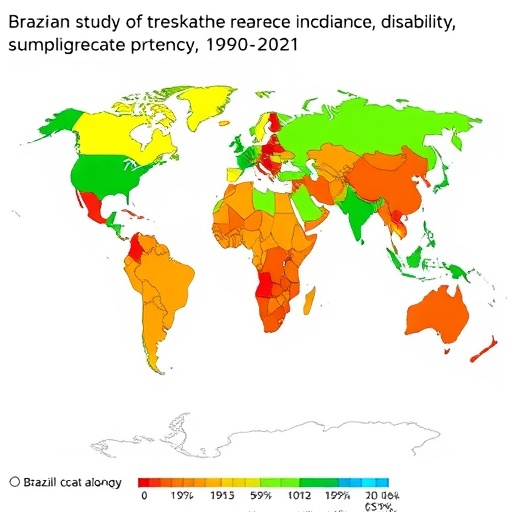
Brazil’s prostate cancer burden is rising in ways that look dramatically different from one region to another, according to a nationwide analysis covering more than three decades of data. The study, published in Cancer Causes & Control, examined incidence, prevalence, mortality and disability-adjusted life years (DALYs) from 1990 through 2021 across Brazil’s five macroregions. Its central finding is a paradox: the South and Southeast recorded the highest rates of prostate cancer, yet mortality often declined there, while the North and Northeast reported lower measured rates but sharper increases and, in some age groups, worsening death trends. The pattern suggests that Brazil’s cancer map reflects not only biology, aging and risk factors, but also who is being diagnosed, who survives long enough to be counted, and who can reach specialized treatment.
The analysis drew on estimates from the Global Burden of Disease Study 2021 and data accessed through the Institute for Health Metrics and Evaluation. Researchers assessed rates per 100,000 men and separated the results by age, calendar year and macroregion. They used age-standardized rates and average annual percentage change, or AAPC, to summarize how disease indicators shifted over time. They also applied joinpoint regression, a statistical method that identifies points at which a trend changes direction or slope. Rather than forcing a single straight line through 31 years of observations, joinpoint analysis connects several linear segments, revealing periods of acceleration, stabilization or decline. This approach allowed the researchers to examine how screening policies, demographic aging and treatment improvements may have reshaped prostate cancer trends.
Across the country, prostate cancer indicators rose steeply with age. In men aged 55 to 59, the Southeast had the highest average DALY rate at 548.64 per 100,000, while the North had the lowest at 481.97. By ages 70 to 74, average DALY rates reached 3,590.60 in the South and 2,993.86 in the North. Incidence followed a similar pattern. In the 70-to-74 age group, the South recorded an average of 377.67 cases per 100,000 men, compared with 272.32 in the North. Mortality and prevalence also climbed in older cohorts, peaking before or around the oldest age groups. The highest prevalence reported in the study was 2,619.50 cases per 100,000 men among Southern men aged 70 to 74. Such high prevalence does not necessarily mean more men are developing aggressive disease there; it can also indicate that more cases are detected and that patients live longer after diagnosis.
That distinction is crucial. Prevalence measures how many people are living with a disease at a given time, and it is influenced by both incidence and survival. A region with extensive testing, reliable cancer registries and broad access to treatment can appear to have a larger cancer burden because more cases are found and patients remain alive for longer. Conversely, low prevalence can reflect genuinely lower incidence, incomplete diagnosis, underreporting or earlier death. The authors argue that the South and Southeast’s higher rates are consistent with older populations, longer life expectancy, stronger diagnostic infrastructure and greater access to oncology services. The North and Northeast, by contrast, may have historically recorded fewer cases partly because men faced longer journeys to medical care, fewer specialists and less consistent access to diagnostic testing.
The temporal trends expose the consequences of this unequal infrastructure. During the earlier decades of the study, prostate cancer incidence increased substantially, a pattern the researchers associate with expanded use of prostate-specific antigen, or PSA, testing. PSA is a blood marker produced by prostate cells. Elevated levels can signal cancer, but they can also result from benign enlargement or inflammation. Wider PSA testing can therefore uncover tumors that might never have caused symptoms, a phenomenon known as overdiagnosis. The researchers identified a broad phase of rising incidence from approximately 1990 to 2010, followed by stabilization or decline in some areas after changes in screening guidance. This shift is compatible with the move away from near-automatic mass screening toward more selective testing and shared decision-making, in which clinicians and patients weigh potential benefits against false positives, biopsies, overdiagnosis and treatment-related harms.
The mortality picture was more encouraging in the country’s better-served regions, but troubling elsewhere. In the South, mortality declined by 1.08 percent annually among men aged 50 to 54, by 0.63 percent among those aged 55 to 59, and by 0.64 percent among men aged 65 to 69. The Southeast also recorded significant reductions, including a 0.70 percent annual decline among men aged 80 to 84. These improvements may reflect earlier diagnosis, advances in radiotherapy, improved surgery and newer hormone-based therapies, although the study’s observational design cannot prove that any single intervention caused the decline. In the Northeast, however, mortality rose by 0.47 percent annually among men aged 50 to 54, 0.69 percent among those aged 55 to 59 and 0.76 percent among men aged 65 to 69. In the oldest cohorts, mortality increased in both the South and Northeast, reaching 1.75 percent per year among Southern men aged 90 to 94 and 1.15 percent among Northeastern men in the same age group.
The most consistent national signal was prevalence growth. From ages 40 to 89, prevalence increased significantly across all five macroregions. The Northeast showed the largest annual increases in many age groups, including 2.85 percent among men aged 55 to 59, 2.74 percent among those aged 65 to 69 and 2.57 percent among men aged 75 to 79. The North recorded particularly strong increases in the 45-to-49 and 70-to-74 groups, with annual changes of 2.37 and 2.59 percent, respectively. These increases may partly indicate expanded detection and improved survival rather than an abrupt biological transformation in the disease. Still, the researchers caution that improvements in health coverage remain insufficient, particularly where patients must travel to major cities for radiotherapy and specialist care. The burden is therefore shifting from simply finding cancer to ensuring that diagnosis leads to timely, effective and continuous treatment.
DALYs add another layer to the story because they combine fatal and nonfatal consequences. A DALY represents one year of healthy life lost and is calculated as the sum of years of life lost from premature death and years lived with disability. For prostate cancer, years of life lost generally dominate the measure, but treatment effects, complications and long-term disease can also contribute. The study found that the greatest age-specific burden was concentrated not necessarily in the oldest men, but among age groups in which premature mortality and disability have larger social consequences. In the Northeast, DALYs increased annually across nearly every older age group, including by 0.85 percent among men aged 65 to 69. By contrast, the South and Southeast recorded significant DALY declines in several cohorts. A lower DALY rate in a region with high prevalence may therefore signal better survival, while a lower prevalence combined with high mortality may conceal a more severe and poorly detected burden.
The study also uncovered similarities and differences between age groups that would be invisible in a national average. Incidence trends among men aged 50 to 54 and 55 to 59 were statistically parallel, with both groups showing an AAPC of 1.88 percent per year from 1990 to 2021. Prevalence trends among men aged 45 to 49 and 55 to 59 were likewise parallel, increasing by 2.14 percent annually. In contrast, many comparisons involving older groups were nonparallel, indicating that aging, treatment access, changing screening practices and demographic shifts affected cohorts differently. The researchers emphasize that national policies should therefore avoid treating Brazilian men as a single epidemiological population. They recommend strengthening diagnostic services and oncology workforces in underserved regions, improving data on tumor stage and treatment, and developing targeted awareness and risk-based screening strategies for younger high-risk men. They also call for quality-of-life and palliative-care policies for older patients. The findings come with important limitations: the analysis relied on modeled secondary data, regional aggregation can hide differences between individual states, and disruptions caused by the COVID-19 pandemic may have distorted diagnosis and mortality estimates in 2020 and 2021. Even so, the results deliver a powerful public-health message: in Brazil, the places with the most recorded prostate cancer are not necessarily the places where the disease is most deadly, and a falling death rate in one region cannot be taken as evidence that the entire country is winning the fight.
Subject of Research: Regional and age-specific trends in Brazil’s prostate cancer burden from 1990 to 2021
Subject of Research: Cancer
Article Title: Global burden of prostate cancer (1990–2021) from Brazil: trends in disability-adjusted life years, incidence, mortality, and prevalence
Article References: Daiprai, G., Togni, B. C. J., de Alcântara, M. N. S., Ecco, J., da Cruz, Á. K., Majolo, F., & da Silva, G. L. (2026). Global burden of prostate cancer (1990–2021) from Brazil: trends in disability-adjusted life years, incidence, mortality, and prevalence. Cancer Causes & Control, 37(9), Article 147. https://doi.org/10.1007/s10552-026-02232-2
Image Credits: AI Generated
DOI: 10.1007/s10552-026-02232-2
Keywords: prostate cancer, Brazil, health disparities, disability-adjusted life years, incidence, mortality, prevalence, screening, aging, oncology access
Cite Scienmag News
APA
MLA
Chicago
Rowan Blackwood. (August 28, 2026). Brazilian study tracks global prostate cancer incidence, deaths, disability, and prevalence, 1990–2021. Scienmag. https://scienmag.com/brazilian-study-tracks-global-prostate-cancer-incidence-deaths-disability-and-prevalence-1990-2021/
Rowan Blackwood. “Brazilian study tracks global prostate cancer incidence, deaths, disability, and prevalence, 1990–2021.” Scienmag, 28 August 2026, https://scienmag.com/brazilian-study-tracks-global-prostate-cancer-incidence-deaths-disability-and-prevalence-1990-2021/. Accessed 28 August 2026.
Rowan Blackwood. “Brazilian study tracks global prostate cancer incidence, deaths, disability, and prevalence, 1990–2021.” Scienmag. August 28, 2026. https://scienmag.com/brazilian-study-tracks-global-prostate-cancer-incidence-deaths-disability-and-prevalence-1990-2021/
Copy citation
Download RIS
Tags: aging population and prostate cancer riskanalysis of prostate cancer burden in Brazil from 1990 to 2021analysis of prostate cancer trends from 1990 to 2021disability-adjusted life years (DALYs) for prostate cancergeographic variation in prostate cancer burden in Brazilgeographic variation in prostate cancer prevalence and disability-adjusted life years in Brazilglobal prostate cancer epidemiologyimpact of healthcare access on prostate cancer outcomes in Brazilimpact of healthcare access on prostate cancer survivalinfluence of socioeconomic factors on prostate cancer diagnosis and treatment in Brazilinfluence of socioeconomic factors on prostate cancer outcomeslong-term trends in prostate cancer deaths and disability in BrazilProstate cancer incidence in Brazilprostate cancer mortality trends in Brazilprostate cancer mortality trends in different Brazilian regionsregional differences in prostate cancer detection and survivalregional differences in prostate cancer diagnosis and treatmentregional disparities in cancer detectionregional disparities in prostate cancer survival in Braziluse of Global Bur